
Editor’s Note: BuzzFeed does not support discriminatory or hateful speech in any form. We stand by the LGBTQ+ community and all fans who found a home in the Harry Potter series and will work to provide a safe space for fans. If you, like us, feel impassioned about trans rights, learn more or donate here.
Harry Potter´s archives ↓
A Live-Action “Harry Potter” TV Series Is Reportedly In Early Stages Of Development At HBO Max, And People Have Thoughts
Editor’s Note: BuzzFeed does not support discriminatory or hateful speech in any form. We stand by the LGBTQ+ community and all fans who found a home in the Harry Potter series and will work to provide a safe space for fans. If you, like us, feel impassioned about trans rights, learn more or donate here.
RSS was opposed to India’s freedom struggle, its flag
Not only Modi’s ideological establishment, RSS was opposed to India’s freedom struggle, its flag, and constitution, it was even allegedly involved in the assassination of Mahatma Gandhi, who was the head and heart of the movement for the independence.
J.K. Rowling is ‘not directly involved’ in the new Harry Potter video game
Harry Potter author J.K. Rowling is not directly involved in new video game Hogwarts Legacy, according to its publisher.
Warner Bros. Games made the clarification in an official game FAQ published on its website. However, it did not make clear if the author had made any contribution at all to the game project.
“J.K. Rowling is not directly involved in the creation of the game, however, her extraordinary body of writing is the foundation of all projects in the Wizarding World,” Warner Bros. Games said in a statement. “This is not a new story from J.K. Rowling.”
Rowling was accused of making several transphobic comments on her Twitter account this summer, and also published a new book accused of portraying transgender people as villains.
The author’s actions led to many Harry Potter movie actors, including leads Emma Watson and Eddie Redmayne, to publicly voice their support for the transgender community.
Daniel Radcliffe, who played Harry Potter in the movies, published an open letter via LGBTQ non-profit The Trevor Project in support of transgender people.
“Transgender women are women. Any statement to the contrary erases the identity and dignity of transgender people and goes against all advice given by professional health care associations who have far more expertise on this subject matter than either [J.K. Rowling] or I,” Radcliffe wrote.
Warner Bros. Interactive announced Hogwarts Legacy, its next-gen adventure game based on the Harry Potter series, earlier this week.
Developed by Avalanche Software (Disney Infinity), the title is described as an open-world RPG that takes players beyond Hogwarts to new and familiar locations, as they “live the unwritten and embark on a dangerous journey to uncover a hidden truth of the wizarding world.”
Published by Warner under the Portkey Games label, Hogwarts Legacy will release in 2021 for PlayStation 5, PlayStation 4, Xbox Series X and S, Xbox One consoles, and PC.
LEGO Harry Potter 76382 Hogwarts Moment: Transfiguration Class [Review]
Very often, when we say Harry Potter, we mean books about magic and wizardry, and when we mention books about magic and wizards, of course, we talk about Harry Potter. In today’s popular culture, those two have become synonymous in many contexts. LEGO doesn’t miss the opportunity to turn the phenomena into something both LEGO and Harry Potter fans will love and adore; this way comes the new lineup of Hogwarts Moments — midsized sets designed as buildable books that can be unfolded into Hogwarts classrooms. The first in the series is 76382 Transfiguration Class capturing one of Professor McGonagall’s lectures. The set consists of just 241 pieces and comes with three minifigures. The set will be available in January 2021 for US $29.99 | CAN $39.99 | UK £27.99.
The LEGO Group provided The Brothers Brick with an early copy of this set for review. Providing TBB with products for review guarantees neither coverage nor positive reviews.
The box packaging
The set comes in a fairly small box, but its design is what will make you stop and enjoy it before opening the set. The front features a vertical artwork full of magic effects, while the back of the box depicts the set in action — and, by the way, it’s a horizontal picture.
It is worth noting that the building guide doesn’t include illustrations or descriptions of any play functions or scenarios. It’s the back of the box that illustrates the set in all its glory. Meanwhile, the building guide includes detailed instructions on fitting every piece of interior inside the book. Once the book is opened, it’s up to you how to use all of it.
New pieces
Although the set contains fewer than 250 pieces, a couple of pieces may be of interest to many builders. First of all, it’s the book covers — two 10×16 plates. The front comes with a stunning print, while the back cover has neither prints nor stickers.
The finished model
Once the build is complete, you put every single piece and accessory inside the book and close it. 8×16 plates are relatively small pieces; this brick-built book is a thick but fairly small volume.
And this is when the magic begins. I had no idea how the designers managed to fit everything between the book covers, but when you start unfolding the model, you can see how tight and neat the inside is.
Thanks to many antistuds on the inner side of the cover elements, you can attach almost all the accessories. Even the book is opened, nothing falls out or falls apart. This set can easily survive even a long trip in a kid’s backpack.
With the walls infolded and the furniture placed beside the set takes more space on a table than I expected. There’s nothing sophisticated in the element’s design, but together they provide extreme playability.
For the play to start, you have to add the minifigures. Each has its own place in the scene, but the abundance of accessories in the set provokes a ton of fun and silly scenarios.
Although some furniture pieces’ design may be a bit on the simple side, the wall of the classroom looks fantastic. It’s a proper castle interior with gothic elements: high narrow windows, multiple arches, and, of course, candles. I don’t even mind the stickers; they fit perfectly inside the rectangular area on the walls and look great in general.
Classroom furniture pieces demonstrate a great variety of basic building techniques. Just like small advent calendar sets, these tiny builds make you smile at how cute and ingenious they are. Smaller stickers used here look very suitable, and I’m applauding the idea of the chairs that can be hidden under the table.
The minifigures
Each of the Hogwarts Moment sets comes with three minifigures: one professor and two students. Today, it’s Professor McGonagall’s lecture attended by Ron Weasley and Hermione Granger.
While the students’ outfits look familiar, they were slightly updated for this set — no huge changes in the design, but a handful of smaller tweaks like updated fabric creases. On the contrary, McGonagall’s minigifure will be a reason for many collectors to buy the set. First of all, it’s the new hat piece, which is now combined with hair. Secondly, it’s a slightly updated pattern of the torso and, of course, a beautifully printed skirt piece.
Conclusion and recommendation
In this section of each review, we usually summarize the advantages and disadvantages of the product and give a verdict. But as soon as I finished building LEGO Harry Potter 76382 Hogwarts Moment: Transfiguration Class, I knew it is not about the strong and weak sides of the set; you either know you need it, or you have no interest in Harry Potter at all. With this said, I can’t find a single reason to ignore the set when it is finally available in January 2021.
LEGO Harry Potter 76382 Hogwarts Moment: Transfiguration Class includes 241 pieces, comes with three minifigures, and will be available starting January 1st, 2021 from the LEGO Shop (US $29.99 | CAN $39.99 | UK £27.99).
The LEGO Group provided The Brothers Brick with an early copy of this set for review. Providing TBB with products for review guarantees neither coverage nor positive reviews.
Harry Potter podcast reckons with JK Rowling on a global stage
Witch, Please is a fortnightly podcast about the Harry Potter world by Marcelle Kosman and Hannah McGregor, which was created while the two were studying at the University of Alberta in 2015.
Kosman and McGregor initially thought that it would be entertaining to re-read the Harry Potter series together and record their conversations as a podcast. The co-hosts decided to do a series primarily focused on the original books and movie adaptations, but continued on as the Pottermore universe expanded. The duo decided to take a break in 2017.
“For a whole variety of reasons, we had put the project on indefinite hiatus a couple of years ago,” Kosman said.
Witch, Please was rebooted earlier this year with the intention to create something similar to the original podcast and have fun.
“We are still looking at the Harry Potter books,” Kosman said. “But whereas in the first round, we didn’t do any research… now it is the opposite. We research and talk about the text through the lens of critical animal studies [and] trauma theory, amongst other things.”
Addressing the recent controversies surrounding J.K. Rowling, the hosts are trying to bridge the gap between their expectations of the author and reality.
“When J.K. Rowling came out with her most recent transphobic comments and then shortly after that doubled down on them, it became really important to acknowledge why what she was saying was harmful.”
Kosman emphasized that it is vital to the duo that they do not to shy away from problematic aspects of the text, but instead provide their listeners with the tools to critically dissect Rowling’s works.
“These books have shaped our experiences of the world for many of us. They have helped us in a lot of ways feel seen when we otherwise felt like outsiders in our homes,” Kosman added. “For Hannah and me, it became imperative for us to provide our listeners with a critical vocabulary to talk about the things that are harmful or hurtful in the text.”
The duo also believes that Rowling’s works have evolved beyond what she intended them to be and now belong to the fans.
“[Rowling] may have authored them, but the universe that has come out of the Harry Potter world is entirely because of the fandom,” Kosman added. “Suppose we can’t talk critically about the books. In that case, we can’t address how they participate in these harmful ideologies.”
At the end of the day, the show is still just two friends trying to figure out Harry Potter and learn more about the fandom.
“If you read the books and it feels uncomfortable, that’s not your fault, that’s the book’s fault,” Kosman concluded. “I hope that that person would be able to find a community of fans who have space for those kinds of conversations, and we get to do that.”
Hogwarts Legacy Release Date Delayed to 2022
Hogwarts Legacy — the next Harry Potter game — has been delayed from 2021 to 2022. On Wednesday, Hogwarts Legacy developer Avalanche Software and Portkey Games (the Harry Potter video game publishing label owned by Warner Bros. Interactive Entertainment) announced that they need more time to deliver the “best possible experience”. As such, Hogwarts Legacy has been pushed back a year. Hogwarts Legacy is set in the titular school in the 1800s, a century before the Chosen One — Harry Potter, duh — ever lived.
“We would like to thank fans from around the world on the tremendous reaction to the announcement of Hogwarts Legacy from our Portkey Games label,” Hogwarts Legacy makers said in a prepared statement on Twitter. “Creating the best possible experience for all of the Wizarding World and gaming fans is paramount to us so we are giving the game the time it needs. Hogwarts Legacy will be released in 2022.”
The open-world action RPG Hogwarts Legacy was originally announced back in September. Avalanche revealed then that players would step into the shoes of “a student who holds the key to an ancient secret that threatens to tear the Wizarding World apart. You have received a late acceptance to the Hogwarts School of Witchcraft and Wizardry and soon discover that you are no ordinary student: you possess an unusual ability to perceive and master Ancient Magic.”
For Utah, USA-based Avalanche, Hogwarts Legacy is the biggest project it has taken on in its history. Best known for developing the Disney Infinity series in recent times, Avalanche was closed after Disney shuttered Disney Interactive Studios in 2016. But then a year later, Warner Bros. Interactive Entertainment acquired and renewed the flame. Avalanche Software is not to be confused with Avalanche Studios, the Swedish developer behind Just Cause 4.
Hogwarts Legacy is out in 2022 on PC, PS4, PS5, Xbox One, and Xbox Series X.
For the latest tech news and reviews, follow Gadgets 360 on Twitter, Facebook, and Google News. For the latest videos on gadgets and tech, subscribe to our YouTube channel.

 Signal to Ramp Up Hiring After WhatsApp Controversy Drives Download Surge Samsung Galaxy S21 Series Hands-on Videos Leaked, Clear Images of New Phones Surface Ahead of Launch
Related Stories

A video of a visually impaired girl getting Harry Potter books in Braille wins hearts online
A video of a visually impaired girl getting Harry Potter books in Braille for Christmas and her joyful reaction has been warming people’s hearts online.
In the video posted on Instagram, the girl’s aunt thanked everyone who donated towards the cause.
“Thank you to everyone who donated and made this Christmas extra special for my niece Emrie! As you can see, she is beyond excited to be able to read the Harry Potter books herself! (sic),” Katelyn wrote in the post.
The video shows Emrie opening up her present and reading the Braille script on the title page to realise which book it is. “Now I can read it,” she says excitedly.
Watch the video here:
According to an Instagram story by the girl’s aunt, a GoFundMe page was set up to fund the gift as the Braille copies were too expensive for her to buy.
Here’s how people reacted to the video:

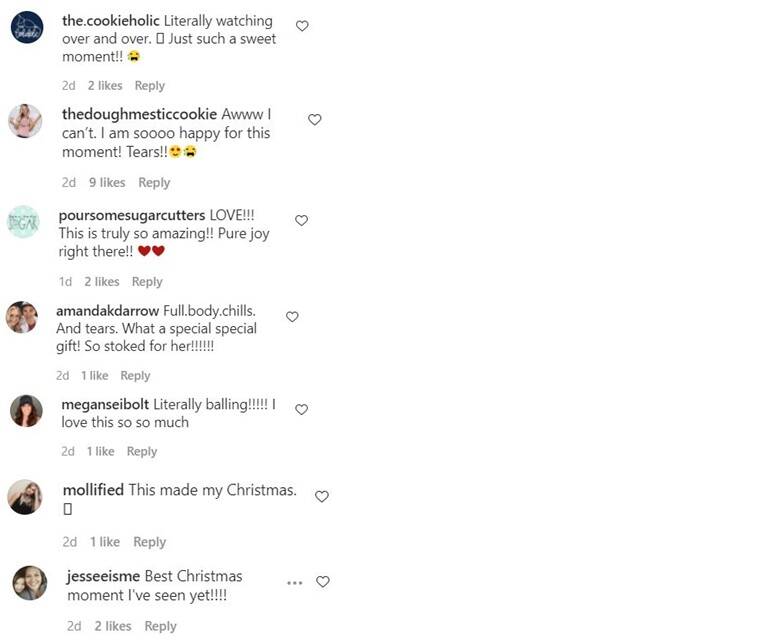
The video has been viewed over 3 lakh times since being shared with over 500 people commenting on it.
Podculture: Secret Hitler, Monopoly and the Historical Board Game
”
Podcast (pod-culture): Play in new window | Download
In 2016, a board game called Secret Hitler was released. Some people loved the game. Others were upset by it. Is it ever ethical to situate entertainment, like a game, within the Holocaust? Is it possible to make a board game that teaches about tragedy, history or a political system in a way that works? What would that even look like? To answer that question, we take a deep dive into Secret Hitler and some other games, including one of the most well-known games in the country, whose real story was buried.
SUSANNA KEMP: Before we begin, a content warning: this episode includes discussions of the Holocaust and Hitler.
SUSANNA KEMP: In December, one of my housemates texted a picture in our group chat of a board game called Secret Hitler that she received as a holiday gift. I’d never heard of this game, and the idea of a board game that had anything to do with Hitler made me uncomfortable, especially as a Jew with family who died in the Holocaust. I grew up hearing stories about survivors and reading about concentration camps. We talked about Hitler and the Holocaust all the time in my Hebrew school. Our parents didn’t want us to forget it. So hearing that something meant for a fun night with friends was about Hitler made me confused and upset. But it also made me want to know more. Secret Hitler made me wonder: Is it ever ethical to situate entertainment, like a game, within the Holocaust? Is it possible to make a board game that teaches about tragedy, or history, or a political system in a way that works? What would that even look like? To answer those questions, I took a deep dive into Secret Hitler and some other games, including one of the most well-known games in the country, whose real story was buried. From the Daily Northwestern, I’m Susanna Kemp, and this is Podculture, a podcast covering arts and entertainment on and around Northwestern’s campus.
SUSANNA KEMP: Secret Hitler was released in 2016 and is part of this genre of games called social deduction, where players try to uncover each other’s hidden roles. The game’s three creators developed the game right here in Chicago. Only one of them is Jewish. Back in January, my house played Secret Hitler. I wanted to see what it was all about. One of my housemates had played before, and she explained it to us all.
HOUSEMATE: So you will either be a liberal or you will be a fascist. The fascists win if they enact three fascist policies and…
SUSANNA KEMP: Here are the basics. Everyone picks an envelope at the beginning of the game, and inside is a card that assigns them a role. One of the cards says Hitler. Another says Fascist. And all the others say Liberal.
HOUSEMATE: Then we all close our eyes and the Fascist and Hitler open their eyes to identify one another.
SUSANNA KEMP: So no one knows who’s who, except for Hitler and the Fascist. Each round, someone is assigned to be the President, and the players also elect a Chancellor. These are roles you have in addition to your other role as Fascist, Liberal or Hitler. Each round, the president draws three policy cards that only they look at. These cards say either “liberal” or “fascist” on them.
HOUSEMATE: So, let’s say I start as President and I’m a fascist and I know that Hannah is Hitler. And I’m gonna say I elect Hannah as Chancellor. We don’t know anything ‘cuz the game’s just started. You all vote “ja,” I get this hand: liberal, fascist, fascist. I discard one.
SUSANNA KEMP: The President discards one card and passes the remaining two to the Chancellor, who looks at both in secret then picks one of the policies to publicly pass.
HOUSEMATE: And then I would give the other two to Hannah. And then everyone would go, “What was in your hand?” and you would say that you had no choice. And then you’d all look to me and be like, “What the hell? You gave her two fascist cards? What were your three cards?” And would say, “I got three fascist cards! I had no choice.”
SUSANNA KEMP: If you’re a fascist, you win if you pass six fascist policies, or if you pass three and Hitler is also elected Chancellor. If you’re a liberal, you win by enacting five liberal policies or by killing Hitler.
HOUSEMATES: The liberals win! Ja!
SUSANNA KEMP: So that’s my roommates and I playing. We’re talking in German accents.
HOUSEMATES: Are you fascist? Vaaat? Nein!
SUSANNA KEMP: We’re laughing.
HOUSEMATES: What’s your liberal policy? Is it free public education? Is it free healthcare? Healthcare for all! Housing for all! Education for all! Woo!
SUSANNA KEMP: And I had a really good time. And… I was Hitler. It felt wrong to pretend to be Hitler, but not as much as I would have expected. I wasn’t sure if the game trivialized the Holocaust or not, and I was wondering why the creators decided to make this game about Hitler, because nothing about the game is very specific to fascism. The policy cards don’t include any real historical info. They’re just labeled “fascist” or “liberal.” In fact, Secret Hitler is so unspecific to fascism that there are spin offs of the game that situate it in different contexts. I was curious if anyone else had thought about this, so I talked to some people who had played. One of them was Elam Blackwell. He’s a Communication junior at Northwestern and part of a team called Mark IV Games that’s working to develop a game called Factions of Sol.
ELAM BLACKWELL: There is a version of Secret Hitler that we used to play at my church, actually, called Secret Voldemort, which is the exact same game except it’s with Voldemort and Death Eaters from, you know, Harry Potter. But Secret Hitler is obviously fraught with a lot more historical complexity than Secret Voldemort.
SUSANNA KEMP: In other words, Secret Hitler doesn’t really need to be about Hitler.
NOELLE PALMER: I think it’s probably just good, like, flavor for the game.
SUSANNA KEMP: That’s Noelle Palmer, another student I chatted with who’d played Secret Hitler. She’s a Weinberg second-year.
NOELLE PALMER: You need a good design point to, like, make your game around. You need something that’s eye-catching. What’s more eye-catching than Hitler?
SUSANNA KEMP: Could making this game about Hitler just be a marketing ploy? Is it possible that a few guys would decide to center a game around a violent dictator just because that game would be, like Palmer said, eye-catching? Turns out, that’s not really the case. One of Secret Hitler’s three creators, Tommy Maranges, agreed to chat with me. In 2015, he had a desk at a co-working space in Chicago. So did this other guy, Mike Boxleiter.
TOMMY MARANGES: We were playing a lot of Avalon at the time, which is a game that’s in the same genre as Secret Hitler. Then, afterwards, he and I would sort of sit around wondering, like, why does this work? Why is this fun? One Monday he came in, eyes kind of on fire, and he was like, “So I just binge watched “Band of Brothers” all weekend, and it made me think, “What if we made the game about World War II? How would that change the mechanics, the dynamics?” And that was the birth of Secret Hitler. Within about 72 hours, we had a pretty close prototype.
SUSANNA KEMP: So the game’s Hitler theme actually came before the creators decided on any rules or gameplay, not after. But using Hitler was a way to make a more interesting social deduction game than we’d played before, Maranges says.
TOMMY MARANGES: Social deduction is an inherently political genre. It’s about a well-coordinated minority working in secret to overthrow or subvert the will of a less coordinated, easily confused majority. The games that had explored that before used pretty bland contexts to explore that, right? The Resistance is a really popular one, but there’s just a resistance and some spies, and you don’t know, is this a people’s resistance, is this a crypto-fascist resistance? So I think that social deduction in particular lends itself to saying something about what it is we’re doing when we work together or when we’re performing politics.
SUSANNA KEMP: I asked Maranges what he hopes people get out of the game. Social deduction games have helped him gain an awareness of his own difficulty separating manipulation from morality. And he hopes Secret Hitler works in the same way for players.
TOMMY MARANGES: I personally have the experience playing social deduction games of being really surprised at how bad I am at recognizing when I’m being lied to, when people are telling me what I want to hear. I think it’s really easy to look back in history and say, “well, obviously, I would have been on the right side of history.”
SUSANNA KEMP: Maranges wants this game to make you wonder, if you were living during a historical period that had clear bad guys and good guys, who would you have been? Is that actually what people think about when they’re playing Secret Hitler? For some, maybe it is. And for others, not really. In 2019, a Jewish-Australian group, the Anti-Defamation Commission, asked Amazon to stop selling the game, which it didn’t do. They argued that the game normalized Hitler’s behavior. But on the other hand, some Jews were grateful for this game.
TOMMY MARANGES: We’ve heard from Jewish groups who have reached out to thank us for making the game. We’ve heard from rabbis who want to take the game with them on Birthright trips to play along the way.
SUSANNA KEMP: For those who may not know, Birthright is a free trip to Israel for young Jewish adults. There were also conflicting opinions about the game among senators. In 2017, the Secret Hitler team sent the game to the 100 members of the U.S. Senate for free.
TOMMY MARANGES: We heard from some senate offices that the interns kind of fought over who got to keep it and it became really popular. We had some offices send it back.
SUSANNA KEMP: And when Maranges and his co-creators were testing the game, some people loved playing it but didn’t think the game was explicitly anti-fascist enough.
TOMMY MARANGES: People did tell us that they felt uncomfortable playing a fascist with no in-game indication the fascists were the bad guys. And so that informed our decision to make the fascists reptiles.
SUSANNA KEMP: Maranges is talking about game design here. On the role assignment cards, the fascists are reptiles and the liberals are humans. In other parts of the game, like on the policy cards, the fascist party is represented by a skull, and the liberal party symbol is a bird. It looks like maybe a dove, or an eagle. But some people didn’t think this design did enough to signal that fascism was unacceptable.
TOMMY MARANGES: We shipped the game out finally in December of 2016. People said they didn’t like that the fascists were lizards, because it suggested that fascists were this evil “other” and no human could be a fascist. I think we would have to be pretty daft to think that no one was going to get upset about it.
SUSANNA KEMP: It’s possible that some people would have been more on board with Secret Hitler if there was a more clear indication that the game was anti-fascist. But this gets back to our original question about games based in reality: would the game be fun if it was more informational?
TOMMY MARANGES: I think that if I were trying to make a game that primarily had a message, it would not be fun. No one likes to feel preached to in a medium that is not a sermon.
SUSANNA KEMP: In other words, games should be fun. And they shouldn’t just be pushing a message, Maranges says. But are there any games that really do get a message across and are also popular?
I want to dive into the story of one game you’ve probably played before. It’s a game whose creator wanted to make a political point, but the original politics of the game have gotten a little buried over the past century. I’m talking about Monopoly.
Mary Pilon wrote a book in 2015 called “The Monopolists” about the secret history of the game. It all came out of some reporting she was doing for The Wall Street Journal in 2009.
MARY PILON: In 2009, the economy was in total disarray. And so a lot of people were drawing comparisons to Depression-era, you know, pastimes, movies, pop culture.
SUSANNA KEMP: Like Monopoly.
MARY PILON: I was going to mention in passing, ‘Oh, Monopoly was invented during the Great Depression,’ because that was the story that was tucked into the game box that my family had, and you know, countless others.
SUSANNA KEMP: The pamphlet in the game box said for many years that the game was created by Charles Darrow. But that wasn’t really true.
MARY PILON: And I looked around, I looked around, it wasn’t adding up.
SUSANNA KEMP: So she used this reporting trick.
MARY PILON: You call folks who are involved in litigation. Because if you’re suing someone or being sued by them, you might know something.
SUSANNA KEMP: She called up Ralph Anspach. He created this game called Anti-Monopoly where players could break up monopolies. Parker Brothers was the board game company distributing Monopoly at the time, and they brought a trademark infringement case against Anspach in 1974. And while he was preparing for the case, Anspach uncovered this Monopoly backstory that Parker Brothers had buried: the story of Elizabeth, or Lizzie, Magie. Monopoly actually started out as The Landlord’s Game, and Lizzie Magie invented it in the early 1900s.
MARY PILON: As a teaching tool to teach against the horrors of capitalism.
SUSANNA KEMP: Unlike the Secret Hitler creators, who really were designing a game just for the sake of designing a game, Lizzie Magie created The Landlord’s Game to present a solution to a problem that she thought a lot of people didn’t understand. She wanted to present the evils of some people accumulating extreme wealth at the expense of others and to imagine a world in which everyone could be rewarded when wealth was created. She structured the game around land value taxation, which tends to produce a lot less inequality. And Ralph Anspach actually argued in his case that he was bringing back the original Monopoly. And eventually, he won.
MARY PILON: This really nutty lawsuit in the 1970s from this economist who was trying to make anti-monopoly games unearth the whole true history of the game.
SUSANNA KEMP: Lizzie Magie created her game with two sets of rules. One was similar to the monopolist rules we use now, and the other employed the concept of land value taxation. She wanted people to play both games, observe the contrast, and think something along the lines of, “Oh, capitalism sucks, and we, the 99 percent, are getting very screwed over.”
MARY PILON: I think she’s a fascinating woman. You can’t separate her from the story of Monopoly. I think she is the pulse of it.
SUSANNA KEMP: Magie was born in 1866, and she led a life that was really unusual for women of her time. She supported herself through work as a stenographer and secretary, but she also performed comedy routines and wrote poetry and short stories on the side. She married late, too, and mocked marriage very publicly. In 1903, she applied for a patent for The Landlord’s Game, and it spread. People started creating their own versions of the game, and some people actually used it as a teaching tool.
MARY PILON: It was played at Harvard, it was played at Wharton. When you look at who was playing it in those days, it’s like this who’s who of left-wing America. So Upton Sinclair had played the game.
SUSANNA KEMP: This one guy, Charles Darrow, took the version of the game that was circulating in Atlantic City to Parker Brothers in 1933. He was unemployed, and Parker Brothers was on the brink of bankruptcy. He got rich, and Parker Brothers stayed in business. They created the narrative that Darrow was the original inventor. I should note here that Magie brought the game to Parker Brothers in 1924, nine years before they started distributing Darrow’s version. They told Magie her version was “too political.” Even though we only play the monopolist version of Magie’s game, that doesn’t mean her original aim of exposing capitalism’s horrors was lost.
MARY PILON: When I started reporting what would become the book, I was also covering Occupy Wall Street, which, you know, was a huge encampment. And I would see the Mr. Monopoly image as part of the protest signs. And I still see it. You know, in L.A. or New York, like, now, the imagery from the board is often used in this very cartoonish way to kind of poke fun at Wall Street and rich people. The first time I saw that, I thought, “Oh, well, that would make Lizzie Magie proud.” Right? She was trying to change the political conversation.
SUSANNA KEMP: People are still using the game as this prop in conversations about things like corporate power and economic inequity. And Pilon thinks we can learn a lot from Monopoly. The Atlantic City-version board that we use today, for example, reflects the city’s segregation in the late 1920s and early 1930s.
MARY PILON: The Quakers, who were predominantly white, lived in these gated communities. The boardwalk of Atlantic City was incredibly segregated, and they had Black housekeepers who lived on Baltic, on Mediterranean.
SUSANNA KEMP: Those are the lower-priced properties in Monopoly.
MARY PILON: Atlantic City was a receiving station for a huge influx of Black Americans who were moving to the North to seek better opportunities, only to find that the same kind of Jim Crow policies that were so oppressive in the South existed up North as well. I think that board games, we don’t think of them as cultural artifacts the way we do film and books and movie(s). And I think that that’s a mistake, that they are works of art and they are things that are created of their time, and we should analyze them and think about them critically.
SUSANNA KEMP: If you want to learn something from a game, Pilon is suggesting you just have to be curious and do some research or Googling. But the irony of Magie’s game—that she made this anti-monopolist teaching tool and instead a monopolist version caught on—still made me think: Lizzie Magie’s original version of Monopoly likely morphed into the monopolist version in part because a competitive game is more fun than one where everyone wins. And Secret Hitler has likely been successful in part because it doesn’t include a lot of historical details that could slow down gameplay.
But are there any games rooted in history or politics that haven’t significantly evolved away from their original version? I spoke to David Rapp when I was researching this piece. He’s a professor in the psychology and learning sciences departments at Northwestern, and he’s a big board game nerd.
DAVID RAPP: For a period of time, I had an absolutely enormous collection. Like, top 10 (percent of) people in the Midwest number of games. Maybe that’s exaggerating. It was a lot.
SUSANNA KEMP: And then he met these people who design games, and he got interested in how to make games. He mentioned around 15 games during our conversation that I’d never heard of, including a bunch of war games. There’s actually a big war game culture. Like Secret Hitler, a lot of them are about WWII. But unlike Secret Hitler, these games tend to physically represent war with a board that’s a map. One of these games that came out more recently, in 2005, is Twilight Struggle.
DAVID RAPP: That’s about the Cold War, and one side plays the U.S. and one side plays the USSR. And you learn a lot about the history. And there are things that both governments do that aren’t comfortable and things that both governments do to support their sides. But that game is really good about extra detail about what happened in this history here. We want you to learn about this Cold War situation. A card will have an action on it. But then underneath says the history, like, what this card means. So how is this important to the Cold War?
SUSANNA KEMP: I want to put out here too that this is a game that people really like. It’s currently ranked as the number one war game and number 10 overall game on the forum BoardGameGeek. For comparison, Monopoly is in the 20 thousands. So in these war games like Twilight Struggle, you’re playing this game that’s rooted in history. And someone’s always going to need to play the bad guy.
DAVID RAPP: If anyone’s playing a game where they’re on the side of someone who is in that historical precedent, now, what does that make them think? Good board game designers usually include some statement about why they’re doing this, like, ‘This is a way to figure out the historical precedent of how things happen. We want to understand the campaigns and military strategies.’
SUSANNA KEMP: The pamphlet in the Secret Hitler box does not include anything along those lines. And the closest thing on their website is the question in the QA section, “I don’t think there’s anything funny or cool about fascism. Who can I complain to?” And the answer is a list of U.S. senators and their contact info.
SUSANNA KEMP: Maybe you feel okay playing the bad guy if you’re learning something while you’re doing it. I spoke to Kyle Nolla, who’s a Northwestern graduate student in the psychology department. She studies video games.
KYLE NOLLA: I have not played Secret Hitler, in part because I was worried about, like, is this game rewarding somebody being a fascist?
SUSANNA KEMP: But she did have a thought about why it might feel okay to pretend to be someone evil, someone like Hitler, in a game.
KYLE NOLLA: So the idea of like, having to be a fascist and trying to trick people, on its face is a little bit uncomfortable. But ultimately, I think it’s important that we have those kinds of mental exercises – like, how does somebody end up using manipulation or whatever? We need to be able to recognize those signs in order to, when it happens in the real world, be able to recognize it for what it is.
SUSANNA KEMP: And she thinks that social deduction games like Secret Hitler give license to lie, too.
KYLE NOLLA: Social licensing is if we say, like, this thing is okay in this circumstance, even though it wouldn’t be universally okay. And so the game context gives licensure to lie, deceive, manipulate people. And so for some people, that’s enough. It’s like, all right. It’s all just a game. So now I’m going to use these skills.
SUSANNA KEMP: For other people, it’s not enough. Nolla, for example, doesn’t like playing social deduction games where she has to lie because people in her life have compulsively lied to her. It all hits too close to home. I think maybe games like Monopoly are easier to play, even if you feel really passionate about lessening the economic divide, because you’re not pretending to be any definitive person. You’re a landlord buying up properties, but you’re not the specific person who’s charging you, or who evicted a friend, for example. On the other hand, if someone asks if you want to play Secret Hitler? Maybe you don’t want to pretend to be Hitler, or to see someone else pretending to be Hitler, no matter how the game is presented to you.
SUSANNA KEMP: If you’re looking for something to do and want a game suggestion, let me tell you, David Rapp knows his stuff. I told him I liked word games, and he introduced me to a few games I might like. If you asked, I’m sure he’d give you a suggestion, too.
SUSANNA KEMP: From the Daily Northwestern, I’m Susanna Kemp, and this has been Podculture. This episode was reported and produced by me. The audio editor of the Daily Northwestern is Madison Smith, the digital managing editor is Haley Fuller and the editor in chief is Sneha Dey.
Email: [email protected]
Related Stories:
— Student board game start-up prepares to launch flagship game
— Evanston Games and Cafe offers opportunity to develop community over board games
— You sunk my movie: Why the board game-inspired ‘Battleship’ flopped
Comments
“Harry Potter” Actor Katie Leung Claims That Publicists Told Her To Deny That She Was Experiencing Racist Attacks While Filming
“I was so in denial of what was happening.”