Movie theatres will reopen in Maharashtra from October 22 after being shut for close to six months, Chief Minister Uddhav Thackeray said on Saturday. The decision follows an announcement on Friday to reopen schools and places of worship on October 4 and October 7, respectively.
The announcement comes as a shot in the arm for the nearly 1,000 single screen cinemas and multiplexes across the state. Theatres in Maharashtra were shut following the coronavirus outbreak in March 2020. They reopened in December and were shut once again over fears of a second wave in March this year. In everywhere else in India barring Kerala, cinemas have resumed operations at half capacity.
Theatres and auditoriums in Maharashtra will open after 22nd October 2021 while observing all COVID safety protocols. SOP is in the works and will be declared soon.
Maharashtra is one of the most important sectors for theatrical distribution. The state contributes an estimated 30% to a movie’s box office. The few Hindi films that were released in cinemas despite the loss of this market – BellBottom, Chehre, Thalaivii – took a hit in their earnings.
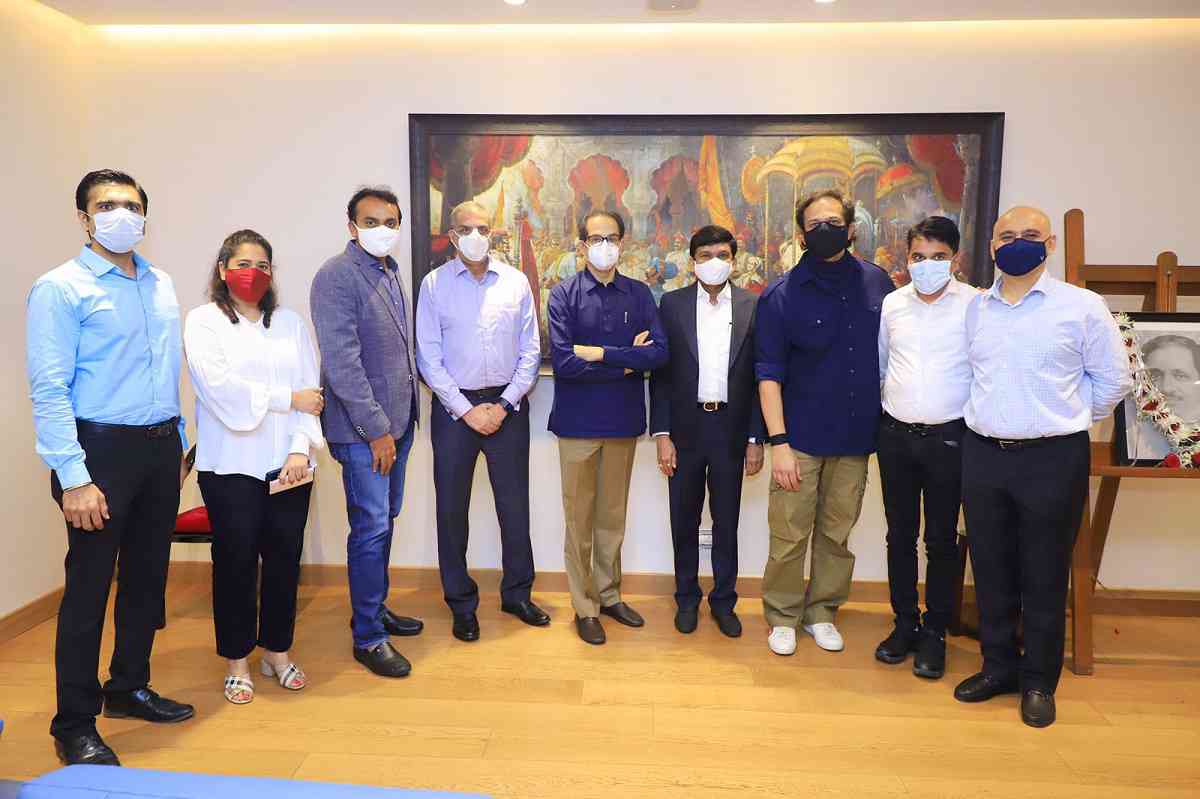
Thackeray’s announcement came after a meeting on Saturday in Mumbai with a delegation comprising filmmaker Rohit Shetty (whose Sooryavanshi has been stuck in the cans since 2020), Pen Studios head Jayantilal Gada and Pen Marudhar director Sanjay Chatar. The delegation included Kamal Gianchandani, President of the Multiplex Association of India and CEO of PVR Pictures, Alok Tandon, CEO of Inox Leisure, Devang Sampat, CEO of Cinepolis India and Kunal Sawhney, Chief Operating Officer, Carnival Cinemas.
Sooryanvanshi, starring Akshay Kumar, is likely to be one of the first releases. Also in the pipeline are Kabir Khan’s 83, Sanjay Leela Bhansali’s Gangubai Kathiawadi, starring Alia Bhatt, and the Ranbir Kapoor-led Shamshera.
Maharashtra Chief Minister Uddhav Thackerary (centre) meeting a delegation of filmmakers and multiplex operators.
The last time theatres in Maharashtra were shut for this long was in 2009. A spat between producers and multiplex chains over how the box office pie was to be split resulted in a boycott on releases. The standoff dragged on for nearly three months. Filmmakers held back productions and relented only when new revenue-sharing terms were set.
This crisis was longer than the one in 1986, when the Hindi film industry, in a rare show of solidarity, went on strike to protest what they termed usurious taxation policies by the Maharashtra government. Among the film industry’s demands at the time was a lowering of entertainment tax on movie tickets.
While the nerds were told they couldn’t sit at the cool kids’ table at this past weekend’s Emmy Awards, they had a grand old time at the Creative Emmy Awards the week prior. There, The Mandalorian’s second season received, understandably, the Emmy for “Outstanding Special Effects in a Series or a Movie.” Now, in celebration, we’ve gotten another peek behind the CG… and in front of it, and off to the side, too, I guess.
What does it take to make a season of The Mandalorian? Oh, hunks of practical sets, bunches of bluescreens, some robotics, some puppets, that insane LED rig called the Volume that allows actors to be on virtual sets themselves while they film, and, oh yeah, an old-school spaceship model, just like the Star Wars crew did for A New Hope 44 years ago:
That’s the show’s Visual Effects Supervisor Richard Bluff giving the tour. While VFX reels like this can be hit or miss, The Mandalorian’s videos never disappoint. There’s always something that surprises me, whether things I assumed were CG turned out to be real, or things that looked real were CG, or things that were physically made and then scanned into CG anyway. But I mostly love that the Trash-ATs are stop-motion puppets for what seems to be no discernable reason. The show’s ability to work with all these processes and VFX, rather than just designing everything on a computer as the prequel movies did, is a huge part of the reason why The Mandalorian looks so good and feels so authentically Star Wars.
The Mandalorian also won 2021 Emmys for Outstanding Prosthetic Makeup, Outstanding Musical Composition for a Series (Original Dramatic Score), Outstanding Sound Mixing for a Comedy or Drama (One-Hour), Outstanding Stunt Coordination, Outstanding Stunt Performance, and Outstanding Cinematography for a Single-Camera Series (Half-Hour), for a total of seven.
In 1966, Isaac Asimov’s Foundation trilogy was voted the best science fiction series of all time at the Hugo Awards. Other series have certainly surpassed it since then, although it’s still considered the work that codified the genre. Despite its fame, because the series is an epic on a galactic level told over the course of 500 years or so, with dozens of characters, conflicts, and stories, no one’s figured out how to bring Foundation into live-action. Apple TV+’s new Foundation series hasn’t figured it out either.
Foundation the TV series is not Foundation the book series. There are a few bones of the original story in there, sure, including the premise. Mathematician/psychologist Hari Seldon (Jared Harris) creates the field of psychohistory, in which the future can be pathetically predicted—not for individuals, but humanity in general—and has discovered the horrifying truth that the 12,000-year-old Galactic Empire is going to fall, beginning a new dark age that will last 30,000 years. It can’t be stopped, but it can be reduced to a mere millennium by creating a repository of human knowledge to become the foundation of a new civilization. It’s an astoundingly great premise that could never be served in a movie, and a TV adaptation was never going to be easy. The first Foundation book alone is made up of five separate novellas that have no characters in common, and take place over 150 years. Very, very few of those characters are developed because we spend so little time with them. They’re not the story—the Foundation is, and how it develops over time.
TV audiences would, understandably, have a hard time getting invested in a show where the entire cast and conflict changes every episode. Showrunner David S. Goyer—writer of about a billion DC superhero movies—limits Foundation’s first season to the first two-fifths of the original novel and ties them together in a somewhat forced way. Goyer’s idea to have Lee Pace play an eternally cloned Emperor Cleon is a clever way to give the series a (basically) consistent antagonist. Changing characters’ genders and ethnicities is a must for modern times—there were virtually no female characters in Asimov’s early books—and, of course, it doesn’t affect the story in the slightest. And he begins the show with a bit of sci-fi spectacle that will absolutely hook audiences into rooting for Hari’s grand plan to succeed.
Here’s the catch: Making a 10-episode season out of about 100 pages of text is an act of lunacy on par with turning The Hobbit into three movies. So much needs to be added to fill out these episodes, which feel so much longer than the hour they generally run. Some of these additions are incredibly welcome. Hari’s protégé Gaal Dornick and Salvor Hardin (in two terrific performances from Lou Llobell and Leah Harvey, respectively) get extensive and badly needed backstories to expand their characters. Emperor Cleon, who barely figures in the first book, not only has his own major storyline but is technically three people: Brother Day (Pace), the younger Brother Dawn (Cassian Bilton), and the senior Brother Dusk (Terrence Mann).
Over 50% off from the original list price! Named “Best Android Tablet Around” by Gizmodo
Trade-in and get $350 instant credit
Most of these additions are invented out of whole cloth, having nothing to do with the story of the Foundation. Honestly, after most of the second episode, the show and the books are pretty much unrecognizable. Even if you’re coming in without having read a page of Asimov, you’ll still notice the drawn-out plots that go nowhere, the padding, and the weird choices the show has the characters make to keep the plot from moving forward. Cheap, nonsensical melodrama fills the series (somehow, Seldin’s plan stops suddenly working because two people get in a relationship, so he has to break them up). Then there’s the show’s terror that people might not make certain connections, so it shows something, has the character comment on it to themself, and then maybe throws in a flashback to someone saying something relevant even if it was said three minutes prior. The show also wants to have pew-pew laser battles and ship fights and spacewalk mishaps and junk, none of which offer anything you haven’t seen before, and are usually used to just run out the clock anyway.
I can’t complain about how it feels like—despite the fact that psychohistory shouldn’t also be able to predict individual actions—Hari’s plan relies exclusively on individual people, because that’s a problem with the Foundation books, too. But it’s compounded in the show because Hari needs to have somehow predicted a survivor of a gunfight and their ability to stop a bomb from going off at the last second. It’s hard to care about a plan when nothing ever appears to be going according to it. The second and bigger problem is all the generic sci-fi action is directly counter to what made the Foundation series so beloved—a celebration of knowledge, history, science, and human connection, and the hope of a new galactic civilization rising from it all.
Foundation doesn’t want to be Foundation. It wants to be the heady, thoughtful, revelatory first season of Westworld, so it pontificates about politics and religion and souls, but it doesn’t have the depth to say anything important. The TV series also wants to be Game of Thrones with its political maneuvering (most of which is invented wholesale for the show), but once Hari Seldon’s spaceship takes off, those imperial politics have virtually nothing to do with the Foundation. It also wants to be a sci-fi action show. It’s so busy trying to be all of these things that it doesn’t have the time to be Foundation. For people who don’t know or care about the source material, the result is extremely pretty but not particularly compelling sci-fi. For people who know or are fans of Isaac Asimov and his work, I feel compelled to warn you that if you watch the show you will see a scene so enraging that you will tear your TV in two with your bare hands; then you’ll realize how utterly unnecessary the scene was, and tear it into four.
Goyer’s Foundation isn’t Asimov’s Foundation. It’s not an adaptation, and it’s so different that calling it “inspired by the works of Isaac Asimov” still feels like a stretch. Maybe it truly is impossible to bring this seminal work of science fiction into another medium, but other shows could still do a hell of a lot better job than this.
The first two episodes of Foundation just began streaming on Apple TV+. Single episodes will drop weekly thereafter.
Mumbai (Maharashtra) [India], September 21 (ANI/BusinessWire India): RSS Production House has finished shooting for the upcoming movie ‘Ajmer 1992’ based on real life events in 1992 with a stellar cast starring Zarina Wahab, Karan Verma, Rajesh Sharma, Sayaji Shinde, Mahesh Balraj, and Sumit Singh in the lead roles.
The plot of the movie unfolds one of the biggest rape scandals across the world where hundreds of girls were blackmailed into being brutally raped by certain powerful people. Most of the girls were from affluent families, daughters of IAS and IPS officers yet the culprits were not brought to justice.
“We made this film so that the entire country knows what the young college girls had to go through. This is all we have tried to show to the public,” said Sushil Sachdeva, producer.
Sushil Sachdeva was always passionate about content production representing the ground reality and struggles of life. He started his journey as an entrepreneur when he met Pushpinder Singh, a director who narrated to him multiple movie scripts. But it was Ajmer 1992 that caught his attention. “It was a realistic story and listening to the plight of the young girls drove me to produce the story,” said the producer.
It took around 2-3 years for Sushil Sachdeva to finalise the script and decide the location, ie, Kishangarh in Ajmer and Chanderi in Madhya Pradesh. “The location has the complete look and feel of the old Ajmer of the 1990s,” said Sachdeva.
It was difficult to secure approvals for shooting the film during the covid lockdown. “The concept of the film was controversial and going through the right kind of politicians for approval was a tough task,” he said. RSS Production House was determined to successfully complete the shooting of the film and it was wrapped up by mid-August.
The vision of RSS Production House is to highlight realistic and content-driven cinema. “I am not interested in comedy films but looking for good content that should hit the public,” he stated.
Sushil Sachdeva also wants to produce regional content like the Punjabi cinema. He adds that Punjabi is very close to his heart as he is natively from Ludhiana, Punjab. He is keen on producing courtroom drama.
The Production House is simultaneously looking for new projects and is meeting with the writers every day. They have 2-3 films coming this year and a web series next year.
Sachdeva is looking for an OTT release of the film which will take place by December.
This story is provided by BusinessWire India. ANI will not be responsible in any way for the content of this article. (ANI/BusinessWire India)
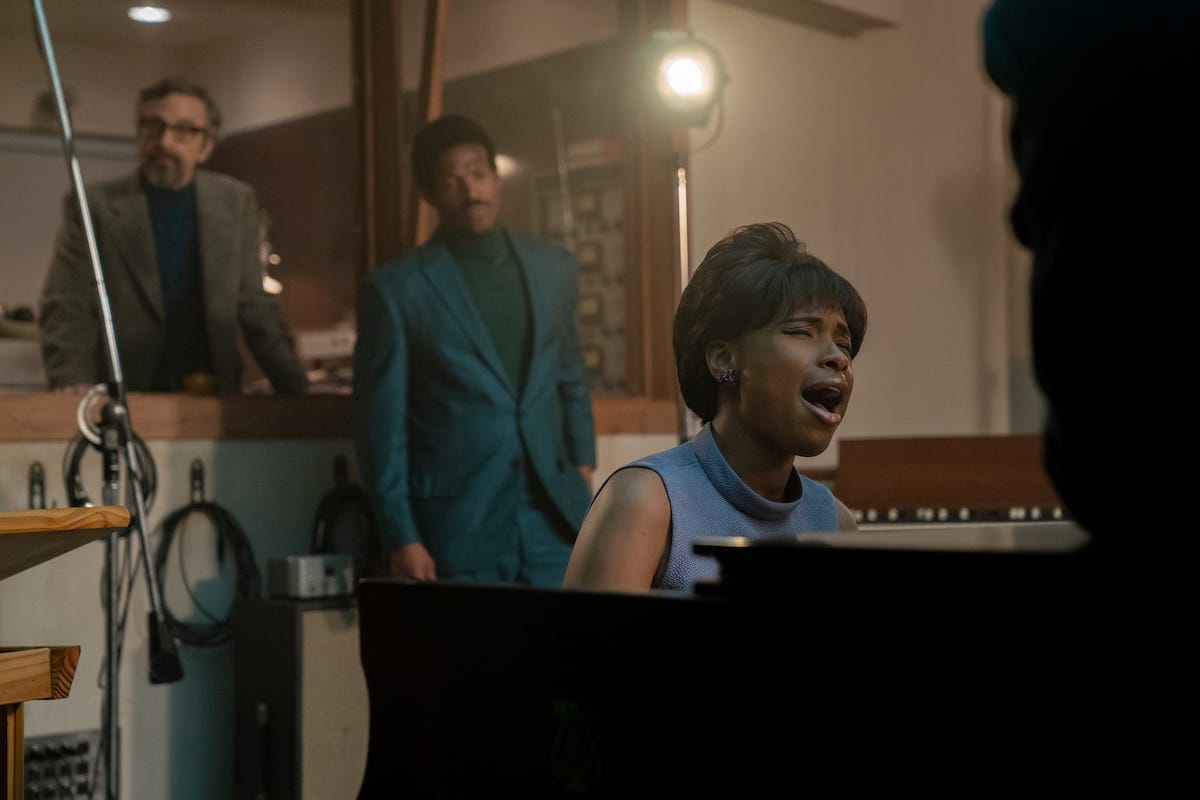
The Aretha Franklin biopic “Respect” opened at No. 4 at the North American box office this weekend, earning an estimated $8.8 million in its debut frame, according to reports.
That’s on par with pre-release box office projections for the movie, which stars Jennifer Hudson as the Queen of Soul in a role hand-picked by the Detroit icon prior to her 2018 death.
“Respect” is earning the respect of theatergoers, racking up an A grade from CinemaScore, which measures audience reaction.
On Rotten Tomatoes, the film received a 63% “Fresh” score from critics and a 94% score from audiences.
MORE: Aretha: A deeper look at the Queen of Soul and ‘Respect’ movie
The film made 63% of its gross from Midwest and East coast audiences, Deadline reports. Ticketbuyers were 48% African American and 66% female and 86% over 25, according to Gitesh Pandya of boxofficeguru.com.
The video game action-comedy “Free Guy,” starring Ryan Reynolds and Jodie Comer, was the weekend’s No. 1 film with an estimated $28.4 million.
The horror sequel “Don’t Breathe 2,” the sequel to the Detroit-set “Don’t Breathe,” opened at No. 2 with $10.6 million.
“The Suicide Squad,” fell 70% in its second weekend to $7.75 million and a No. 5 finish.
Early on in ‘Nayattu’, we see police officer Maniyan (Joju George) reluctantly manufacturing evidence against someone, following orders from a prominent politician. By the practiced ease with which he goes about this act, we know that this is not the first time he is doing it, neither would it be the last. “Even goons have the freedom to not take up quotations they don’t want to. The police do not have that freedom,” he tells rookie police officer Praveen Michael (Kunchakko Boban), revealing his helplessness.
Also Read | Get ‘First Day First Show’, our weekly newsletter from the world of cinema, in your inbox. You can subscribe for free here
But when it becomes inconvenient for the system, it won’t take long for it to turn the hunt against those who were once their hunters. Police officers Maniyan, Praveen and Sunitha (Nimisha Sajayan) are forced to go on the run after they realise that the police, due to political pressure, is trying to frame them in a case, in which the circumstantial evidence is against them.
In his fourth film, Martin Prakkat attempts to lay bare the inner workings of the law and order machinery, and looks at how the political ramifications of high-profile cases and media narratives can shape the final outcomes, as per the script written from top. Shahi Kabir, a civil police officer, who wrote the screenplay for ‘Joseph’ brings his knowledge and experience of working in the department to the table.
A considerable part of the initial half is spent in telling us the personal backgrounds of the three police officers. Two of them are from Dalit backgrounds and all three are not economically well-off. Maniyan has invested all his hope on his young daughter, but is constantly concerned that he is never present for her when she needs him. All these details would come to play a key role in the narrative later.
At the centre of the conflict is Sunitha’s complaint against one of her relatives, a local ruffian associated with a Dalit political group. In the station, things get out of hand but political pressure again saves the day for the goon. But even when the script seems to have good intentions, some of the scenes at this point have a possible implication that the laws empowering Dalits are somehow being misused, which is not true considering the number of cases of Dalit oppression still being reported.
Other than this misstep, the film stays firmly on the side of those who are fighting a losing battle against the system. Taking a shift from the flashier presentation and upbeat mood of his previous films, Prakkat chooses a darker mood, which sits well with the hopelessness that pervades the film. The viewer is also immersed in this world with the trio, feeling every ounce of the fear and anger that they experience. But the rather ambiguous epilogue can leave more questions than answers in the mind of some viewers.
‘Nayattu’ is a convincing portrayal of the mercilessness of a faceless system, where the hunters could become hunted before they even realise it.
DONALDSONVILLE – A movie boasting a cast that includes “Captain America” star Anthony Mackie is expected to film this week in Ascension Parish.
Local officials told the Donaldsonville Chief that production will begin as soon as Monday for the upcoming Netflix film “We Have a Ghost”. Aside from Mackie, a New Orleans native, the cast will include David Harbour, Jennifer Coolidge, Jahi Di’Allo Winston, and Tig Notaro.
Filming in Donaldsonville will happen along Railroad Avenue, from Mississippi Street toward Louisiana Square. Filming in the city is expected to take at least a week, with officials asking some local businesses to close temporarily to accommodate the film crew.
The report said the production is requiring that all cast and crew be be fully vaccinated and that it’s trying to avoid large crowds gathering during filming due to the pandemic.
Filming for “We Have a Ghost” is also expected to take place in New Orleans.
Another Netflix production, “The Highwaymen”, filmed in Donaldsonville back in 2018. That film, based on the real-life pursuit of infamous criminals Bonnie and Clyde, starred Kevin Costner and Woody Harrelson.
Mumbai (Maharashtra) [India], September 21 (ANI/BusinessWire India): RSS Production House has finished shooting for the upcoming movie ‘Ajmer 1992’ based on real life events in 1992 with a stellar cast starring Zarina Wahab, Karan Verma, Rajesh Sharma, Sayaji Shinde, Mahesh Balraj, and Sumit Singh in the lead roles. The plot of the movie unfolds one of the biggest rape scandals across the world where hundreds of girls were blackmailed into being brutally raped by certain powerful people. Most of the girls were from affluent families, daughters of IAS and IPS officers yet the culprits were not brought to justice. “We made this film so that the entire country knows what the young college girls had to go through. This is all we have tried to show to the public,” said Sushil Sachdeva, producer. Sushil Sachdeva was always passionate about content production representing the ground reality and struggles of life. He started his journey as an entrepreneur when he met Pushpinder Singh, a director who narrated to him multiple movie scripts. But it was Ajmer 1992 that caught his attention. “It was a realistic story and listening to the plight of the young girls drove me to produce the story,” said the producer. It took around 2-3 years for Sushil Sachdeva to finalise the script and decide the location, ie, Kishangarh in Ajmer and Chanderi in Madhya Pradesh. “The location has the complete look and feel of the old Ajmer of the 1990s,” said Sachdeva.
It was difficult to secure approvals for shooting the film during the covid lockdown. “The concept of the film was controversial and going through the right kind of politicians for approval was a tough task,” he said. RSS Production House was determined to successfully complete the shooting of the film and it was wrapped up by mid-August. The vision of RSS Production House is to highlight realistic and content-driven cinema. “I am not interested in comedy films but looking for good content that should hit the public,” he stated. Sushil Sachdeva also wants to produce regional content like the Punjabi cinema. He adds that Punjabi is very close to his heart as he is natively from Ludhiana, Punjab. He is keen on producing courtroom drama. The Production House is simultaneously looking for new projects and is meeting with the writers every day. They have 2-3 films coming this year and a web series next year. Sachdeva is looking for an OTT release of the film which will take place by December. This story is provided by BusinessWire India. ANI will not be responsible in any way for the content of this article. (ANI/BusinessWire India)
Apple offered a brief glimpse of the Tom Hanks-led Finch at its recent iPhone 13 launch event, and now you can watch the first full trailer for the upcoming sci-fi film. The clip sets the stage for the story that follows. A solar flare knocked out most of the technology on Earth and left much of the US a desolate wasteland. Hanks’ character, the titular Finch, survives in an underground shelter with his only companion, a dog named Goodyear, until he builds a new Android companion. The three of them eventually leave their home when it becomes threatened by the sandstorms that dominate the world of the movie.
Like Greyhound, Apple acquired Finch for Apple TV+ when the film got lost in pandemic-related delays. It’s only one part of a strong fall lineup that is surprisingly heavy on sci-fi stories. Before Finch comes out on November 5th, genre fans can look forward to the company’s adaptation of Isaac Asimov’s Foundationnovels on September 24th and then Invasion, which stars Jurassic Park’s Sam Neill, on October 22nd.
Mumbai (Maharashtra) [India], September 21 (ANI/BusinessWire India): RSS Production House has finished shooting for the upcoming movie ‘Ajmer 1992’ based on real life events in 1992 with a stellar cast starring Zarina Wahab, Karan Verma, Rajesh Sharma, Sayaji Shinde, Mahesh Balraj, and Sumit Singh in the lead roles.
The plot of the movie unfolds one of the biggest rape scandals across the world where hundreds of girls were blackmailed into being brutally raped by certain powerful people. Most of the girls were from affluent families, daughters of IAS and IPS officers yet the culprits were not brought to justice.
“We made this film so that the entire country knows what the young college girls had to go through. This is all we have tried to show to the public,” said Sushil Sachdeva, producer.
Sushil Sachdeva was always passionate about content production representing the ground reality and struggles of life. He started his journey as an entrepreneur when he met Pushpinder Singh, a director who narrated to him multiple movie scripts. But it was Ajmer 1992 that caught his attention. “It was a realistic story and listening to the plight of the young girls drove me to produce the story,” said the producer.
It took around 2-3 years for Sushil Sachdeva to finalise the script and decide the location, ie, Kishangarh in Ajmer and Chanderi in Madhya Pradesh. “The location has the complete look and feel of the old Ajmer of the 1990s,” said Sachdeva.
It was difficult to secure approvals for shooting the film during the covid lockdown. “The concept of the film was controversial and going through the right kind of politicians for approval was a tough task,” he said. RSS Production House was determined to successfully complete the shooting of the film and it was wrapped up by mid-August.
The vision of RSS Production House is to highlight realistic and content-driven cinema. “I am not interested in comedy films but looking for good content that should hit the public,” he stated.
Sushil Sachdeva also wants to produce regional content like the Punjabi cinema. He adds that Punjabi is very close to his heart as he is natively from Ludhiana, Punjab. He is keen on producing courtroom drama.
The Production House is simultaneously looking for new projects and is meeting with the writers every day. They have 2-3 films coming this year and a web series next year.
Sachdeva is looking for an OTT release of the film which will take place by December.
This story is provided by BusinessWire India. ANI will not be responsible in any way for the content of this article. (ANI/BusinessWire India)
(This is an unedited and auto-generated story from Syndicated News feed, LatestLY Staff may not have modified or edited the content body)