
The premise here is pretty simple … if you correctly answer 6 questions about what will unfold during Sunday’s awards, you’ll have the chance to win the $10,000 prize.
Movie Rental´s archives ↓
It’s the Oscars 2021 – but how many people have seen the main films?
“You need the critics, the festivals, the theatrical openings, the marketing, the PR,” she adds. “All of those things together are what drives that conversation, and about three quarters of that was missing this year.”
Pixar ‘Soul’ Creators Pete Docter & Kemp Powers : Fresh Air
The Oscar-nominated animated film imagines a place where souls are matched with unique passions. It follows Joe Gardner, a middle school band teacher and aspiring jazz musician, who nearly dies right after securing the gig of his life. Pete Docter and Kemp Powers say their movie is meant to challenge conventional notions of success and failure. We talk about lost souls, appreciating the small things, and early versions of the film.
Justin Chang reviews ‘Moffie,’ about a white gay teen in Apartheid South Africa.
Satire—A ‘movie review’ of the Winter 2021 semester
By now I’m sure everyone is familiar with the recent release of “The Winter 2021 Semester” and the mixed reviews it has received. Some claim it was a refreshing break from the usual fast-paced, action-heavy semester movies of the past, while others argue that although the plot had potential, it often fell flat and was disappointing.
Written and directed by 2020s Most Chaotic Director of the Year, COVID-19, “The Winter 2021 Semester” utilized creative costuming and leading-edge technological advances to create an experience like no other.
COVID-19’s costuming choices were the talk of the town when their first movie was released last year, and they did not disappoint this time around. Costumes that cover the entire bottom half of all the actors’ faces create a powerful image that is reminiscent of Bane in “The Dark Knight Rises.” While the coverings added to the mystery of each character, they simultaneously made it difficult to recognize specific characters and capture the full scope of their emotions.
Many of the characters also came off as 2-dimensional, almost as if they were only visible from one side of a screen, and often had to be identified by the sound of their voice alone. This strange format and depiction of characters were upsetting to some viewers, but the revolutionary technology used to create these scenes has been hailed as “the future of all interactions” by the CDC.
The movie opened on a college campus, supposedly set during the winter months but the glaring lack of snowfall made for a disappointing image. The lack of stable set design was made more apparent as the movie progressed, showing scenes in 60-degree weather followed by one in -10-degrees plus a vicious wind chill the next day.
One of the main conflicts, the fast and continued spread of the SARS-CoV-2 virus, made for an interesting premise, but the seemingly never-ending pandemic plotline quickly became repetitive.
This trend continued throughout the entire film. While the exposition started off slow, I expected the pace to speed up a bit as the plot progressed. Instead, I was met with a slow and monotonous stretch of time where very little seemed to progress in a positive direction.
A little over halfway through, a “wellness day” plot twist broke through the long stretch of predictable moments and kickstarted a series of dramatic events that picked up the pace to more of what I was expecting. The excitement was fairly short-lived, however. Even as multiple vaccines to contain the evil SARS-CoV-2 virus were distributed, little hope was given to ensure the viewer that the ending wouldn’t be bittersweet.
The final scenes were certainly stressful and tense but ended with a huge sigh of relief. Not all the loose ends were tied up during the conclusion, but for those following the series, it was more hopeful than we have come to expect from the tragedy-loving director.
While the open-ended conclusion to the film was somewhat disappointing, it did provide ample starting points and opportunities for closure in the eagerly anticipated sequel, “The Fall 2021 Semester.”
Editor’s Note: This piece is a satire column, not a news article. The information presented herein is not factual, and is intended only for amusement. It expresses the personal opinions of the individual writer, and does not necessarily reflect the views of the North Wind.
Bollywood’s Mayawati, Rabri Devi biopics easy. Will it ever touch BJP-RSS leaders?
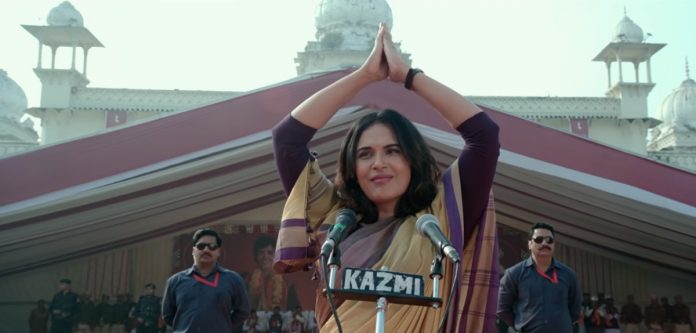
There are very few things that Hindi cinema and Indian streaming platforms appear as obsessed with as biographical films on politicians. It’s easier for them to make scathing films on politics that tend to be a cookie-cutter, ‘sab mile huye hain‘ take on the corruption and incompetence of our political system — it’s like pointing in the general direction of the sky. But it is biopics that are tricky.
From PM Narendra Modi (2019) to Madam Chief Minister (2021), Bollywood’s political biopics have thus far either crashed and burned or simply been mediocre and forgettable, failing to live up to the hype or the controversies that surrounded them. Some films, like Jagmohan Mundhra’s Sonia Gandhi project, never really took off because it didn’t have the blessings of 10 Janpath. And while many Indian filmmakers have attempted to make films on Mohandas Karamchand Gandhi, it is still the Richard Attenborough version that we get to see on TV every 2 October. The documentary on Arvind Kejriwal, An Insignificant Man (2016), was deemed as hagiographic and didn’t make it to any film awards.
Certainly, these failures are a far cry from biopics made on non-political figures, be it the box-office success of Sanju (2018), or MS Dhoni: The Untold Story (2016), or the critical acclaim for Gunjan Saxena: The Kargil Girl (2020), or the web series Scam 1992 (2020).
But that hasn’t yet deterred Hindi cinema production houses, studios, and streaming platforms from continuing to make and market such biopics. After Madam Chief Minister loosely resembling Bahujan Samaj Party leader Mayawati, now it is another chief minister’s turn.
Also read: Madam Chief Minister on Netflix one more example why female politicians in India dress down
A bar set too low
Last week, following the success of Scam 1992, SonyLIV released a teaser for its upcoming series Maharani, created by Subhash Kapoor and starring Huma Qureshi.
Sony shared this premise of the series on YouTube: “A political drama set in Bihar of the ’90s. With its caste arithmetic, traditional satraps and the emerging voice…will an illiterate woman survive this?”
Sound familiar? That’s because this narrative is “loosely based” on Rabri Devi Yadav, Bihar’s first woman chief minister.
Serving from 1997 to 2005, after her husband Lalu Prasad Yadav was embroiled in a corruption scandal and subsequently jailed, Rabri Devi was once described as being “dragged from the kitchen to the Bihar Assembly” in an “initiation by fire”.
Given the circumstances around her rise to power and her background, Rabri Devi’s story is ripe for adapting into a high-quality biopic that, even if not historically accurate, can have a lot to say on issues like caste politics, class consciousness, power, and corruption.
Despite the big names involved in this project, it still would be completely understandable to not have high hopes from Maharani due to the mistakes made in previous biopics.
Also read: Madhuri, Deepika, Gauhar — How everyone in Bollywood is getting the same PR tip
Bollywood’s caste problem
Maharani will be Subhash Kapoor’s second project to be released in 2021, his first was the Richa Chadda-starrer Madam Chief Minister.
Loosely based on the life and career of Mayawati, the film explores the rise of a fictional Dalit politician in Uttar Pradesh named Tara Roopram, played by Chadda.
The weeks before the film’s release were shrouded in controversy, not from any objection from the Central Board of Film Certification (CBFC) or from any political groups, but from audiences themselves.
While Chadda had already raised eyebrows for being a non-Dalit actor playing a Dalit character, what made matters worse was the film’s poster that showed Chadda holding a broom, with the tagline, “Untouchable. Unstoppable.”
Tone-deaf at best, and casteist at worst, the poster predictably became the primary target of controversy for its stereotyping of the Dalit community. As a result, Chadda issued an apology, stating that the poster was an “unintended oversight”.
However, instead of being a fiery political drama, Madam Chief Minister turned out to be a damp squib, according to film critics and audiences alike.
The principal cast received praise from the likes of critics such as Ronak Kotecha and Nandini Ramnath, but Subhash Kapoor’s screenplay was derided for its cliches because it failed to say anything insightful about the caste politics that was marketed as the backbone of the film. Bollywood’s understanding of caste has mostly been lazy and almost Gandhian — and certainly not suited for 21st-century’s questioning Ambedkarites. But filmmakers can’t take on leaders from the Bharatiya Janata Party or Rashtriya Swayamsevak Sangh either. A biopic on Smriti Irani, Uma Bharti, or Pragya Thakur could well be watchable but who would take the risk. Even Kangana Ranaut’s film on Jayalalithaa is being made and released only after her death. Such is the fear.
Picking BSP and Rashtriya Janata Dal leaders is a relatively easier task.
Upon the release of Madam Chief Minister, Chadda responded in detail to the criticisms that had been directed at her throughout the buildup to the release.
“Please don’t expect me to become a scholar or expert on the subject, by acting in one film, especially when it is as vast and complicated as caste and varna,” she said.
— TheRichaChadha (@RichaChadha) January 22, 2021
Indeed, it was unfair for Chadda to be the sole target of criticism from so many, because the other senior members of the production, especially Subhash Kapoor, were also responsible for the mediocre final product.
2019’s glut of Biopic misfires
Any criticism that Madam Chief Minister received pales in comparison to what we got in the first half of 2019, which saw the release of three high-profile biopics: The Accidental Prime Minister (2019), Thackeray (2019), and PM Narendra Modi (2019).
While the first two films received mediocre reviews and were not huge box-office successes, the Vivek Oberoi-starrer PM Narendra Modi was an unmitigated disaster from start to finish.
The trailer itself was branded as pure “propaganda” by various film critics and people within the Hindi film industry. When the film finally released on 24 May 2019, after being delayed from its April release due to the Lok Sabha election that year, the criticism only intensified as Oberoi’s performance, the script, and the direction, were panned in equal measure. The film was like a paean to the prime minister more than anything.
It is hard to counter such viewpoints when the creative integrity of the film was called into question, as its producers were alleged to have links to the Bharatiya Janata Party, although they denied such allegations.
PM Narendra Modi and Madam Chief Minister show the fundamental problem with politician-based biopics in Hindi cinema today. Either the subject is seen as connected to the production in some way and compromises any independent perspective, or the product itself is so far removed from reality that it devolves into an overly dramatised, cliched mess, and comes across as casteist instead of caste-conscious.
It is still very much possible that Rabri Devi-based Maharani can buck this trend and be the next Scam 1992 by providing a unique perspective on Bihar politics, the way Scam did for the workings of the Bombay Stock Exchange. You see, it’s easier to be critical of those not in power anymore. But the jury is still out on the quality of the film.
Views are personal.
Subscribe to our channels on YouTube Telegram
Why news media is in crisis How you can fix it
India needs free, fair, non-hyphenated and questioning journalism even more as it faces multiple crises.
But the news media is in a crisis of its own. There have been brutal layoffs and pay-cuts. The best of journalism is shrinking, yielding to crude prime-time spectacle.
ThePrint has the finest young reporters, columnists and editors working for it. Sustaining journalism of this quality needs smart and thinking people like you to pay for it. Whether you live in India or overseas, you can do it here.
Bafta Film Awards 2021: Nomadland and Promising Young Woman win big
“Every award is meaningful, but this one especially recognised by British people, known as very snobbish people, and they approved me as a good actor so I’m very, very privileged,” she said.
James Cameron says the next ‘Avatar’ movie will have more water
Updated 6:27 PM ET, Thu April 22, 2021
Kitana in ‘Mortal Kombat’ Movie ‘Memba Her?! 4/22/2021
Soto traded punches with an epic cast of actors including Bridgette Wilson as the military fighter, Sonya Blade, Christopher Lambert as the thunderous fight ref, Lord Raiden … and of course Robin Shou as the good guy and love interest, Liu Kang.
Disney Sets Massive Movie Deal With Sony Pictures, Bringing More Marvel to Disney Plus
Disney has set a massive movie licensing pact with Sony Pictures for the U.S. that promises to reunite Spider-Man and other Marvel properties on Disney Plus starting with Sony’s 2022 release slate.
The wide-ranging deal also calls for Sony titles to run across Disney’s array of streaming and linear platforms, making it unprecedented in scope.
More from Variety
The agreement comes on the heels of Sony’s output deal with Netflix for titles in the lucrative post-theatrical release Pay 1 window. The Disney deal covers subsequent TV windows, meaning that the titles will land on Netflix first, about nine months after the start of a film’s theatrical run. Disney is scooping up for multiple platforms the windows previously reserved for ad-supported cable and broadcast airings of movies.
Like the Netflix deal, the Disney pact only covers the U.S. despite the global reach of the streamers.
The complex deal, which is likely to be worth hundreds of millions of dollars to Sony over the term, was wrangled by Chuck Saftler, head of business operations for ABC, Freeform, FX Networks and Acquisitions for Disney Media and Entertainment Distribution, and Keith Le Goy, president of worldwide distribution and networks for Sony Pictures Entertainment. The deal marks another example of the entertainment industry rewiring its business models to adjust to a new era of TV exhibition and distribution.
“This landmark multi-year, platform-agnostic agreement guarantees the team at Disney Media and Entertainment Distribution a tremendous amount of flexibility and breadth of programming possibilities to leverage Sony’s rich slate of award-winning action and family films across our direct-to-consumer services and linear channels,” said Chuck Saftler, head of business operations for ABC, Freeform, FX Networks and Acquisitions for Disney’s Media and Entertainment Distribution. “This is a win for fans, who will benefit from the ability to access the very best content from two of Hollywood’s most prolific studios across a multitude of viewing platforms and experiences.”
Le Goy noted that marketplace conditions are driving big changes to Sony’s long-term movie windowing strategy.
“This groundbreaking agreement reconfirms the unique and enduring value of our movies to film lovers and the platforms and networks that serve them,” said Le Goy. “We are thrilled to team up with Disney on delivering our titles to their viewers and subscribers. This agreement cements a key piece of our film distribution strategy, which is to maximize the value of each of our films, by making them available to consumers across all windows with a wide range of key partners.”
More to come
Best of Variety
Sign up for Variety’s Newsletter. For the latest news, follow us on Facebook, Twitter, and Instagram.
Oscar predictions: Can anything beat ‘Nomadland’?
Ahead of Sunday’s 93rd Academy Awards, Associated Press Film Writers Jake Coyle and Lindsey Bahr share their predictions for a ceremony that is forging on in the midst of the pandemic.
BEST PICTURE
The Nominees: “The Father,” “Judas and the Black Messiah,” “Mank,” “Minari,” “Nomadland,” “Promising Young Woman,” “Sound of Metal,” “The Trial of the Chicago 7.”
COYLE: A contemplative character study made for $5 million and populated by non-professional actors, Chloé Zhao’s “Nomadland” is not your typical Oscar heavyweight. And yet it’s overwhelming the favorite, a roundly acclaimed movie from an exciting auteur that has already ruled at the Golden Globes, the BAFTAs and, most crucially, the producers and directors’ guilds. The weirdness of this unending pandemic awards season adds a drop of uncertainty to everything. But as much as I’d like to see “Sound of Metal,” “Promising Young Woman” or “Minari” sneak in for an upset, “Nomadland” is a near-lock, and an eminently worthy winner. But it’s udder madness that Kelly Reichardt’s lyrical “First Cow” never contended here. And how much better would the season have been if Steve McQueen’s explosive “Small Axe” film anthology (which instead will vie at the Emmys) had somehow been in the mix? Old Oscar traditions are eroding, but not quickly enough.
BAHR: You had to bring up “Small Axe,” didn’t you? I would have liked to see “Never Rarely Sometimes Always” go the distance too, but I guess this year there was only room for one contemplative character study made for under $5 million — and the one about the rural Pennsylvania teens on a bleak road trip wasn’t it. But it would still be “Nomadland’s” year and that’s only cause for celebration.
BEST ACTRESS
The Nominees: Carey Mulligan, “Promising Young Woman”; Frances McDormand, “Nomadland”; Viola Davis, “Ma Rainey’s Black Bottom”; Vanessa Kirby, “Pieces of a Woman”; Andra Day, “The United States vs. Billie Holiday.”
BAHR: The best actress race is perhaps the biggest wild card of the night. Viola Davis won the Screen Actors Guild Award, Andra Day won the Golden Globe and Frances McDormand won the BAFTA. It’s chaos! Day still seems like a long shot and McDormand’s last win still seems fresh enough that it might push voters who would’ve otherwise went for her Fern elsewhere. This year I’m inclined to believe that Davis will walk away with the trophy for her raw portrayal of blues singer Ma Rainey, but I can’t help but think that perhaps Mulligan should win for “Promising Young Woman.” As for who should’ve been a contender, there are so many but two of my favorites include Aubrey Plaza in the criminally underseen “Black Bear” and Han Ye-ri, who gave my favorite performance in “Minari” as the long-suffering, steadfast mother Monica.
COYLE: Chaos indeed! I think this is a toss up between Davis and Mulligan, with the edge going to Davis after her SAG win. Davis has won before, for her titanic performance in “Fences.” But that came (somewhat debatably) as supporting actress. And there is justice in Davis — very possibly the greatest actor alive — taking the top award, especially when you factor in the category’s history. Just once before has a Black woman (Halle Berry in 2002 for “Monster’s Ball”) won best actress. Still, the race would have been all the more interesting if it hadn’t overlooked two of the year’s best performances: Radha Blank (“The Forty-Year-Old Version”) and Carrie Coon (“The Nest”).
BEST ACTOR
The nominees: Riz Ahmed, “Sound of Metal”; Chadwick Boseman, “Ma Rainey’s Black Bottom”; Anthony Hopkins, “The Father”; Gary Oldman, “Mank”; Steven Yeun, “Minari.”
COYLE: After some ho-hum years, the best actor category is really strong this time around. I loved all of these performances. Still, this award has — rightly — belonged to Boseman throughout an award season that has doubled as tribute and wake for the late “Ma Rainey” actor. His greatest performance was his last. Some see a chance of Hopkins (who won at the BAFTAs) pulling off an upset for his devastating portrait of a man stricken with dementia. But I don’t. Expect Boseman to become the third actor to win an Oscar posthumously, following Heath Ledger (“The Dark Knight”) and Peter Finch (“Network”). I wouldn’t swap any of these nominees out, but Sacha Baron Cohen’s high-wire guerilla performance in “Borat Subsequent Moviefilm” is in a category by itself.
BAHR: Could you imagine if Boseman didn’t win? The grit and commitment in all these performances are worth singing about, though. There were so many others that could have fit in here too, like Delroy Lindo for “Da 5 Bloods,” Mads Mikkelsen for “Another Round” or, while we’re bending categories, even Hugh Jackman for “Bad Education.”
BEST SUPPORTING ACTRESS
The Nominees: Maria Bakalova, “Borat Subsequent Moviefilm”; Glenn Close, “Hillbilly Elegy”; Olivia Colman, “The Father”; Amanda Seyfried, “Mank”; Yuh-Jung Youn, “Minari.”
BAHR: In a category where Amanda Seyfried started out seeming like a lock, it certainly seems like the tide has shifted toward Yuh-Jung Youn for her performance as the unconventional grandmother Soonja in “Minari.” It’s a difficult task to be both the comic relief and the heart of a film, but she pulls it off effortlessly which is why she probably will and should win (although Maria Bakalova could sweep in with a possible upset). Both women elevated their respective films and deserve all the attention they’re getting. And Seyfried will absolutely get her Oscar somewhere down the line. I would have also liked to see Talia Ryder advance to this stage for “Never Rarely Sometimes Always.”
COYLE: This has been a shape-shifting race but Youn is definitely in the lead. I’d like to see more love all around for “Minari,” but it’s kind of fitting that Lee Isaac Chung’s film be celebrated through the minari-growing matriarch of the movie. Two other names that I wish were here, both for disarmingly funny, natural performances: Cristin Milioti, MVP of “Palm Springs,” and Dylan Gelula of the indie college romance “S—-house.
BEST SUPPORTING ACTOR
The Nominees: Sacha Baron Cohen, “The Trial of the Chicago 7”; Daniel Kaluuya, “Judas and the Black Messiah”; Leslie Odom Jr., “One Night in Miami”; Paul Raci, “Sound of Metal”; LaKeith Stanfield, “Judas and the Black Messiah.”
COYLE: This seems certain to go to Daniel Kaluuya. For his mighty performance as Black Panther leader Fred Hampton, Kaluuya (a nominee for “Get Out”) has racked up wins at the SAGs, Globes and BAFTAs. A little wrinkle came when Stanfield was unexpectedly nominated here despite being campaigned for as a leading actor — and that could split some of the vote between the two “Judas and the Black Messiah” stars. Stanfield, for me, is the best actor in this bunch. But this is Kaluuya’s year. Stanfield will be back, as will some of the performers who missed out, like Kingsley Ben-Adir, terrific as Malcolm X in “One Night in Miami.”
BAHR: Oh, Kingsley Ben-Adir! If I’m being perfectly honest, I would have been happy if the supporting slate was simply the cast of “One Night in Miami,” plus Kaluuya. I do think Paul Raci has a shot as the Cinderella story of awards season, but it also feels like it’s time to get Kaluuya up on that stage.
DIRECTOR
The Nominees: Chloé Zhao, “Nomadland”; Lee Isaac Chung, “Minari”; David Fincher, “Mank”; Emerald Fennell, “Promising Young Woman”; Thomas Vinterberg, “Another Round.”
BAHR: The directing category is Chloé Zhao’s to lose and I think she both will win and should win for the transcendent “Nomadland,” even if it’s become a forgone conclusion at this point. In an awards season as endless as this one it’s hard not to be skeptical of any film and filmmaker that has thus far swept most awards. But that this tiny movie has had such an ascent is something of a miracle and well deserved. The bonus is that (hopefully) we’ll finally have more than one best director-winner who is a woman. That said, it would have been nice had Miranda July (“Kajillionaire”) been among the contenders as well.
COYLE: I like imaging the Dynes of “Kajillionaire” getting all dressed up and taking multiple bus transfers to the Oscars. But Zhao will win, and it should be a great moment. Not just because she’ll be only the second woman to ever win the award but because she’s an exceptional — and exceptionally humble — filmmaker with a lot of movies ahead of her. More often this award goes to someone who’s been around a while. Pretty soon, we’ll be wondering how it’s possible that David Fincher — maybe the very best Hollywood director of his era — hasn’t ever won.
DOCUMENTARY
The Nominees: “Collective,” “Crip Camp,” “The Mole Agent,” “My Octopus Teacher,” “Time”
COYLE: With increasing frequency, this is the best Oscar category, and it’s the one with the most snubs. Some of the very best movies of the year — including “Dick Johnson Is Dead” and “The Truffle Hunters” — didn’t make it through the crowded shortlist stage. And still the films that did get nominated are sensational. Probably the only one that I wouldn’t pick — “My Octopus Teacher” — is going to win. Little noticed at its debut last fall, the film’s audience swelled on Netflix, turning it into an out-of-the-blue Academy Awards contender. I would cheer loudest, though, if “Crip Camp” were to win. It would be a triumph for a warm-hearted film, and for the disability community.
BAHR: Even the shortlist itself was brutal, leaving out “The Dissident” and “Acasa, My Home” but the documentary category has long left out some of the medium’s best work (hi “Hoop Dreams”). It is odd that a late-game Netflix sensation like “My Octopus Teacher” somehow became the frontrunner, but I’m trying not to judge what people connect to this year even if I would prefer an urgent piece like “Collective” take the prize.
INTERNATIONAL FEATURE
The Nominees: “Quo Vadis, Aida?”, Bosnia and Herzegovina; “Another Round,” Denmark; “Better Days,” Hong Kong; “Collective,” Romania; “The Man Who Sold His Skin,” Tunisia.
BAHR: This category seems to be a race between Denmark’s “Another Round” and Romania’s “Collective,” both of which were nominated in other prominent categories (director and documentary, respectively). I think this one will veer towards “Another Round” simply because its directing nod gave it a brighter spotlight and a bigger audience and voters have a chance to honor “Collective” in another category. Another film that would have been a worthy contender here is Italy’s “Martin Eden.”
COYLE: “Another Round” is a lock. But “Quo Vadis, Aida?” is really good, too. Jasmila Žbanić dramatizes the lead-up to the 1995 massacre of Bosnian Muslim men and boys by the Bosnian Serb army in Srebrenica. Following a fictional translator (Jasna Đuričić) working for the United Nations, the film devastatingly probes a human rights tragedy.
ANIMATED FEATURE
The Nominees: “Onward,” “Over the Moon,” “A Shaun the Sheep Movie: Farmageddon,” “Soul,” “Wolfwalkers.”
COYLE: Pixar, like always, seems to have this in the bag. The studio’s “Soul” is the clear favorite. There’s so much that’s wondrous in Pete Docter’s film that its Oscar victory is hardly something to lament. But you couldn’t find a better underdog than the plucky Irish animation studio Cartoon Saloon, which last year released their most enchanting and ambitious film yet. Tomm Moore and Ross Stewart’s “Wolfwalkers,” the culmination of a triptych of Irish folklore, is impossibly stunning. Every hand-drawn frame is a work of art. It’s the Kilkenny-based studio’s fifth Oscar nomination, and it’s time they won one.
BAHR: Disney and Pixar are so hard to beat. Since 2010, they’ve won eight times and the other two were not exactly indie underdogs (“Rango” and “Spider-Verse”). I’m rooting for “Wolfwalkers” but I’m betting on “Soul.”