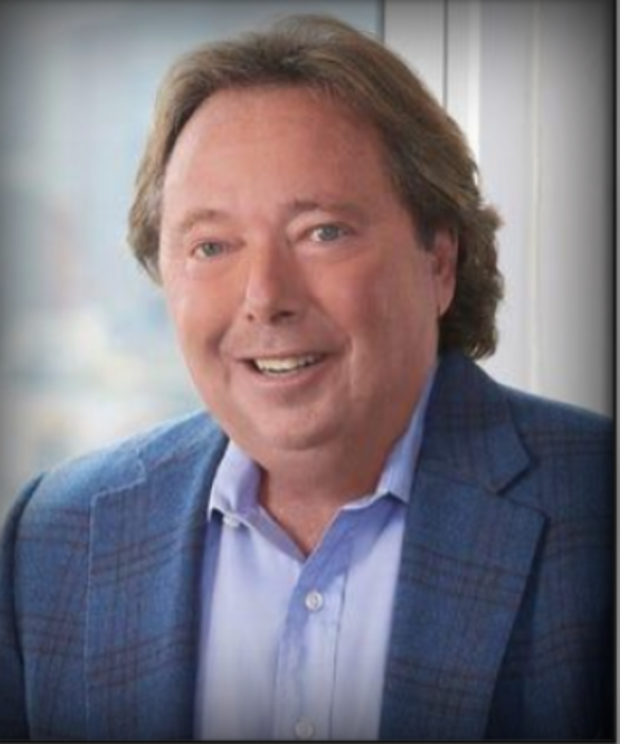
In this episode of Facing Forward, Margaret Brennan talks with Rich Gelfond, IMAX CEO on how Hollywood is betting big on pent-up demand after a challenging year with COVID restrictions. Can the industry convince enough people that it’s safe to return, despite the ease of streaming?
Highlights
- On when moviegoers can feel safe again: The movie industry has to go out of their way to- it involves somewhat consumer service. So I think you have to say when people come, thank you very much for coming. Welcome back. I think the facilities have to be cleaner than is safe. They have to evoke cleanliness when you come in. And I think the staff has to continue to handle egress and exit in certain ways that make people feel safe. So I really think it’s all three.
- On the future of streaming: “The question is, will I take eight hours when I can go to a restaurant, go to a concert, go to a ballgame, because I live in New York, go to theater, go to the symphony. Am I going to commit eight hours to doing that? I don’t think so. I think I’m going to do some of the other things that I used to do, and especially in the early stages I think I’m going to relish doing those things. So, yes, streaming is here to stay, but I think the golden age of streaming is going to look a lot different when the world opens up.”
Download, rate and subscribe here: Apple Podcasts, Spotify and Stitcher
“Facing Forward”: Rich Gelfond transcript
Producers: Richard Escobedo, Anne Hsu, Kelsey Micklas
Tom Williams
MARGARET BRENNAN: Rich, welcome to the podcast.
IMAX CEO RICH GELFOND: I’m happy to be here, MARGARET.
MARGARET BRENNAN: So it is wonderfully warm right now. We’re headed into the summer season. Vaccines are becoming available. Do you actually think we’ll see a summer Blockbuster movie season?
GELFOND: Yeah, I’m pretty confident about that, MARGARET. I think that if you look at other parts of the world where it’s been safe to go and there’s been a- a time period where people have gotten used to it, there are Blockbusters. So I’m pretty sure there’s going to be a Blockbuster season in North America.
MARGARET BRENNAN: Well, I mean, some of the places you’re probably talking about, like Australia, China, Japan, they’ve had their theaters open, but they’ve also been much more stringent in cracking down on personal behavior to- to help control the pandemic. That must make a huge difference for you here in the US, where things really vary state by state, town by town.
GELFOND: Yeah, but you have to remember that the U.S. isn’t really open. I mean, a number of theaters are open, but they’re open on weekends. There haven’t been Blockbuster film releases pretty much for a year, with a few slight exceptions. So I think it’s more a question of do people feel safe going and are they comfortable? And I do think that’s pretty much around the corner. And we’ve started to see some signs of life, little green shoots emerging. But I’m pretty sure between the vaccines and the regulation that we’re going to make it.
MARGARET BRENNAN: Going to make it, meaning?
GELFOND: Meaning to the summer Blockbuster season as you asked.
MARGARET BRENNAN: Yeah. So I mean, New York City, they have theaters open at partial capacity and in Los Angeles, huge market, they’re reopening. How- how open exactly are theaters in America?
GELFOND: Well, something like 60, 70% of the theaters have been, quote unquote, open, but in fact, there have been very limited hours, in some cases weekends only, in some cases just a few shows a week. And I think the exhibitors did that in a way to take care of their infrastructure, make sure it’s clean, not lose their employees, get training, but it- it- it’s really not open in a true sense of it. And even though the box office has been increasing, it’s still been a fraction of what it was before the pandemic.
MARGARET BRENNAN: I mean, how do you get people to feel safe? Is it all about the vaccine?
GELFOND: I- I- I don’t think it’s all about the vaccine. I think it’s partly about the vaccine. I think it’s partly about the reality of being safe. And then finally, I think it’s about the perception of safety. So, yes, the vaccine is a big deal. As you know, there’s been a lot more doses. Also, you have to remember that a lot of the moviegoing population in North America are younger people and they tend to be objectively safer than other people in terms of the risks, and they tend to feel a little safer. So that’s the first part of it. The second part of it is the safety protocols. And in fact, the industry has installed something called CinemaSafe, which is a series of steps, whether it has to do with cleaning or mask wearing or concessions, all sorts of things to make people objectively safer. And then the third one is the perception of safety. And that is, I think, as an industry, the- the movie industry has to go out of their way to- it involves somewhat consumer service. So I think you have to say when people come, thank you very much for coming. Welcome back. I think the facilities have to be cleaner than is safe. They have to evoke cleanliness when you come in. And I think the staff has to continue to handle egress and exit in certain ways that make people feel safe. So I really think it’s all three.
MARGARET BRENNAN: So it’s really- there’s a lot being put on the theater owners’ shoulders, essentially, in order to help protect your brand and to help protect the films as well. Right? I mean, AMC considered bankruptcy. You’ve seen Alamo Drafthouse filed for bankruptcy. I mean, this impacts your brand too.
GELFOND: Well, IMAX was in a very different position than a lot of the companies you mentioned, because we’re global. And because we’re global, the bad news is we entered the pandemic earlier than almost anyone because, as you know, China went in months before the rest of the world. On the other hand, though, we’ve gotten to learn from other territories and we’ve seen what those protocols are. So I don’t believe North America will open like a switch. No one else did. And if you use China as an example, first they ran some library content, then they ran some smaller movies. They established going back as safe. There was a word of mouth that people enjoyed it and felt safe. And then ultimately the Blockbusters came back and they did extremely strong business. As a matter of fact, our December this year in China was almost 30% ahead of last December, and Chinese New Year was one third better for the industry than it was last- in 2019 for Chinese New Year. So I think you- you can’t expect, you know, when the open sign comes in, people are going to flock. And I think you have to roll it out in a measured way. And I really believe, like in the rest of the world, people will accept that and- and come out.
MARGARET BRENNAN: So here in the US, what’s in the pipeline. Like, I can’t imagine there is going to be a film about a virus or an outbreak any time soon, like topically, is this experience driving a shift in production?
GELFOND: MARGARET, It sounds like you could have another career in running a movie studio, but I completely agree with you. I think there’s going to have to be some sensitivity in terms of what we’ve just been through. But because the theatres were closed for such a long period of time, there’s a big Blockbuster- there’s a big backlog of Blockbuster films. So you have a lineup for the rest of the year that includes “Black Widow” from Disney, the sequel to “Top Gun,” “Maverick” with Tom Cruise. You have a “Godzilla vs. Kong” from Warner Brothers. You have “Dune” from Warner Brothers. You have a new Bond sequel. You have “Mission Impossible.” You have a Spider-Man. So you’re taking sort of a- a year and a half’s worth of films and condensing them. And that’s one reason I feel pretty good about this year is I think it’s kind of an embarrassment of riches in terms of the film slate that’s available.
MARGARET BRENNAN: I mean, it was tough, though, getting to this point. IMAX was down in revenue 65% from the year before. You had to furlough employees. Are you back to hiring again?
GELFOND: Well, we’re- we’re in the process of un-furloughing people. We pretty much didn’t fire anyone, and when the pandemic started, we decided not to fire people, but instead go to a four-day workweek and the industry opened in fits and starts. So when it reopened in September, we thought we were out of the woods. But unfortunately, as the number of cases increased, that’s when we had to furlough about a third of our company. And we brought back probably about 20% of the people on furlough now. And as the industry opens over the next few months, we’re planning on bringing back virtually everyone else.
MARGARET BRENNAN: So when do you think that we will see in the US the- the surge that you have seen in China and in Asia?
GELFOND: My best guess would be in the- in the July-August time period. “Top Gun” sequel, “Maverick” with Tom Cruise, I haven’t seen it. But people I know have seen it think extremely highly of it. They think it may even be better than the first one. It’s a typical kind of Blockbuster movie in that it- it- it spans all the quadrants. It’s a family movie. It’s for kids. It’s for older people. So that would be the time when I think things are really going to open up in a very material way.
MARGARET BRENNAN: When will we get to pre-pandemic levels?
GELFOND: Again, you know that- that’s a harder one to assess–
MARGARET BRENNAN: Yeah.
GELFOND: –but as I mentioned, in other markets, it’s beyond pre-pandemic levels. And I think, you know, some of the reasons for that are people are tired of sitting in their living rooms watching streaming content, whether it’s shows or content. And, you know, I’ve enjoyed a lot of the streaming as much as anyone else, but I just think people want to get away from their parents. Parents want to get away from their kids. People want to be with their friends. I think once people get a taste of it- and one point I should make, which is quite important, is that there are things that have been open for a while that are less safe than movie theaters. In a movie theater, you wear a mask and you face the back of someone’s head. And also the- the experience itself is passive. There’s not someone on stage singing. There’s not people screaming at each other in the theater. It’s not like a restaurant where you’re talking to your waiter or your mask is off for a long time because you’re eating. A movie theater is actually, you know, one of the more safe out-of-home entertainment experiences.
MARGARET BRENNAN: Okay, we’re going to take a real quick break here. But on the other side of it, I’m going to continue talking about what to expect in the new normal.
*COMMERCIAL BREAK*
MARGARET BRENNAN: So for myself, I- I haven’t been to a movie theater in ages, but I’m more risk-averse. When you look around the US and you see that the health restrictions are still in place, like putting a hard stop on 25% capacity in New York, for example. Doesn’t that put a lid on what is possible? I mean, do you need to get to herd immunity before you can say, hey, we’re roaring?
GELFOND: No, I don’t think so. I think, you know, in the way people say church was built for Easter Sunday, I think the theaters were built for huge Blockbusters, you know, opening weekend. And I think if we get to 50% capacity, you’ll be able to do very good numbers at the theaters. Again, it might cut short a little bit in opening weekend where it wouldn’t be as big as- as it theoretically could be. But at 50%, I think it can do- the industry can do extremely well. And you look at New York as an example. New York opened its restaurants at 25% and then in the last few days just increased it to 50%. So I think that progression, again, is going to happen faster than people think. So I do think it’s going to come back quickly. The exhibition industry has a unique challenge because it’s not only the jurisdictions opening the theater, but it’s the studios releasing the Blockbuster films. And the studios have been reluctant to do that in the pandemic, not only in the U.S., but globally. And one of the reasons they’ve been reluctant is you really need New York and L.A. to create an event out of a film. So you could theoretically open a film in- in- in China or the Middle East or other places it’s safe. But you really need the red carpet. You need the premier, you need the talk shows, you need the critics. And New York and L.A. have had a disproportionate share in influencing the studios not to release their films.
MARGARET BRENNAN: But the- the fact you were just saying, you know, Hollywood and Los Angeles as major cities, they were- L.A. was so hard hit by COVID. Why hasn’t that driven a shift? You know, why don’t- why doesn’t the movie production and all of what you’re talking about just go elsewhere?
GELFOND: It’s a very hard thing to just pick up and move. I mean, production is much more of a global business than people think. A lot of television is shot in Georgia. A lot of movie production is done outside London at a number of studios. But in the L.A. area, you have the whole infrastructure. So whether it’s the set designers or the lighting people or the makeup people or the- the hairstylists or whether it’s even the business people and the screenwriters and the production people, you can’t move those things overnight. But I- I do think the fact that L.A. was hit so hard has in a way exaggerated the global concern. So some of these other countries probably could have released Hollywood Blockbusters a long time ago. But when executives are looking out that window and seeing such a tragic situation and it being so sad in their neighborhoods, it’s very difficult to think the rest of the world will be different. But as L.A.’s positivity rate has been driven down recently and production is opening up, I think that mindset also will change.
MARGARET BRENNAN: So do you think that some of the adaptations are here to stay? I mean, we’ve seen this huge acceleration in moving to streaming, which you mentioned, and then you have, you know, Disney, Warner Bros. doing simultaneous releases into theaters and on demand. Do you think that’s a trend that remains here to stay?
GELFOND: I think for some smaller movies that may be here to stay, you know, more niche movies. With- it’s hard to recoup marketing costs on a small movie. But I think for Blockbuster movies like the kind IMAX does, that is- that is not here to stay. I mean, you have to remember that people have literally, not figuratively, been locked in their homes and in their living rooms with no alternative. So it’s hardly surprising that they’ve decided to watch things that are streamed in their living rooms. I mean, people have kitchens, but they’re dying to go out to restaurants. People can watch sports on TV, but they love going to live sports. And I don’t think a hundred years of moviegoing and social gathering and being a cultural icon is going to be undone by a new distribution technology that allows you to drive things in your living room. I mean, I don’t- I don’t know about you, MARGARET, but, you know, and I’m not a millennial. I’m older, so I have a different viewpoint than many people. But I can’t wait to get off my couch and do all of those things. And movies are one of the first of them.
MARGARET BRENNAN: But then at the same time, we’ve gotten so used to doing things when we want to do them, where we want to do them and on our own terms, so that- that would be the argument for streaming still having a foothold. But you’re saying there are still just certain things that have to be in-person experience?
GELFOND: Yeah. And I mean, I think streaming will have a foothold. But I asked myself a lot of the streaming, which I love- so we really enjoyed “Bridgerton.” It’s not the kind of thing I would typically watch. But the question is, will I take eight hours when I can go to a restaurant, go to a concert, go to a ballgame, because I live in New York, go to theater, go to the symphony. Am I going to commit eight hours to doing that?
MARGARET BRENNAN: Right.
GELFOND: I don’t think so. I think I’m going to do some of the other things that I used to do, and especially in the early stages I think I’m going to relish doing those things. So, yes, streaming is here to stay, but I think the golden age of streaming is going to look a lot different when the world opens up.
MARGARET BRENNAN: So you’re probably not allowed to answer this question, but what movie are you excited to see in an IMAX this year?
GELFOND: Oh, well, you know, I can definitely answer the question. There are five movies that have IMAX DNA in them and I like to list all of them. They include Bond and- and Black Widow and they include Maverick. But I have to say, because it’s one of the earliest ones, I’m incredibly excited to see Maverick. And I’m supposed to get a sneak peek before it opens and I can’t wait. And the reason I say that is because of the visual appeal, you know, the fight sequences, the scope and scale and the sound. I think it’s going to sort of say to the world, we’re back.
MARGARET BRENNAN: Rich Gelfond, thank you so much for your time today. We’re going to take a quick break.
GELFOND: Thank you.
 Get our daily Pasadena newspaper in your email box. Free.