logo
Already a member? Login here

Movie Rental´s archives ↓

Universal’s New Streaming Exclusivity Deal Will Affect Super Mario Movie

Minions and MarioMinions and Mario

Universal Pictures has just struck a deal with streaming service Peacock, which will make its new movies Peacock exclusives in the US for the first and last four months of their 18-month streaming window, after it has finished its cinema showings.

This deal, which comes into effect in 2022, will affect the upcoming Minions movie, a Puss In Boots sequel, the next Jurassic Park movie, and the Super Mario movie, which is currently underway at Illumination.

Both Universal Pictures and Peacock are part of NBCUniversal, which is owned by Comcast, so if you’re wondering who the heck Peacock is — it’s NBC’s rival to Netflix and Disney+.

Peacock launched in early 2020

US viewers without Peacock will be able to watch the Super Mario either in the cinema, or during the ten-month period in-between the Peacock exclusive months.

Around this time last year, we heard that the Super Mario movie was “making good progress“, and in May, we reported that Chris Meledandri, the founder of Illumination, would be working more closely with Nintendo as a “non-executive outside director“.

However, a lot of information about the Super Mario movie is still unclear. Charles Martinet, the voice of Mario, was reportedly not cast as Mario (or even approached for the role).

As to whether we’ll be seeing more Nintendo movies in future — it’s a possibility, as Nintendo president Shuntaro Furukawa said they were “looking into” representing other franchises.

New metric shows COVID cut average lifespan by nearly a decade in parts of U.S.

At its peak, COVID-19 drastically reduced the average human lifespan — by as much as nine years in one U.S. state — according to a new longevity metric developed at UCLA.

Sociology professor Patrick Heuveline devised the metric, called the mean unfulfilled lifespan, to assess the impact of temporary “shocks” like the novel coronavirus on average length of life. To date, the pandemic has claimed the lives of more than 4.2 million people worldwide.    

The tool allows demographers to conduct fine-grained analyses in specific regions over various periods of time, offering a new and more dynamic way of gauging how different areas of the country and the world experience decreases in lifespans over the course of the pandemic, Heuveline said.

Heuveline’s analysis, published online in the open-access journal PLOS One, suggests, for example, that as COVID-19 peaked in New Jersey in mid-April 2020, the average lifespan in the state plummeted by almost nine years, the most dramatic example from the U.S.

Demographers typically calculate lifespan using a metric known as period life expectancy at birth, or PLEB, which is the average number of years a person born at a certain time would be expected to live if future death rates remained at present levels. When researchers factor in the impacts of a given cause of death — a steady increase in heart attacks or car accidents, for instance — they see how these factors can reduce PLEB.

However, calculating changes to life expectancy in this way cannot adequately capture the effect of large, temporary shocks like natural disasters or the COVID-19 pandemic, in which mortality conditions are rapidly shifting, Heuveline said.

To more clearly illustrate the impact of such phenomena, Heuveline’s mean unfulfilled lifespan measures the difference between the average age at death of individuals who died within a given time frame and the average age these people would have been expected to reach had there not been a temporary shock.

“As did a few other demographers, I initially tried to convey the mortality impact of COVID-19 by assessing how much life expectancies would decline during the pandemic,” he said. “When mortality conditions are continuously changing, however, life expectancies are hard to interpret, and I wanted to provide a more intuitive indicator of that mortality impact.” 

► Read about Patrick Heuveline’s previous research on COVID-19 and life expectancy.

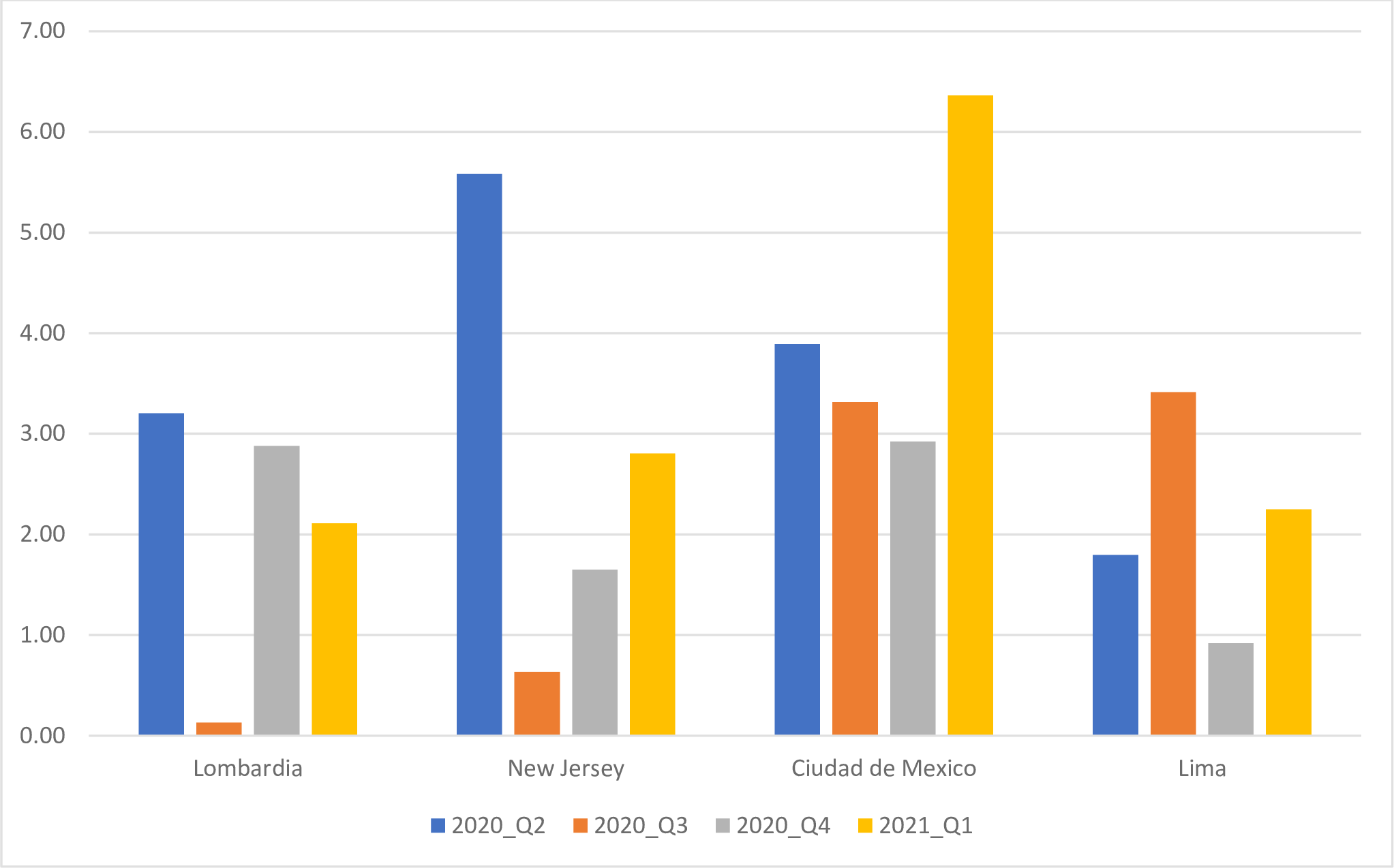
Heuveline demonstrated the mean unfulfilled lifespan by applying it to COVID-19 mortality data from regions with similarly sized populations, including New Jersey, Mexico City, Lombardy in Italy, and Lima, Peru. He compared decreases in life expectancy by calendar quarter (from March 31, 2020 to March 31, 2021) and using rolling seven-day windows (from March 15 to June 15, 2020). The latter analysis suggested that the mean unfulfilled lifespan peaked at 8.91 years in New Jersey, 6.24 years in in Mexico City, 6.43 years in Lombardy and 2.67 in Lima.

In addition, his study found that during the month of April 2020, the mean unfulfilled lifespan may have reached 12.7 years in the Guayas province of Ecuador.

Graph illustrating effect of COVID-19 on death rates in four regions

Heuveline noted that uncertainties in calculating mean unfulfilled lifespan may arise from potential differences between deaths related to temporary shocks like the pandemic and actual or excess deaths — differences that, when accounted for, may push the peak unfulfilled lifespan figures seen in the study even higher. His analysis demonstrates how these issues can be factored into calculations.

Heuveline said he hopes the new metric will eventually be applied broadly as researchers seek to better understand the impact of epidemics, natural disasters and even violence on life expectancy.

Jane Withers, child star of Hollywood’s Golden Age, dies aged 95

Updated 7:14 AM ET, Mon August 9, 2021

‘Aelay’ film review: A well-crafted rural film on a problematic father son relationship

We’ve all been talking about Georgekutty of Drishyam 2 in the last week or so. But this week, Tamil cinema has given us a Muthukutty to talk abut.

Aelay opens with a family that has just seen the death of Muthukutty (Samuthirakani). Parthi (Manikandan) arrives there sans fanfare, emotion. He looks at the dead body of his father rather impassively, and walks around the household with no signs of being shaken up.

In some time, he’s hungry and heads out to eat a plate of parotta, even as the wails and cries inside his household continue to fill the air.

Why is Parthi devoid of any emotion, and who is Muthukutty? Aelay tackles this troublesome father-son relationship with ample twists and turns, especially towards the second half.

Tamil cinema has looked at such troublesome relationships before; Em Magan, starring Nasser and Bharath, comes to mind immediately. While that film made the father plain evil with a change of heart in the end, Aelay gives multiple shades to the father: he’s cunning, he’s miserly and is fond of his drink and gambling….but he’s also affectionate and considerate when the situation arises.

Muthukutty sells kuchi ice (icecream) for a living, and given that he’s doing so in dusty rural Tamil Nadu, he ought to have become successful. But he struggles to make ends meet – he even once exchanges a costlier icecream (the ones that used to come in a ball) for a paltry cone that he’s selling. All these shady dealings do not go down too well with his son, Parthi.

Aelay’s first half is told majorly in flashbacks; the sluggish nature of the scenes do test your patience a bit. A romance stretches it even further but once things get interesting post the interval block, Aelay metamorphises from being an old-fashioned rural drama to a quirkier tale that is peppered with humour and intrigue.

Director Halitha Shameem ensured that Tamil cinema fans ended 2019 on a great note, with her colourful Sillu Karupatti earning much acclaim and setting a trend with anthologies that picked up during the pandemic and continues till date. Muthukutty is written well, getting more shades as the film progresses, and that’s no surprise as he is the protagonist. But to Halitha’s credit, even the other major characters — Parthi, Nachiya (Madhumathi) — sustain interest thanks to their layered performances. Even a supposedly insignificant dog gets a rather interesting treatment in the Aelay universe.

The cinematography (by Theni Eswar) helps in setting the tone for all this; a crucial sequence featuring a coconut tree gets captured by some great camerawork. Kaber Vasuki and Aruldev’s music add flavour to the rustic locations, but it’s the characters and their performances that win you over. Muthukutty’s ice vandi will surely keep you cool this summer.

Aelay will be premiered on Star Vijay on Feb 28 (Sunday) at 3 pm

Biden keeps out Democrats with RSS links

Sandeep Dikshit

Tribune News Service

New Delhi, January 21

As strategists parse the nearly 20 Indian-Americans appointed in the Biden administration, what is noteworthy are those who didn’t make it.

An Obama administration staffer Sonal Shah as well as Amit Jani, who worked on the Biden campaign team have so far been excluded, allegedly due their RSS/BJP links which has been brought into the limelight by over a dozen Indian-American organisations.

Editorial The Biden-Kamala era: India needs to sidestep the eddies

Biden’s team has people like senior diplomat Uzra Zeya who had played a role in the Devyani Khobargade case or Samira Fazili who had joined protest rallies in the US against the CAA, NRC and the Kashmir lockdown. Those with RSS/BJP links have not found a place while secular Indian-American organisations have maintained the pressure on the Biden-Harris Transition Team to keep such individuals on the sidelines, said sources.

The Democrats may have been more circumspect over accommodating pro-BJP/RSS elements in the government following renewed activism by organisations opposed to the Hindutva project and also after witnessing the fate of such candidates, added the sources.

Also read: Facebook’s oversight board to decide on Trump’s ban

Congressional candidate Sri Preston Kulkarni lost the elections after strident opposition from Indian-American organisations and former US Congressperson Tulsi Gabbard also lost political ground because of this reason.

Sonal Shah has served on Biden’s Unity Task Force but her father was the President of Overseas Friends of BJP-USA and is the founder of RSS-run Ekal Vidyalaya for which she has raised friends.

Jani’s may have been the case of lax vetting. Named Biden campaign’s Muslim Outreach Coordinator, he was re-appointed as National Asian American and Pacific Islander Director after it was pointed out that his family has ties with PM Modi and other BJP leaders.

Also read: Biden sends immigration Bill to Congress: Thousands of Indian IT professionals to benefit

In order to ensure that the Biden administration does not backtrack on excluding those with RSS/BJP links, 19 Indian-American organisations have written to Biden pointing out that many South Asian-Americans individuals with ties to far-right Hindu organisations in India are affiliated with the Democratic Party.

Greece wildfires: Evia island residents forced to evacuate

On Evia, a large island to the north and east of Athens, two fire fronts have destroyed thousands of hectares of land, along with a number of houses and businesses.

Tom Hanks says movies and TV shows must ‘portray the burden of racism’

Updated 10:58 AM ET, Sat June 5, 2021

The Super Mario movie will be a Peacock exclusive in the US after it leaves cinemas

The upcoming Super Mario animated movie will be available exclusively on Peacock in the US once it leaves cinemas.

A new deal struck between Universal and Peacock will ensure that all Universal, DreamWorks and Illumination films will come to Peacock no more than 4 months after their theatrical debuts, Reuters reports.

These will include such planned 2022 movies as Jurassic World: Dominion, a new movie from Get Out filmmaker Jordan Peele and new entries in the Minions and Puss in Boots series.

However, it will also include the Super Mario movie, which is currently in production at Illumination.

The Super Mario movie will be a Peacock exclusive in the US after it leaves cinemas
Both Peacock and Universal Pictures are part of NBCUniversal, which is owned by Comcast

The deal refers to the ‘pay-one’ window, which is the period of time after a film leaves cinemas and is then added to streaming platforms or TV channels.

The pay-one window is usually 18 months long but the new deal will see it split into three segments of 4, 10 and 4 months.

Peacock will get the movies exclusively for the first 4 months, after which it will be offered to other streaming services like Netflix or HBO Max for 10 months. Then Peacock will get them exclusively again for the final 4 months.

Nintendo president Shuntaro Furukawa said in January 2020 that development of the Super Mario animated film was “moving along for an anticipated theatrical release around 2022”.

The Super Mario movie will be a Peacock exclusive in the US after it leaves cinemas
Chris Meledandri has been appointed an outside director at Nintendo

In May 2020 a source close to Illumination then told Deadline that progress on the movie was continuing smoothly despite the COVID-19 pandemic, because remote working had already been an established practice at the studio.

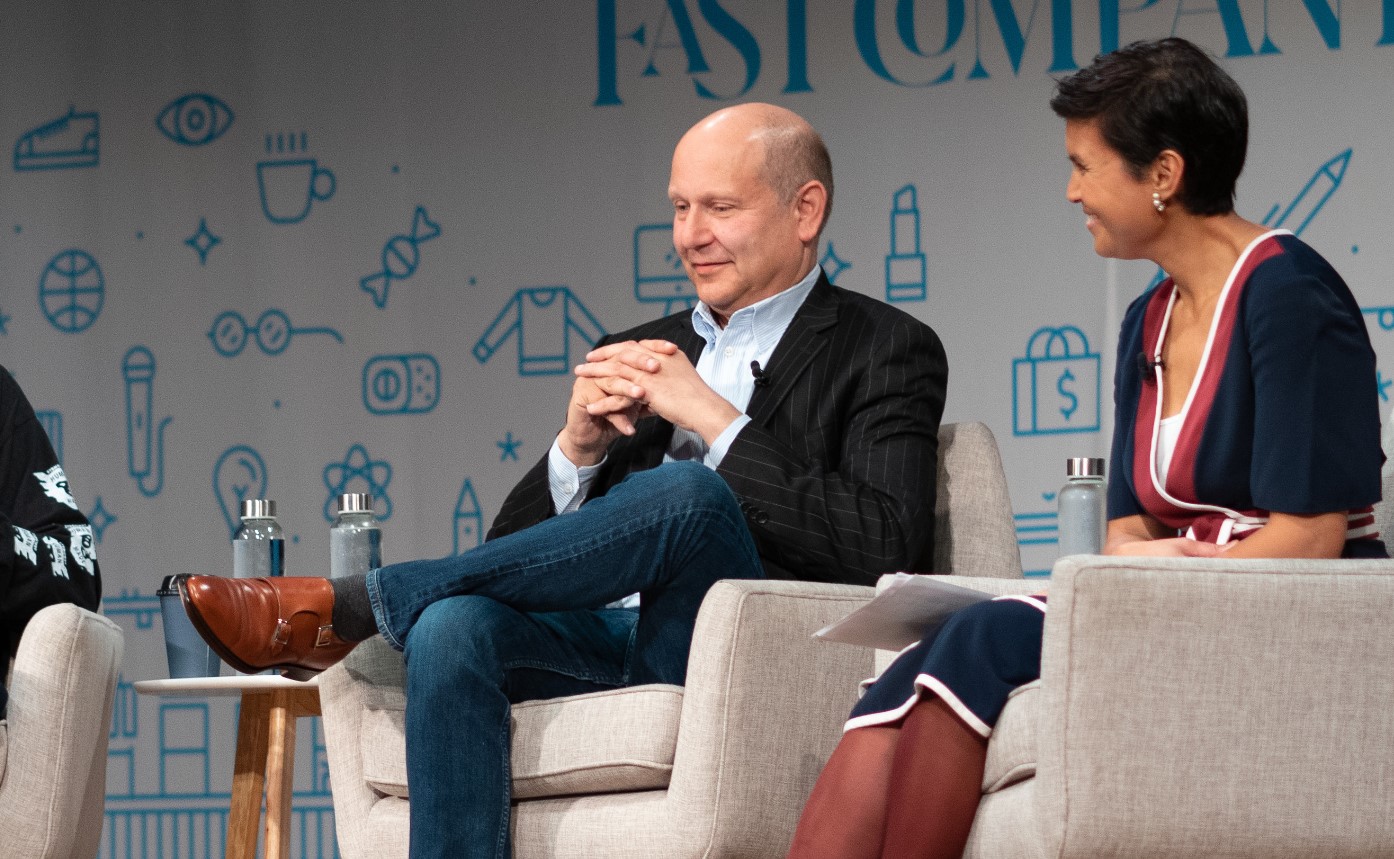
Chris Meledandri, the American film producer and CEO of Illumination, was nominated as a new outside director of Nintendo in May. Meledandri is currently producing the Super Mario movie alongside Nintendo’s Shigeru Miyamoto.

Nintendo president Shuntaro Furukawa recently indicated that the company is exploring the potential of creating more animation content featuring its other game series, and Meledandri’s appointment could suggest a future relationship with the Despicable Me creator.

Hollywood Seeks to Be Film King Again With Expanded Tax Breaks

Frustrated at losing movie and television production to other states with rich tax breaks, California is looking to expand its own incentives to keep its flagship industry at home.

Lawmakers are considering four bills—and more could be coming—that push against the limits of California’s 10-year-old film and television tax credit program and stay competitive with more generous breaks in states including Georgia, which has overtaken California as the top movie-production state, and New Mexico, which used incentives to land a Netflix Inc. production hub.

More than 30 other states use tax breaks to poach productions, with Hawaii, Illinois, Massachusetts, Montana, and West Virginia weighing bills this year to renew or expand their programs.

Entertainment studios, hit hard by production shutdowns and closed movie theaters during the Covid-19 pandemic, are poised to benefit from the proposals as they race to meet demand for content on streaming services like Disney+, HBOMax, Netflix, paramount+, and Peacock. They’re part of the discussions but aren’t weighing in publicly yet on the bills.

“Do you want studios to continue to do well but expand in places other than California?” said Thomas Davis, president of the California Council of the International Alliance of Theatrical Stage Employees and business manager for IATSE Local 80. “More studios in Atlanta doesn’t help people in California.”

More tax incentives would be welcome news for studios leaning heavily into streaming, Bloomberg Intelligence Senior Industry Analyst Geetha Ranganathan said.

“This could certainly spur more local investment especially as traditional studios face intense competition from the likes of Netflix and Amazon,” she said.

Too Much Competition

The proposed bills use different approaches to attack the same problem: demand for California’s film and TV tax credit outstrips supply every year. Total annual funding is capped at $330 million, with that total divided into buckets for feature films, independent films, and new, relocating or recurring TV shows, pilots, or mini-series.

Twenty-two out of 61 applicants won awards in the most recent round for feature and independent films announced March 1 by the California Film Commission, which oversees the program. Reese Witherspoon’s film “Ashley’s War” and Jason Bateman’s film “Here Comes the Flood” were among the latest winners.

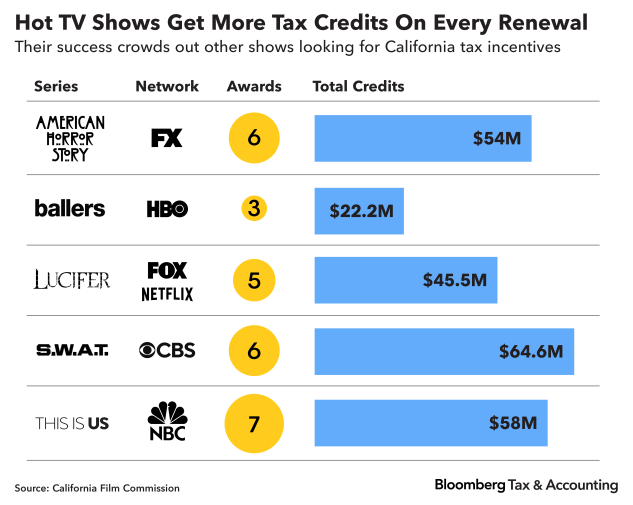
In the TV category, new shows are crowded out by recurring shows that continue to get tax credits each season. “American Horror Story” on FX, “Ballers” on HBO, and “This is Us” on NBC are among 25 popular shows that gobble up the funding year after year. The two most recent round of TV awards in August 2020 and March 2021 were open only to series relocating to California.
The Legislature’s independent fiscal policy analyst is cautioning lawmakers to focus economic stimulus on programs that are well designed and clearly targeted, can make an impact quickly, have strong policy justifications, and don’t drain revenue or worsen inequality.

In the past, the Legislative Analyst’s Office has found the costs of the state’s entertainment tax incentives outweigh the benefits, and one-third of the projects receiving the credit would have been made in California with or without it. Still, the analyst has acknowledged the importance of defending California’s flagship industry from the financial lure of other states and countries.

Without commenting on specific legislation, a spokeswoman for Gov. Gavin Newsom (D) said the current program is creating jobs and showing the industry California is committed to keeping its status as the film and TV capital of the world.

“The entertainment industry was born in California, and it’s a critical part of our economy,” said Kaitlin Lewis, assistant deputy director of communications for the Governor’s Office of Business and Economic Development. “Despite the challenges caused by COVID-19, demand for stages and other production infrastructure remains strong across the state, and we will continue to work with our industry partners to keep it that way.

Labor’s Backing

Unions that supply the industry’s day-to-day workers back some of the bills as tools to help rebuild the state’s workforce as the pandemic fades. The bills would reward construction of new sound stages, strong wages, and a diverse workforce while keeping accountability measures not always present in other states to ensure recipients live up to their promises.

“If you’re talking about handing out money just because you can, that’s not what we’re about,” Davis said. “We want to ensure the jobs stay in California.”

The theatrical stage union and the California State Building and Construction Trades Council are backing a bill to help get around the state tax credit’s limits by focusing on building more sound stages, which were in short supply before the pandemic.

S.B. 485 by Sen. Anthony Portantino (D) would create a new credit category for companies that spend at least $15 million to construct or renovate a sound stage in California. Once the company uses the sound stage or leases it to a production that films there, it could receive a credit for 20% of qualified expenditures. The credit would increase to 25% if the company spends $25 million or more on construction.

Union-friendly provisions of the bill require the construction projects to pay prevailing wages—the hourly rate usually paid to construction or craft workers in the nearest labor market—and use workers trained by the building trades unions. The companies must pay at least $7.5 million in annual wages and could claim the credit yearly for productions that begin within five years of construction and remain at the sound stage.

Similarly, Sen. Maria Elena Durazo (D) has revived her bill that failed in 2020 (S.B. 51`) to create a refundable credit for companies that create at least 5,000 prevailing-wage jobs for 10 years as long as the companies reinvest the credit into building media production facilities.

Netflix and Sony Pictures Entertainment unsuccessfully lobbied lawmakers to pass the bill last year, according to disclosures filed with the Secretary of State, and Durazo is trying again with the same measure (S.B. 313). Netflix spent $213,750 and Sony Pictures Entertainment spent $58,500 paying lobbyists in 2020 who worked unsuccessfully to pass the bill, disclosure forms showed.

“We want to make sure that we are building the infrastructure that will allow us to continue to be destination number 1 for the film industry and to create more of the good, middle-class jobs that come with it,” Durazo said in an email.

Diversity an Added Focus

To diversify hiring in the industry, Sen. Ben Allen (D)is proposing a bill (S.B. 611) that would improve a company’s chances of winning the existing film and TV tax credit if it hires people who have completed training through the film commission’s Pilot Skills Career Pathway program or similar programs that partner with labor unions for training and apprenticeships.

Another bill focused on diversity would expand the existing credit program for independent films if they are produced by companies with at least 51% ownership by a minority individual or group. A.B. 986 by Assemblyman Mike Gipson (D) /would give films a 40% credit for qualified expenses – up from the current 25% credit for independent films – and provide $200 million in annual funding for the expansion.

State Treasurer Fiona Ma (D) is sponsoring the bill, and said she has support from several minority studios including Milojo Productions, owned by Kelly Ripa and her husband Mark Consuelos; Mario Lopez Productions, and Verso Entertainment, owned by Jessica Alba and Cash Warren.

“All of the major studios are not doing enough about diversity,” Ma said. “The system is skewed.”

Tax incentives for the film industry tend to be the least effective economic development policies, but could be more effective if they focus on specific problems like a lack of diversity, said Nathan Jensen, a government and economics professor at the University of Texas who studies tax incentives.

“Politicians like to expand these programs to encompass more goals. But this often leads to these programs not accomplishing any goals,” Jensen said.


Jakob’s Wife Offers Convincing Proof That Horror Is the Ultimate Glow-Up

The story of a woman coming into her power after getting a supernatural boost is hardly a new one—but much like more traditional makeover narratives, it’s often rewarding enough to justify being so familiar. The most delicious version of this tale usually involves a frumpy lass becoming a glamorous villain, like Uma Thurman blooming into Poison Ivy in Batman Robin, or the misfit girls of The Craft becoming dazzling teen dreams. Jakob’s Wife, a new horror film coming to Shudder, walks the same path and with spectacular results.

Jakob’s Wife—the new film from Travis Stevens, who directed and also co-wrote with Kathy Charles and Mark Steensland—angles in by centering the action in a deceptively mundane setting, and by giving us an endearing main character whose eerie transformation is more liberating than terrifying. It is, however, still a rather nightmarish experience for Anne Fedder (Barbara Crampton, star of Re-Animator, From Beyond, and Channel Zero, to name just a few), whose life prior to her sudden vampire encounter could kindly be described as despairingly dull. Married to Pastor Jakob Fedder (Larry Fessenden, whose acting credits include You’re Next alongside Crampton and The Dead Don’t Die, and whose directing credits include The Last Winter and a segment in ABCs of Death 2), Anne’s played the role of a dutiful minister’s wife for 30 years, cooking, cleaning, sitting through her husband’s sermons, enduring his repulsive grooming habits, and holding her tongue every time he interrupts her or talks over her, which is often.

After a young member of the congregation goes missing, Anne sticks up for her, insisting that “good people don’t leave their families” when people start suggesting the teen may have run off with a boyfriend. That belief is something Anne herself must grapple with—first after a reunion with an old flame turns unexpectedly steamy, and then after she’s bitten by a mysterious creature and feels something awaken inside of her. If she doesn’t want to make Jakob’s breakfast, well—she ain’t gonna. Prim cardigans and cross necklaces are out in favor of red lipstick and dramatic wardrobe choices (good thing she has an extensive collection of scarves to hide those new holes in her neck). She also discovers she has super-strength—rearranging the living room was never so easy!—and strong opinions of her own, the latter of which she’d forgotten about after decades of acquiescing to her husband’s point of view. Jakob’s perplexed by her behavior, but Anne has never been happier, admitting, “I feel more alive than I have in years.”

The irony there is, of course, that she’s technically less alive than before, though she isn’t quite a full vampire yet. “The hunger” is becoming a pressing problem (it’s worth mentioning Jakob’s Wife doesn’t skimp on the spurting, gushing, gruesome blood, and critter effects… this is a vampire movie, after all!), along with other inconveniences, like the dangers of sunlight. There’s also the troubling yet titillating presence of “the Master,” the ancient vampire who bit Anne in the first place—something that Anne begins to realize was no random attack. (To name the actor who plays the Master would be a Jakob’s Wife spoiler, though you can easily find it online if you’re curious.) In fact, calling it an “attack” maybe isn’t quite accurate, considering how much Anne’s life has improved in its wake.

For his part, Jakob rolls with the vampire stuff much more agreeably than he does with Anne’s newly assertive, liberated personality—there’s no hesitation when it comes to getting holy water and stakes together to try and hunt down the Master, in the hopes that killing the top vampire will instantly change Anne back to her old, meek self. Jakob’s Wife doesn’t take the easy way out with the Jakob character; he could have been just a closed-minded, misogynistic small-town minister type, and while there are some elements of that, he’s more a guy who’s just become so used to his comfortable routine that it doesn’t occur to him to ever want to change it. Fessenden is very good as this oblivious, mildly boorish (but not monstrous) man who’s stunned to realize that his wife’s long been deeply unhappy in their marriage. But really, this movie is all about Anne.

Crampton is reliably great in everything, but we often see her using her blonde, preppy good looks to contrast with whatever nefarious character she’s playing (see: her turn as an evil landlord on the most recent season of Creepshow). Here, she’s just as effective as a good-hearted woman forced into a situation she wouldn’t have chosen—but who ultimately realizes the power that comes with being able to choose for herself what happens next. Even if it involves guzzling human blood.

Jakob’s Wife is currently available on-demand and digital; it arrives on Shudder August 19.


Wondering where our RSS feed went? You can pick the new up one here.

Page 120 of 221:« First« 117 118 119 120 121 122 123 »Last »