
Editor’s Note: BuzzFeed does not support discriminatory or hateful speech in any form. We stand by the LGBTQ+ community and all fans who found a home in the Harry Potter series and will work to provide a safe space for fans. If you, like us, feel impassioned about trans rights, learn more or donate here.
Harry Potter´s archives ↓
‘Well over’ 100 firefighters battle huge blaze on George IV Bridge
Photographer Matt Donlan, who captured many dramatic pictures at the scene, said: “On days like the one we are witnessing today, you can’t help but praise our fire service heroes. They’ve been on the go a long time in challenging conditions on a very warm day.”
Rupert Grint stopped watching ‘Harry Potter’ movies after the first 3
- Rupert Grint told Variety that he has only seen the first three “Harry Potter Movies.”
- Grint said he saw the first three at premieres, “but after that I stopped watching them.”
- However, Grint said that he plans to watch the rest of the movies with his daughter.
Rupert Grint has said that he stopped watching the “Harry Potter” movies after the first three, and he only saw those at the premieres.
In an interview with Variety, Grint, who played Ron Weasley in all eight movies, said: “I’ve probably seen the first three at the premieres, but after that, I stopped watching them.”
After “The Prisoner of Azkaban,” then, Grint has somehow missed all of the other Potter movies. But that may change following the birth of his first child.
“But now that I have a daughter, I will probably have to watch them with her,” Grint said. Grint and his wife, actress Georgia Groome, welcomed their daughter Wednesday in May 2020. Grint shared a picture of Wednesday when he made his Instagram debut in November.
A post shared by Rupert Grint (@rupertgrint)
Grint isn’t the first “Potter” alumn who hasn’t been caught up with the movie series. Draco Malfoy actor Tom Felton recently rewatched the movies for the first time in 20 years. Felton called Malfoy a “little s—” during the live stream he filmed while watching them.
In the same interview with Variety, Grint said that he doesn’t expect to be part of the new Harry Potter TV series being developed by
HBO Max
, and said it would be “weird if it was a continuation kind of thing.” It’s unclear what the series will be about, but it seems he doesn’t want anyone else playing Ron.
“I weirdly feel quite protective of that character,” he said. “Even when I saw the stage shows, it was a very strange experience. If it’s like a different group of friends, I guess it would be interesting.”
Is Harry Potter now on HBO Max or Amazon Prime? Tracing why a film or show keeps switching streaming platforms-Entertainment News
Content is king — if you can find it.
As streaming services proliferate, it is becoming more of a challenge to track down your favorite TV shows and Blockbuster movies when streaming services can change up their offerings every month. That is complicating life for those who know what they want to watch, but just do not know where to locate it.
Some hits are practically itinerants. Batman Begins and The Dark Knight, for instance, bounced around four different services between March 2020 and March 2021 — Netflix, Hulu, HBO Max, and Peacock. Some of these services hosted the movies twice in that time according to Reelgood, a service that tracks videos across streaming services. (You can currently find the movies on Hulu and HBO Max.)
Why do some film and show titles keep switching platforms?
Want to watch a Harry Potter movie? Films in the series started on HBO Max in May 2020 before heading to Peacock in August. They then jumped back to HBO Max in June 2021 — but only for a single month. At the moment, the first three films are available for free on Peacock, but you will need a premium subscription for the last five.
Not long after its March launch, paramount+ reclaimed some of its movies, like Mission Impossible: Ghost Protocol and the Paul Rudd comedy I Love You Man from other services.
Origins of platform switching
This merry-go-round arguably started in 2019 when NBC said it would no longer license The Office to Netflix, although Netflix kept the rights through 2020 — a move intended to bolster NBC’s Peacock streaming service. The Office was the most viewed show on Netflix in 2018, streamed for over 52 billion minutes, according to Nielsen. HBO Max made a similar move when it yanked back Friends from Netflix.
The Hollywood producers of these shows and films likely appreciate the extra cash they have earned from licensing shows to Netflix, Amazon Prime Video, and similar services. But those partners have steadily morphed into competitors as studios like NBCUniversal, Disney, and WarnerMedia created their own streaming options to get in on the gold rush. In the meantime, Netflix, Amazon, and Hulu have focused more on creating their own original content.
“Exclusive content has always been an important factor in the battle for streaming dominance,” said Reelgood CEO David Sanderson. Production companies that want a bigger piece of the pie, he said, have realised that their best chance of success involves their own properties.
Cause of confusion among consumers
Consumers, meanwhile, are left to frantically scan for the shows they want. Chris Kaufman, a 35-year-old in Logan, Utah, once put movies like the Ocean’s 11 trilogy in his Netflix queue to watch later. But when he got around to them, they were gone. (They left Netflix in December 2020, and are now on HBO Max). “I don’t have a whole lot of time in the day to watch, and now I have to go and search it out,” he said.
Search engines can help. Alan Keane, a 35-year-old Brooklyn resident, says he uses Google when not searching through individual services. Other choices include apps such as Reelgood and JustWatch, which let you search a customizable list of services for particular titles. Digital media players like Roku and Apple TV also let you search across all the streaming apps you subscribe to.
But constantly having to search out those shows and movies can be frustrating. Since there are no penalties for consumers who drop a streaming service, it can also lead to customer “churn,” an industry term for the pace at which people sign up for and drop services, said Jeff Wlodarczak, an analyst at Pivotal Research. “If your streaming service runs out of interesting content, I would simply drop the service and come back at a later date,” he said.
Kaufman said he and his family, including his wife and toddler, are considering dropping Netflix since they are using HBO Max more now. “We have been in discussion as a household. We might be dropping a service on a monthly basis, and reacquiring it a couple months later when it is fresh and new for us,” he said.
Platform switching is here to stay
Kevin Westcott, who heads consulting firm Deloitte’s US technology, media, and telecom business, said his firm’s research finds that this content merry-go-round is the leading frustration subscribers report with streaming services. It is also the No 2 reason people say they may cancel a service, coming in just after price increases.
But he does not see things changing any time soon. In fact, Westcott figures that a version of “windowing” — the process of releasing a movie first in a theater, then on cable channels and streaming services — will stick around because it is a major source of revenue for the studios. “We’re always going to be in a situation where content will move,” he said.
Netflix, Amazon, NBCUniversal, Disney, and WarnerMedia did not immediately respond to a request for comment.
Edinburgh’s George IV Bridge fire: Footage shows fire damage inside ‘Harry Potter café’
Mr Taylor, who has owned the independent café for 25 years, said: “We thought yesterday that we would just have to deal with smoke and water damage but having been allowed a quick look inside today I can see that is not the case and in fact there is a lot of fire damage too. To say I’m devastated is an understatement.
Hogwarts Legacy release date, formats and everything you need to know about the Harry Potter RPG – Pocket
Why you can trust Pocket-lint
(Pocket-lint) – Hogwarts Legacy – a new role-playing game set in the world of Harry Potter – originally leaked in 2018 under the name “Magic Awakened” but took a couple more years before it was officially unveiled.
Now we know more about it, have screens and a trailer. Even its (shifted) release window has been confirmed.
So here’s everything we know about Hogwarts Legacy so far.
What is Hogwarts Legacy?
Hogwarts Legacy was officially announced as part of the PlayStation 5 Showcase in September 2020 – with the debut of the trailer above.
It is a single-player, open-world RPG set in the Wizarding World in the 1800s, long before Harry Potter and even Newt Scamander were born.
Players will take the role of a new student attending Hogwarts School of Witchcraft and Wizardry. There they will develop their character while undertaking a dangerous extended journey through the game.
Abilities can be learned and enhanced, while companions can be enrolled to help fight and solve the enemies, creatures and mysteries that await.
It is being developed by Avalanche Software – best known for the Disney Infinity toys-to-life game series. It will be published by Warner Bros. Games’ label Portkey Games.
What platforms will Hogwarts Legacy be available for?
The game is currently planned for Xbox One, Xbox Series X/S, PS4, PS4 Pro, PS5 and PC.
Sadly, there is no word on a Nintendo Switch version. But, with Nintendo Cloud Streaming bringing some triple-A titles to the mobile platform, maybe that could be possible somewhere down the line.
Top Nintendo Switch games 2021: Best Switch games every gamer must own
By
·
25 August 2021
Hogwarts Legacy release date
Although the game was originally scheduled for a 2021 release, it was put back to 2022 due to the developer wanting more time to create “the best possible experience for all of the Wizarding World.”
— Hogwarts Legacy (@HogwartsLegacy) January 13, 2021
Hogwarts Legacy screengrabs
Several screens have been released so far. You can swipe through them below…
Actress Helen McCrory, star of “Peaky Blinders” and “Harry Potter” films, dies at 52
British film, television and stage actress Helen McCrory has died aged 52 from cancer, her husband and fellow actor Damian Lewis said on Friday. McCrory “died peacefully at home surrounded by a wave of love from friends and family”, Lewis wrote on Twitter, calling his late wife “beautiful and mighty.”
“We love her and know how lucky we are to have had her in our lives. She blazed so brightly,” the actor added, explaining she had died “after an heroic battle with cancer.”
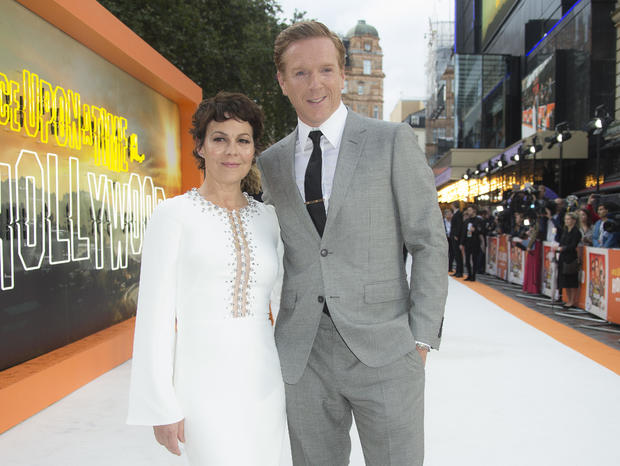
Joel C Ryan/AP
McCrory was best known as a star of hit BBC crime drama “Peaky Blinders” and for the role of Narcissa Malfoy in the “Harry Potter” films, as the mother of the boy wizard’s school-aged rival.
She played Cherie Blair, the wife of former British prime minister Tony Blair, twice in both the “The Queen” (2006) and “The Special Relationship” (2010), and played fictional British interior minister Clair Dowar in the the James Bond film “Skyfall” (2012).
Born in Paddington in west London in 1968 to a Welsh mother and Scottish-born father, McCrory was the eldest of three children.
She attended school in southeast England and spent a year living in Italy before studying acting at London’s Drama Centre.
A lengthy acting career followed, which saw her play a multitude of roles on the small and big screen, as well as on stage.
McCrory and Lewis, who starred in the US TV series Homeland, married in 2007. The pair met performing in the Shakespeare play “Much Ado About Nothing” as comedic protagonists Beatrice and Benedick.
In 2011, she told the Independent newspaper she had eschewed celebrity but was honoured to have played such interesting roles.
An actor’s job, she said, was to “reassure the audience that life, as muddled and as wonderful as it is, is worth living”.
A memo for muggles: J.K. Rowling’s ‘Harry Potter’ books prove there’s still magic in this world
On July 31, 1965, at the Yate General Hospital in South Gloucestershire, Anne Rowling née Volant and Peter John Rowling welcomed their firstborn Joanne Rowling into the world. There was nothing particularly unusual about the circumstances. No crow crowed thrice. No comet whizzed by. The baby didn’t have any freaky birthmarks, lightning-shaped or otherwise.
(Stay up to date on new book releases, reviews, and more with The Hindu On Books newsletter. Subscribe here.)
The biographical details give little indication that Joanne Rowling aka J.K. Rowling would go on to have one of the most extraordinary careers in modern publishing. A book-filled childhood in Gloucestershire, loving parents determined to give her the college education they lacked, a younger sister to boss around, and all the privileges of being a citizen of a first-world country. There were shadows too: the premature loss of her mother to multiple sclerosis, a seemingly-useless Classics degree, a short-lived marriage, uncertain employment, and the shabby difficulties of being a single mother in Thatcherite Britain. By the time she finally had a novel — Harry Potter and the Philosopher’s Stone — to show publishers, she was 30.
Red-carpet welcome
As is well known, Rowling’s debut novel was rejected by 13 publishers; this fact has long warmed the chthonic innards of struggling writers. Nigel Newton at Bloomsbury decided to take a chance on the book. Not because he’d read the sample chapter, but because his eight-year-old daughter Alice had. She’d given it her enthusiastic approval. Thus the fate of Rowling’s five years of labour was decided by the thumbs-up of an eight-year-old. The book was published on June 26, 1997 with a print-run of 500 hardcover copies.
Wait, let’s backtrack a bit. “Sample chapter”? Who sent Nigel Newton the sample chapter? Rowling? No. It was sent by Rowling’s agent, Christopher Little. She’d managed to secure an agent. Most authors never even get to that point in their careers, so Rowling was already well ahead of the vast number of other unknowns.
It’s also not uncommon for a promising debut novel to be rejected multiple times. Booker-winner Marlon James’ debut novel John Crow’s Devil was rejected 78 times. Lisa Genova’s global bestseller Still Alice was rejected over a hundred times. The all-time champ is Dick Wimmer, whose Irish Wine was rejected 162 times. In the book industry, 13 rejections practically amountto a red-carpet welcome.
Point is, Rowling seemed all set for a fairly successful career as an author. Maybe shortlisted for a book prize or two down the road; treading the litfest-circuit holding forth on topics such as Palestinian Children’s Literature; and eking out a living from anaemic royalties, articles on celebrity authors, and creative-writing workshops.
Gets tricky
What followed however was something completely unexpected. Not only was Rowling’s debut novel a smash success, but so were all the subsequent volumes in the series. So far, more than 500 million copies of the series have been sold.
Contemplate this number for a moment: 500 million copies. It is a number large enough to have made her the world’s first author to become a billionaire. How about this statistic? A standard pine tree produces about 10,000 sheets of paper. Using this fact, the website saveonenergy.com calculated that Rowling’s seven-volume series, a total of 4,224 pages, has so far sent more than 23.5 million trees to their next lives. Or this: Rowling has outsold the next nine bestselling-authors combined.

What can explain the series’ appeal? This is where it gets tricky. It is like asking what makes a person tall. Attributes like ‘height’ depend on too many factors. Ditto for ‘book appeal’. Richard Caves, an economist who studied creative industries, refers to this as the “Nobody Knows” principle. The term references screenwriter William Goldman’s famous comment in his memoir, Adventures in the Screen Trade: “Not one person in the entire motion picture field knows for a certainty what’s going to work. Every time out it’s a guess — and, if you’re lucky, an educated one.” This is also true of the book industry. Nobody knows what made Fifty Shades of Grey a bestseller. Perhaps the next big thing will be Jane Austen, Vampire Hunter. Nobody knows.
This hasn’t stopped otherwise sensible people from offering definitive answers. In a gloomy and bilious essay for The New York Times, A.S. Byatt, herself no stranger to success, and perhaps of the view that she deserves it, suggested that children could be excused for liking the Potter novels — they simply didn’t know better. The real mystery is why adults like these books. The novels, she concluded, were written for “people whose imaginative lives are confined to TV cartoons, and the exaggerated (more exciting, not threatening) mirror-worlds of soaps, reality TV and celebrity gossip.” The ghosts of 23.5 million trees must be feeling even more depressed.
Success breeds success
The opposite approach is to see in Rowling’s books every desirable virtue: comfort, comradeship, a thumping good adventure, immersion, escape… And why not? These are the reasons that readers themselves offer when asked why they like Rowling’s series. For example, I like her sense of humour. It’s an important part of the novel’s amiability. But there is good reason to be wary of such reasons. Social psychologists have demonstrated that such reasons follow our preferences and not the other way around. We make up reasons, we are unaware we have made up reasons, and then we double down on the reasons when questioned.
At the same time, success breeds success. For example, Richard Bachman had exactly the same genetic inheritance, writing skills and experiences as Stephen King. Yet Bachman’s debut novel sold only 28,000 copies. What does Stephen King do for the reader that his alter ego Richard Bachman does not?
So is it all just a fluke then? Not quite. It is true that Rowling’s extreme success with the Potter series is both contingent and unexpected. But we can’t thereby conclude that she is irrelevant to that phenomenal success. That is not what ‘random’ means in mathematics. A random number is one that is its own most economical description; there’s no simplifying it further. What ‘random’ means for publishing is that if we wish to replicate Rowling’s particular success, then we’d need to replicate everything else associated with it. And that is impossible to do. You can’t simply duplicate aspects of her work and expect things to play out the same way. Her success is random in the sense that it’s the product of unique and un-substitutable causes. It is, one might say, magical.
However, it is a different magic from the magic in the Potter series. In the series, a magic spell can be cast by any suitably trained person and provided it is done correctly, the spell has a fixed consequence. The person casting the spell and the target object are quite independent of the spell itself. In this sense, the magic spells work like toasters and light switches.
The spell cast by fiction isn’t that kind of magic. Here, it is the author’s words, the reader, the reader’s social context, why, the entirety of the world, that jointly determine whether the spell will work. Our marketing shamans can gaze at the gizzards of numbers all day and see nothing. But an eight-year-old child may, without obvious effort, open possibility’s door.
Perhaps the remarkable thing isn’t that J.K. Rowling was able to cast a spell to create that door, but rather, that she showed such a possibility still exists. Aren’t we told that we now have a shorter attention span than that of a goldfish? That people don’t read any more? That the age of the novel is over? All probably true, and all quite irrelevant. What Rowling has achieved is a sort of existence proof. There is still magic in this world, and the story can still effect its old miracles.
Author of Half Of What I Say, the writer has a collection of short stories forthcoming from Hachette.
Name The Harry Potter Books In 1 Minute
Editor’s Note: BuzzFeed does not support discriminatory or hateful speech in any form. We stand by the LGBTQ+ community and all fans who found a home in the Harry Potter series and will work to provide a safe space for fans. If you, like us, feel impassioned about trans rights, learn more or donate here.