Harry Potterfans across the world are waiting with anticipation for the release of the full trailer for Fantastic Beasts 3, which is due for release in 2022.
Ahead of the trailer release, a teaser trailer has been published with fans able to relive many of the highlights of Harry Potter’s story to date.
Watch Fantastic Beasts 3 trailer teaser
The teaser trailer features clips and a look across all of Harry Potter‘s success, from the original books and movies right through to theme parks and Broadway productions.
We see famous clips from the film series and even a very brief glimpse of Gellert Grindelwald, to build excitement ahead of the full trailer launch.
When will the Fantastic Beasts 3 trailer be released?
The full trailer will be released on Monday, December 13, 2021, to give us our first glimpse of what the movie will tell us.
We already know that Newt Scamander and Albus Dumbledore are in for some trouble as Gellert Grindelwald looks to take power, but scant details have been revealed about the plot to date.
Who will star in Fantastic Beasts 3?
The headline news is that Johnny Depp will not be returning as Grindelwald following his resignation from the role, though he had filmed one scene in character before that.
Mads Mikkelsen will take over the role, having starred in films such as Doctor Strange and Hannibal.
Returning cast include Eddie Redmayne as Newt Scamander. Katherine Waterston as Tina Goldstein, Jude Law as Albus Dumbledore, Dan Fogler as Jacob Kowalski and Alison Sudol as Queenie Goldstein.
When will Fantastic Beasts 3 be released?
Fantastic Beasts 3 will be released in the United Kingdom on April 8, 2022, with a US release date a week later, on April 15, 2022.
The film was originally set for release in November 2021, but the pandemic caused delays to filming which pushed back the release date.
Johnny Depp‘s resignation led to Warner Bros initially pushing the launch back even further, to July 2022, but they have since brought it forward to April 2022.
Joellen Russell likes a big class. The bigger the better, actually, with online sections and huge auditoriums and students swarming her after a lecture – the way they did one Thursday morning this fall after her Intro to Oceanography course at the University of Arizona.
“Wait, Dr. Russell, I’m not sure about the homework.”
“What about the jet stream?”
Why We Wrote This
A group of female scientists is trying to overcome climate “doomerism” – the idea that nothing can be done to stop global warming. For them, it’s not just about the science but about values: how the issue affects families.
“Dr. Russell! I saw your sweet family at CVS!”
The distinguished professor stays onstage, laughing, joking, answering question after question, until finally she suggests that anyone else who wants to talk should visit her during office hours, which she holds at a picnic table outside.
“It’s a bit of a circus,” she says as she walks out of the voluminous lecture hall. “But, I like it when it’s noisy. I like it when they want to talk and they want to tell you things and they want to ask things.” She grins, as if getting away with something. “It’s fun.”
The university’s administrators have suggested that perhaps Dr. Russell might want to teach smaller, more exclusive seminars. That, after all, is what’s typical for tenured professors with named chairs and multimillion-dollar grants and international partnerships on the cutting edge of scientific research. But Dr. Russell knows that students who take her introductory class are more likely than other undergraduates to enroll in another science course. They are also more likely to graduate. And that, she believes, means they are more likely to join her in what she sees as the biggest, most important fight for humankind today – a battle not only against climate change, but also against those who say there’s nothing anyone can do about it.
And she wants to grow an army of resilience.
“My job is not to just advance the science,” she says. “It’s to build the next front lines. I launch as many as I can.”
Dr. Russell is not alone in this mobilization. Across the scientific world, there is a growing movement not only to show the way climate systems are changing, but also to fight what has become known as climate “doomerism,” the idea that there’s simply nothing we can do about global warming, whether because of China’s coal plants or domestic ignorance or just that we’ve run out of time. This effort is founded on resilience – both collective and personal. Many of the key players in this rejection of despair are women. Many are mothers. And many are taking aim at long-held norms and assumptions of the higher education establishment, whether it’s what type of classes to teach, how research is shared – or, most recently, how scientists incorporate their families into their work. One new group, called Science Moms, is working to take this movement public, connecting female climate scientists who have children to other mothers in an effort to spread information about climate change.
“Women are creating space for different kinds of reactions to the climate crisis and opening up that conversation,” says Jacquelyn Gill, a climate scientist and paleoecologist at the University of Maine in Orono. “The discourse itself has changed.”
Dr. Russell’s journey is an example of this. Over her career, she has expanded her understanding of resilience from something personal to a collective force, from scientific achievement to a broader embrace of humanity. Her story is a mirror, in many ways, of the approach to global warming writ large: how people, groups, and societies around the world are beginning to integrate climate into the way they think, live, and act.
“I finally found my united voice,” Dr. Russell says. “It turns out that my students and my community members and my kids’ classroom teachers and all the rest of them were waiting for me to shake off the shackles of ‘just the science’ and talk to them about the values part. And I am thrilled.”
For her, this new kind of resilience starts with Joseph and Maeve. Joseph is 14 years old now; Maeve is 11. And not all that long ago, Dr. Russell says, she would have been uncomfortable talking about her children at work. Not because she didn’t adore them. To the contrary, she has been enthralled with these “smoochie babies” since before their births. She snuggles with them on the couch, reads “Harry Potter” to them at night, and splashes with them in the pool. But she learned early that in the geophysical sciences – a field in which only 27% of U.S. faculty members are women, according to one recent study – motherhood was suspect.
That lesson seemed to come from everywhere. As a graduate student making her first expedition to the Southern Ocean, Dr. Russell had to take a pregnancy test before being allowed on the research ship. That’s still standard practice, she says. “No man knows how that feels,” she says.
She had colleagues who called women with children “breeders”; she knew the stories of friends denied positions because supervisors suspected they would “just get pregnant and leave.” And while there were a growing number of women joining the scientific ranks, very few had families.
“It was just normal to not have kids if you wanted to be a scientist, at least in the fieldwork-type sciences,” she says.
So when, by surprise, she became pregnant soon after she got to the University of Arizona, Dr. Russell panicked. There were no other mothers on the tenure track in her department. Her husband, Paul Goodman, was also an academic but had left his prior position so she could take the job in Tucson. Hers was their primary salary. When she Googled “maternity policy” for the university, she discovered that there was no paid leave.
For 4 1/2 months, she tried to hide her pregnancy. She kept thinking about an experience she had as an undergraduate at Harvard University in the early 1990s, when she had joined a research team in Hawaii, trudging through mud in the Alakai Swamp, collecting soil samples with two male professors and a female postdoctoral student. Dr. Russell recalls the postdoc pulled her aside at one point, frantic. The young woman was pregnant but had been trying to hide it because she thought it would threaten her position, which was up for review.
“So we sneaked all of her gear into my backpack so that she wouldn’t have to carry anything,” Dr. Russell says. “It was over 125 pounds; I weighed 130. And I lifted that freaking pack and I carried it out because … the idea that they would find out, or that she would lose the kid …” she trails off.
The men never knew what was going on. The postdoc eventually had a healthy baby and kept her job. But the lesson for 20-year-old Ms. Russell was clear: The way to survive motherhood in the sciences was to pretend your babies did not exist.
Dr. Russell eventually worked up the courage to tell her department chair at the University of Arizona that she was pregnant. But even after the big hug she got in response; even after her male colleagues wandered down the hall to ask whether, just this semester, she might let them teach one of her courses because, well, they’d never taught oceanography before and it might be interesting; even though she recognized that they were trying to lighten her load to make up for the university’s lack of maternity leave – she still was scared, still determined to show that motherhood would not change her work.
That, she thought, was resilience. After all, this sort of determination had always worked for her.
As a child growing up north of the Arctic Circle by the Chukchi Sea, in a Native fishing village where her father worked for the U.S. government’s Indian Health Service, she dreamed of one day following the sea ice, to understand what happened after it broke up and floated away. A relative told her that the best place to learn about that would be the Scripps Institution of Oceanography at the University of California, San Diego. The young Joellen scrawled “Scripps or bust” on her Converse sneakers.
When the family moved to rural Montana for her father’s next posting, the local school system did not offer calculus or geometry – skills Joellen knew she would need if she wanted to go to Scripps. She convinced her parents to let her apply to boarding school and was accepted on financial aid to the prestigious St. Paul’s School in New Hampshire. “I wanted to learn. I was so desperate,” says Dr. Russell. “And so I studied and I studied and I studied and I hustled and I hustled.”
When she discovered, to her heartbreak, that Scripps was a graduate program only, and that she would need to go to college first, she applied for financial aid at all the schools her advisers recommended. Harvard gave her the most monetary support, so she went there, waking up each night to the traffic and sirens on Massachusetts Avenue.
From there she did go to Scripps. She also voyaged to the Southern Ocean, where albatross circled the massive waves like fighter jets. She took positions at the University of Washington, and then Princeton, and eventually came to Arizona, where she began building a supercomputer system that would help untangle one of the big puzzles of modern climate science: how the oceans both slow and accelerate atmospheric warming. She was figuring out what happened to the sea ice.
So when she became pregnant, Dr. Russell was determined to continue that work.
When Maeve came, three years later, in 2010, there was still no paid maternity leave. So Dr. Russell put on compression stockings and boarded planes so she could network with colleagues on both coasts to put together a multimillion-dollar interdisciplinary grant application. They wanted to build and deploy hundreds of robot floats with sensors to record temperature, oxygen, and other chemistry at various depths in the Southern Ocean. She lugged a giant, plug-in breast pump to conferences and through airports, sitting with it on the dirty floor of Los Angeles International Airport – the only place near an outlet back then – and hoping none of her colleagues walked by.
Her father flew in from Montana to help her husband when she had work trips. She started investigating how to use artificial intelligence and advanced technology in climate modeling, and continued building out the National Science Foundation-funded SOCCOM, or Southern Ocean Carbon and Climate Observation and Modeling, project.
At the same time, the climate crisis was accelerating. The 2010s was the warmest decade in recorded history, kicked off by heat waves and wildfires in Russia. Soon there would be floods in Pakistan and Bangladesh, and droughts in East Africa.
Although most nations had agreed to emissions-limiting goals set forth in the 2015 Paris Agreement, in 2019 carbon dioxide levels in the atmosphere passed a measurement of 410 parts per million – the highest concentration of the greenhouse gas in 3 million years. That’s the year Dr. Russell became a full professor. More heat waves swept across both the Arctic and Europe. In Tucson, the summers became oppressive. She understood, as thoroughly and intimately as anyone, the mechanisms of what was happening with the climate, and how these extreme weather events were connected to the geochemical data sets she analyzed at work. She was also a parent, distraught when Maeve got heatstroke trying to ride her bike. She woke up earlier and earlier to walk the family dogs so they wouldn’t burn their paws on the pavement.
But that personal world, and any emotions about what was happening to her children’s futures, was something separate from her work. Then, Dr. Russell got an email.
Katharine Hayhoe is a well-known atmospheric scientist who is a distinguished professor at Texas Tech University in Lubbock and chief scientist for The Nature Conservancy. She is also an evangelical Christian, and her work communicating about climate change across political demographics has gained her a sort of celebrity status in the scientific and climate advocacy worlds.
Dr. Hayhoe was reaching out to a group of female climate scientists who were also mothers, she explained, with the goal of building an outreach and awareness campaign. She wanted Dr. Russell to be one of the founding members of the group, which would be called Science Moms.
Dr. Russell remembers hesitating.
By that point she had already been trying, in her own small way, to change the professional norms around parents. She regularly told the younger women in her department – and the younger men, for that matter – that they should have their own lives; that they should have families and babies, if that’s what they wanted; that they should make time for pets and parents. She urged them to take advantage of the university’s paid parental leave program, which the school started offering in 2014.
Dr. Russell believed in sharing research as well, embracing open-source data and encouraging her graduate students to take lead authorship on journal articles. She wanted to avoid the traditional practice of hoarding research for individual glory and instead create a model that was broader and more inclusive.
But to face the world and identify as a mother – that was different. That would require a different type of resilience.
The idea for Science Moms grew out of a collaboration between Dr. Hayhoe and John Marshall, the former chief strategy officer at Lippincott, a marketing consulting firm, as well as Dan Schrag, director of Harvard’s Center for the Environment. Mr. Marshall and Dr. Schrag had formed a nonpartisan nonprofit called the Potential Energy Coalition to, as they put it, “change the narrative” on climate change.
Mr. Marshall had spent years as a successful executive in the advertising and marketing industry when his 17-year-old son suggested, somewhat bluntly, that perhaps he should stop using his skills to get people to spend money and instead make the world a better place. It was a thought-shifting moment, Mr. Marshall remembers.
Soon, he and Dr. Schrag were talking about climate change – a problem that impacted every human on Earth, but one that had become unnecessarily political. They wanted to get more people to both care about climate change and demand action to address it – but without taking a particular partisan or policy stance. After running analytics, Mr. Marshall determined that among all U.S. demographics, mothers age 40-55 were the most likely to be moved on the issue. They were worried about their children’s futures but felt uneducated about climate science and didn’t know what to do about global warming.
Mr. Marshall realized he needed the right messenger to reach this group. He wanted someone who would be trustworthy and relatable, but also knowledgeable. And he knew from his for-profit work that the more authentic the storyteller, the better.
“Our work has focused on elevating new spokespeople, spokespeople that everyday Americans can relate to,” Mr. Marshall says.
At the same time, Dr. Hayhoe had been working on her own efforts to increase the conversation about climate change. In a TED Talk viewed almost 4 million times, she argued that the most important thing people could do to fight climate change was to talk about it – something she and others believed wasn’t happening enough around American dinner tables. She has also written a book, “Saving Us,” about what individuals can do to make a difference on the issue.
Mr. Marshall and Dr. Schrag reached out to Dr. Hayhoe to share their marketing research and get advice. Soon, the three coalesced around the idea for Science Moms – a way to bring together a group of climate scientists who were mothers to connect with other mothers in their communities.
The team, led by Dr. Hayhoe, reached out to Emily Fischer and Melissa Burt at Colorado State University in Fort Collins, and Tracey Holloway, a professor at the University of Wisconsin-Madison who founded the Earth Science Women’s Network. And they reached out to Dr. Russell.
For Dr. Russell, Dr. Hayhoe was the right person to pitch the idea of Science Moms. She was another scientist from a red state who was decidedly, publicly, nonpartisan. But Dr. Russell was still nervous, wondering whether her male colleagues would think she was “playing” on her motherhood, or whether she would be seen as “less serious” by talking about being a mom.
She wasn’t the only scientist who worried about this. “I mean, that’s always an issue, right?” says Dr. Fischer, one of the group’s co-founders.
But as Dr. Fischer says, everyone in that group also knew, intimately, the importance of taking a stand. “I lead a very large mentoring program for women,” she says. “So I understand very well the research on role modeling for women. And so, when I feel this question, this ‘how is this going to be perceived by my colleagues that don’t have children,’ I know I have a larger purpose.”
To Dr. Russell, it was one of the first times she felt she could integrate, rather than separate, these different parts of her identity – the scientist and the mother. And looking at the Zoom screen filled with colleagues in the same situation, she felt a new type of strength. A new resilience. They were like a group of penguins, she says, encouraging each other, nudging each other to the cliff, diving off en masse and hoping they wouldn’t get eaten by the seals.
Since the group started, the scientists have recorded videos about both climate science and their children, which together have been viewed more than 440 million times. They have participated in livestreamed town hall conversations and gone on television to talk about climate change from a parenting perspective. They have brainstormed new ways of breaking down complex climate data to a lay audience, met with groups of nonscientist mothers, and helped with social media and advertising campaigns.
“It’s a testament to the human spirit that the people who know the whole story, how serious it is, they’re the ones who work the hardest,” says Mr. Marshall. “Yes, it’s resilience. But the why behind the whole thing is love.”
And it’s that same love, Dr. Russell says, that she can bring to the university lecture hall, or to the office hours with the line of students wanting to share their dreams, or when sitting down at dinner next to her children eating Paul’s famous vegetable lasagna.
It’s the same love, the same person, the same resilience. And it can change the world, she believes. So yes, she wants big classes, big tents, big movements.
Over the past weeks, the Science Moms founders have written letters to their children, which many have shared publicly.
“To my smoochie babies,” Dr. Russell wrote. “I chose this life to help build a better world for you.
“I hope that when you’re grown, you’ll forgive me for being the ‘tired’ mama. The ‘gone to the field’ mama. The ‘obsessed with the new data’ mama. Because the climate is changing so fast, and will affect your world so much, I’ve had to become your ‘gladiator science’ mama so I can fight every day – for you.”
Check Out New Photos of Harry Potter and the Cursed Child on Broadway
The Tony Award-winning production is set to officially reopen as one condensed play at the Lyric Theatre December 7.
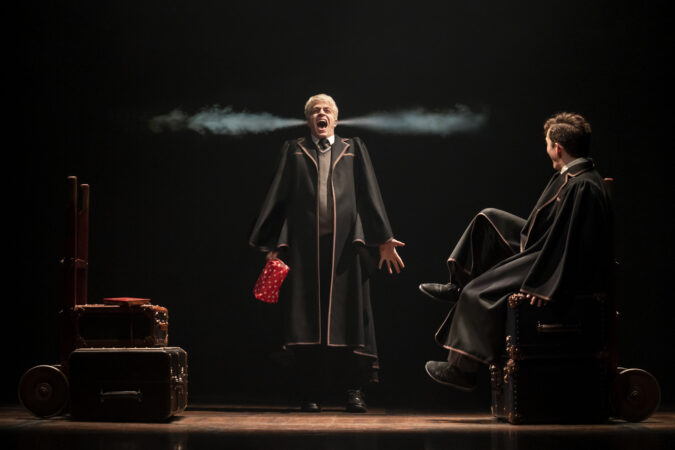
James Romney and Brady Dalton Richards in Harry Potter and the Cursed Child Matthew Murphy
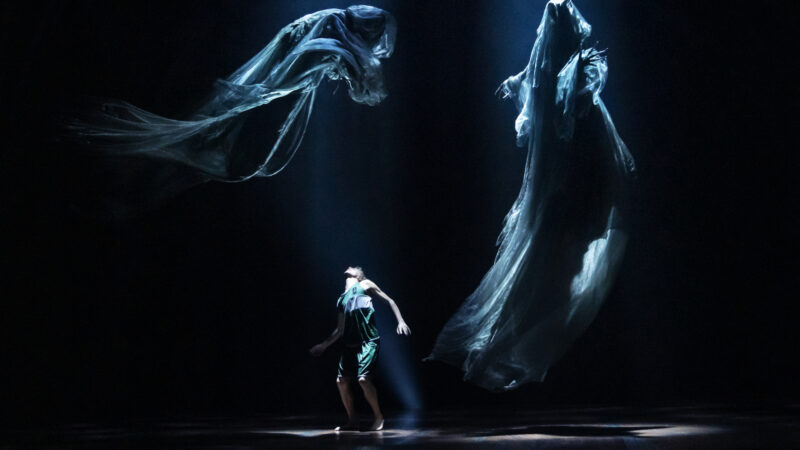
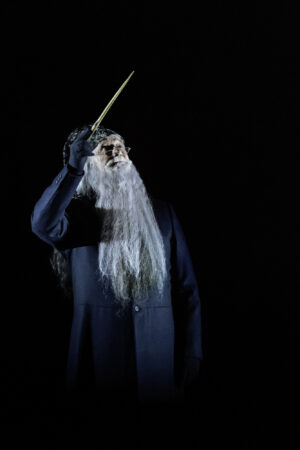
After returning November 12 to Broadway due to the COVID-19 pandemic, Harry Potter and the Cursed Child is set to officially reopen at the Lyric Theatre December 7 with the production newly condensed into just one part.
Harry Potter and the Cursed Child first opened on Broadway as a two-part experience April 22, 2018. The production would go on to be nominated for 10 Tony Awards, winning five, including Best Play.
The play, penned by Jack Thorne, director John Tiffany, and original series author J.K. Rowling, takes place 19 years after the events of The Deathly Hallows as the title wizard’s youngest son begins his first year at Hogwarts School of Witchcraft and Wizardry.
Check Out New Photos of Harry Potter and the Cursed Child on Broadway
8 PHOTOS
The Broadway production stars James Snyder as Harry Potter and Diane Davis as Ginny Potter alongside James Romney as their son Albus Potter; David Abeles as Ron Weasley, Jenny Jules as Hermione Granger, and Nadia Brown as their daughter Rose Granger-Weasley; and Aaron Bartz as Draco Malfoy and Brady Dalton Richards as his son Scorpius Malfoy.
Rounding out the company are Oge Agulué, Kevin Angulo, Chelsey Arce, Quinn Blades, Michela Cannon, Will Carlyon, Lauren Nicole Cipoletti, Judith Lightfoot Clarke, Ted Deasy, Kira Fath, Stephanie Gomérez, Steve Haggard, Ben Horner, Edward James Hyland, Jax Jackson, Jack Koenig, Spencer LaRue, Rachel Leslie, Sarita Amani Nash, Alexandra Peter, Dan Piering, Kevin Matthew Reyes, William Rhem, Antoinette Robinson, Stephen Spinella, Tom Stephens, Maya Thomas, and Karen Janes Woditsch.
The production features movement by Steven Hoggett, sets by Christine Jones, costumes by Katrina Lindsay, music and arrangements by Imogen Heap, lighting by Neil Austin, sound by Gareth Fry, illusions and magic by Jamie Harrison, and music supervision and arrangements by Martin Lowe. U.S. casting is by Jim Carnahan. Sonia Friedman Productions, Colin Callender, and Harry Potter Theatrical Productions serve as producers.
BookTrib is proud to present to our readers the Writers, Ink podcast, a show about the business of writing hosted by international bestselling author J.D. Barker and indie powerhouses, J. Thorn and Zach Bohannon.
J.K. Rowling was nearly homeless when she wrote the first Harry Potter book. Stephen King penned Carrie on a small desk wedged between a washer and dryer. James Patterson worked in advertising and famously wrote the Toys “R” Us theme song long before becoming an author.
Whether you’re traditionally published or indie, writing a good book is only the first step in becoming a successful author. The days of just turning a manuscript into your editor and walking away are gone. If you want to succeed in today’s publishing world, you need to understand every aspect of the business — editing, formatting, marketing, contracts. It all starts with a good book, then the real work begins.
Harry Potter: Return to Hogwarts is here. On Saturday, the hotly-anticipated Harry Potter reunion special episode will stream globally, bringing together the central Harry Potter trio Daniel Radcliffe (Harry Potter), Emma Watson (Hermione Granger), and Rupert Grint (Ron Weasley) to celebrate the 20th anniversary of the first movie. (The 20th anniversary of the first book was back in June 2017.) Along with other members of the Harry Potter films’ cast and crew, Radcliffe, Watson and Grint will visit Warner Bros. Studio Tour London – The Making of Harry Potter, talk about their experiences of working together on the eight movies, cry and hug a lot (naturally), and reminisce about the magical years. There’s no host or special guests here, unlike that Friends reunion special. They will simply talk to each other.
Speaking of Friends: The Reunion, Harry Potter: Return to Hogwarts also comes from HBO Max — the streaming service owned by the sister company of Harry Potter producer Warner Bros. Pictures — who seems to be making a habit of creating unscripted reunion specials out of big famous nostalgic properties to grow itself. It’s an interesting growth hack. (HBO Max also released all 2021 Warner Bros. movies day-and-date on its service, which did not sit well with Hollywood players at all.) While Harry Potter: Return to Hogwarts is an HBO Max original, it’s been sold off to other broadcasters elsewhere since HBO Max is not available everywhere. With that, here’s everything you need to know about the Harry Potter reunion special, including when and where to watch it.
Harry Potter: Return to Hogwarts release date in India
The two-hour-long Harry Potter reunion special is out New Year’s Day, January 1 worldwide. Harry Potter: Return to Hogwarts will be available in India on January 1, the same day as the rest of the world.
Harry Potter: Return to Hogwarts release time in India
In India, you can stream Harry Potter: Return to Hogwarts starting 2:30pm IST on January 1.
That’s not quite in line with its release time elsewhere. In the US, the Harry Potter reunion special will be available 12am PT / 3am ET.
That translates to 1:30pm IST, so Indian Harry Potter fans are having to wait an extra hour.
Earlier in December, HBO Max unveiled a 90-second trailer for the Harry Potter reunion special that gave fans a look at what they should expect. It finds the central trio and many more cast members at Warner Bros. Studio Tour London – The Making of Harry Potter, reflecting on the memories they made, talking about how they became a family, and revealing how they felt about their roles.
In addition to Radcliffe, Watson and Grint, the Harry Potter reunion special brings back Helena Bonham Carter (Bellatrix Lestrange), Robbie Coltrane (Hagrid), Jason Isaacs (Lucius Malfoy), Gary Oldman (Sirius Black), Imelda Staunton (Dolores Umbridge), Tom Felton (Draco Malfoy), James and Oliver Phelps (Fred and George Weasley), Mark Williams (Arthur Weasley), Bonnie Wright (Ginny Weasley), Alfred Enoch (Dean Thomas), Matthew Lewis (Neville Longbottom), Evanna Lynch (Luna Lovegood), and Ian Hart (Quirinus Quirrell) among others.
Franchise directors Chris Columbus, Alfonso Cuarón, Mike Newell and David Yates will also be present, alongside Harry Potter producer David Heyman. The controversialHarry Potter author J.K. Rowling is not involved with Harry Potter: Return to Hogwarts, though she does appear through archival footage.
How to watch Harry Potter: Return to Hogwarts in India
Amazon Prime Video is the streaming partner for the Harry Potter reunion special in India. You will need an Amazon Prime subscription that costs Rs. 179 per month, Rs. 459 each quarter, or Rs. 1,499 a year. Prime Video will release Harry Potter: Return to Hogwarts an hour after its global premiere.
How to watch Harry Potter: Return to Hogwarts in the US
Naturally, the aforementioned HBO Max is the exclusive home of the Harry Potter reunion episode in the US. HBO Max costs $15 a month. Existing HBO on TV subscribers can upgrade to HBO Max at no additional cost.
HBO Max will also offer Harry Potter: Return to Hogwarts in Spain and Nordic regions.
How to watch Harry Potter: Return to Hogwarts in the UK
Sky Max, Sky Showcase, and its streaming counterpart NOW are the official broadcasters for the Harry Potter reunion special in the UK. On TV, Harry Potter: Return to Hogwarts will air at 8pm GMT on Sky Showcase. If you can’t wait till then, you can stream it on Sky and NOW from 8:05am GMT onwards. NOW starts at GBP 10 a month.
How to watch Harry Potter: Return to Hogwarts in Australia
Foxtel’s Binge, Foxtel Now, and Foxtel iQ will host the Harry Potter reunion special down under. Binge costs between AUD 10 and AUD 18 per month. Will be available in line with the rest of the world at 7:01pm AEDT.
How to watch Harry Potter: Return to Hogwarts in Canada
As with all things HBO, Crave is the home for the Harry Potter reunion special up north. Crave starts at CAD 10 per month, but you’ll need the HBO add-on that takes the price up to CAD 20 per month.
How to watch Harry Potter: Return to Hogwarts in Italy, Portugal, Russia
In Italy, the Harry Potter reunion special will be offered on NOW, Sky Uno, and Sky Cinema Harry Potter. HBO Go will host it in Portugal, and Amediateka — the home of all things HBO — in Russia.
How to watch Harry Potter: Return to Hogwarts in Central Europe
The Harry Potter reunion special is coming to HBO Go in Central Europe. That includes Bosnia and Herzegoina, Bulgaria, Croatia, Czech Republic, Hungary, Macedonia, Montenegro, Poland, Romania, Serbia, Slovakia, and Slovenia.
Celebrities talking and posting on social media are one way in for many people – but even at Eva’s level of public profile, as a recognised young Australian actor with a solid body of work, history is never erased. Online, Sean has a history. There’s a showreel of a young man starring in Nowhere Boys; media reports about the Harry Potter cast, references to Sean’s role in the film Jindabyne. Eva is slowly emerging publicly online. Her thoughts on this are moving and considered.
“To be really literal about it, how do you remedy the situation? It could be search engine optimisation. For a lot of trans people I think there’s something really traumatising about the presence online or otherwise of people’s memories of them pre-transition. I don’t feel shame. I don’t hate Sean and I’m not ashamed I was Sean. I want to be perceived as a woman, but there’s no emotional investment for me in people forgetting my trans-ness. I hope people look online or see old photos of me and say: ‘oh wow, she looks so different, hormones work!’”
As Eva makes a kind of professional debut, she admits to being terrified about the play’s premiere. “She wants to cancel the play every day,” Ruby says. “I want to be the older sister jumping in to say, yes, it’s terrifying but incredibly brave. She’s acting, and it’s also her debut as a playwright – double-whammy terrifying. Eva is putting herself out there for people, which takes a ton of courage.”
If you purchase an independently reviewed product or service through a link on our website, STYLECASTER may receive an affiliate commission.
When you think of the holidays, do you think of a huge hall filled with tables of food, the smell of pine, shining lights, lots of laughter, and clusters of children dressed in black cloaks? Yes, we are indeed describing the Great Hall in none other than the ‘Harry Potter’ series. But this scene of warmth and joy doesn’t have to stay inside of your TV screen anymore, because Le Creuset recently launched a Harry Potter collection that we’re buying faster than you can say expelliarmus (warning: many Harry Potter references and puns ahead).
Whether you’re a Harry Potter superfan or know someone who is, this cookware collection probably has you flying off your broom right now. How could it not? It’s only every so often that you get a chance to bring the magic of Harry Potter into your kitchen.
The collaboration features Le Creuset’s signature cast iron Dutch Oven, a kettle, and so much more, all designed with magical additions, like lightning bolts and golden snitches. We’re honestly stupefied. In fact, with these we have a feeling we might get a little distracted in the kitchen and start casting spells instead of stirring our stews.
You might not have enough in your Gringotts account to buy the entire collection, so we’ve gathered the four items that you’ll love just as much as Dobby loves his socks.
The Quidditch Signature Round Dutch Oven is such a keeper (get it?). It holds 2 and ¾ quarts and has all the same capabilities as Le Creuset’s original and iconic Dutch oven. There’s another option in the collection, but we love this one’s Golden Snitch knob and embossed Quidditch goal rings.
Courtesy of Le Creuset.
Hogwarts Houses Potholder
We adumbledore the Hogwarts Houses Potholder. It has all four house crests (Gryffindor, Hufflepuff, Ravenclaw, and Slytherin) and is made of cotton canvas and blue terry cloth. You can hold tight onto your culinary concoctions thanks to this double-handed potholder. It’ll also look amazing when you hang it on your oven.
Courtesy of Le Creuset.
Hogwarts Express Kettle
We might have to levitate ourselves out of here, because this Hogwarts Express-inspired kettle is too cute. It has 9 ¾ printed on the top of the knob as well as black and gold accents that’ll take you back to all of the most memorable train rides on Hogwarts Express.
Courtesy of Le Creuset.
Lord Voldemort Rectangle Covered Casserole
Take a step into the dark side with this riddikulus casserole dish that’s designed after “He Who Must Not Be Named.” Le Creuset couldn’t not pay homage to Lord Voldemort himself. In case you didn’t notice, the handle draws influence from the villain’s wand, and inside, there’s an embossed Death Mark front and center.
Save a whole $120 on this majorly discounted cast iron sauteuse. It’s decked out with larger handles so that you don’t drop your culinary masterpieces, and has a capacity of 3.5 quarts (the perfect size for Thanksgiving and holiday feasts).
Courtesy of Amazon.
Stoneware Heritage Covered Oval Casserole
Cook up all the green bean and potato casseroles you want in this gigantic covered oval casserole dish. It’s 34% off as we speak, and comes in three other stunning colors.
Courtesy of Amazon.
Toughened Nonstick PRO Cookware Set
If you already own Le Creuset’s more popular items, try out the brand’s frying pan set next. It includes a 9.5-inch pan and an 11-inch one. Both of them are nonstick, give you the perfect cook, and have ergonomic handles. With a 20% markdown, why not?