Movies Anywhere, the streaming hub that pulls together films you purchase for a variety of digital stores, has added a feature many users have long been hoping for: lists. Not only will this help you better organize your library, the system will automatically generate personalized lists based on the movies you own. You should now see a My Lists tab next to My Movies.
Organizing a Movies Anywhere library presents a different challenge to grouping titles together on the likes of Netflix and Amazon Prime Video. While subscribers of those services have access to the same content based on the country they’re in, every Movies Anywhere user has a unique selection of films in their locker.
Movies Anywhere is looking to avoid having the same movie in too many lists. As such, movies are typically funneled into categories to which they’re most closely matched.
One key part of the My Lists feature is that it takes into account viewing behavior. During a demo last week, Movies Anywhere didn’t go into too much detail about how this works. However, if you watch a few minutes of any film, the algorithm, artificial intelligence and machine learning systems will consider what you’re interested in watching when they organize your lists.
Movies Anywhere’s content team classifies the films and there are around 2,000 different potential categories as things stand. These are centered around things like genres, franchises, people (say, actors, directors or composers) and themes. So, if you have a lot of movies about robots or cyborgs in your library, they might be grouped together in a list. Same thing goes for a collection of Marvel Cinematic Universe films. Other lists might focus on movies focused on antiheroes or musicians. The system might generate a list of nostalgic flicks, or classify films into subgenres.
Lists that Movies Anywhere creates for you are marked as “automatic lists.” You can also create and modify lists. You’ll be able to add and remove films, reorganize lists and rename them. If you own all the Star Wars movies, for instance, you can place them in release order, sort them in the canonical timeline or even arrange them in the so-called Machete order. It’s up to you.
One thing you can’t do right now is modify any lists on the Movies Anywhere smart TV app. You can only browse your lists there. But because your lists sync across devices, you can make changes on a phone, tablet or computer, and you’ll see those reflected on your smart TV.
This is a useful update, especially for Movies Anywhere users who pick up a ton of movies during sales or those who redeem tons of digital codes from Blu-ray purchases. The service says that My Lists is “a direct response to specific requests” from users. It should bring some more order to users’ libraries, which can get unwieldy as they grow in size.
Did you hear that footage from that new Tom Holland movie screened recently? No, not Spider-Man: No Way Home. (Though the Marvel film did, finally, get a trailer yesterday). We’re talking about Uncharted, that other major franchise the actor is fronting for Sony Pictures. The PlayStation video game has had a long, arduous road to the big screen and io9 had a chance to view the first footage. Want to know the details?
Uncharted, directed by Ruben Fleischer (Zombieland, Venom), is scheduled for release February 18, 2022. Acting as a loose adaption of the popular video game franchise, Holland plays Nathan Drake, an explorer slash adventurer very much in the mold of Indiana Jones. He’s joined by his friend and mentor Sully (played by Mark Wahlberg) and…that’s about all we know about the movie. However, as part of Sony’s big panel at CinemaCon 2021, a few quick scenes were shown, and we think they’ll make fans very happy.
We saw Sully, in a suit, sitting down and asking Drake if he’d like a chance to see things he’s only read about in books. So, obviously, this film takes place early in Drake’s adventuring career. That lead to a few shots that were very recognizable from the games—one looked lifted almost exactly from Uncharted 4: A Thief’s End, of Drake standing in a dark, water-filled cave with a pirate ship at the end. Next, we see him on a plane, getting stuck in a huge piece of cargo and getting yanked off into the air. The camera follows Drake in full free-fall, as he tries to grab onto something and save himself. Game fans will recall this setup from Uncharted 3: Drake’s Deception.
What do these scenes tells us about Uncharted? Honestly, not too much. But the fact that there are memorable scenes from at least two of the video games lets us know this isn’t any kind of direct adaptation of Nathan Drake’s story but knows fans will appreciate seeing a few nods. Uncharted, which also co-stars Antonio Banderas, opens next year.
References to rebellion leaders Variyamkunnath Kunjahamed Haji and Ali Musaliar have been recommended to be removed from the Dictionary, published jointly by the Union culture ministry and the Indian Council of Historical Research, a member of the ICHR research project committee, C.I. Isaac, confirmed to The Telegraph.
Also deleted might be the names of 385 other Mappila rebels, said Isaac, working president of RSS think tank Bharateeya Vichara Kendram and a member of the committee that reviewed the list and recommended the removals.
The disclosure has come at a time a debate is raging in social media in Kerala about the resurgence of the Taliban in Afghanistan. Some Right-wing proponents have sought to exploit the situation by drawing a parallel between the 1921 rebels and the Taliban.
After The Hindu newspaper had reported the matter earlier in the day, Isaac had expressed the Sangh parivar view by telling a television channel that the Mappila Rebellion “was never part of the freedom movement” and that “religious conversion was its only objective”.
Isaac said the revised Dictionary was expected to be released in October.
The move coincides with the centenary of the rebellion, which began on August 20, 1921, in Malappuram against the British and their supporters among the landlords, most of whom were upper caste Hindus.
The uprising, which lasted about six months, ended with Ali being hanged in Coimbatore jail and Haji facing a firing squad in Malappuram.
Some 10,000 people, nearly 2,400 of them rebels, were killed in the rebellion, which the Sangh parivar sees as an anti-Hindu pogrom.
Academic and author M.N. Karassery regretted the decision to drop the two names and offered a historical perspective.
“I would say the Mappila Rebellion started off as anti-British, gravitated to become anti-feudal, and then some splinter groups went against the Hindus, many of whom were killed if not converted to Islam,” Karassery told this newspaper.
“As is true with most such events in history, deviations by small groups lead to unsavoury events that tarnish the whole movement.”
He added: “One may have reservations about some event or some historical character, but that doesn’t justify such bias — neither Haji nor Ali supported the communal elements that targeted Hindus.”
C. Haridas, a former Congress MP, criticised the ICHR and the Centre for removing the names of “two of the greatest freedom fighters from Kerala”.
“Both were captured and executed by the British, against whom they put up a valiant fight,” Haridas, who lives in Ponnani, the epicentre of the rebellion, told this newspaper.
“I’m deeply pained at politics and communalism dictating who is a freedom fighter.”
The Dictionary, commissioned in 2009, contains accounts of freedom fighters starting from the 1857 revolt. The first edition was published in 2019 and released by Prime Minister Narendra Modi.
Controversy had erupted last year when netizens embarrassed the BJP by highlighting how the book released by Modi eulogised Haji and Ali, reviled by the Sangh parivar as “anti-Hindu”.
Indian Union Muslim League general secretary and Lok Sabha member P.K. Kunhalikutty said the name removals were a “BJP agenda” and the party would launch protests.
His party colleague Sadiq Ali Shihab Thangal sought “some gratitude” for the way the Mappila rebels had sacrificed their lives and property for the nation.
Isaac told the media the rebellion “was an event for forcible conversion and the killing of those who refused”.
“The communists had on July 25, 1973, demanded in Parliament that the rebellion be recognised as part of the freedom struggle,” he said.
“But the then home minister said it was not part of the freedom movement but (of) communal riots, and hence the demand cannot be accepted.”
BJP national vice-president A.P. Abdullakutty told reporters: “They (Mappila rebels) are the Taliban of those days. Treating them as freedom fighters would be the biggest cruelty to history.”
RSS leader Ram Madhav had last week described the Mappila Rebellion as “one of the first manifestations of the Taliban mindset”.
Sangh parivar leaders had raised objections in June last year when filmmaker Ashiq Abu announced a Malayalam biopic on Haji’s life with actor Prithviraj in the title role.
At least three others, including RSS co-traveller Ali Akbar, quickly announced their own films on the Mappila Rebellion. Akbar said he wanted to present the “correct portrayal” of Haji, whom he described as “anti-Hindu”.
In 1988, filmmaker I.V. Sasi had made a film titled 1921 starring Mammootty, but Haji was not the main character in the movie.
She discusses the “social and political hysteria” around video nasties, saying: “When this new technology, VHS, came out, there was a boom in these lurid horror movies as these films could be delivered straight to video and so to our homes.
(CNN)“Shang-Chi and the Legend of the Ten Rings” conjures a slick addition to the Marvel Cinematic Universe, one that owes less to the comics than most of its predecessors. The movie not only strikes a welcome blow for inclusion with its predominantly Asian cast, but deftly juggles epic world building with lighter comedy in a way that should appeal to audiences, depending on how many can be lured back to theaters at this moment.
‘);$vidEndSlate.removeClass(‘video__end-slate–inactive’).addClass(‘video__end-slate–active’);}};CNN.autoPlayVideoExist = (CNN.autoPlayVideoExist === true) ? true : false;var configObj = {thumb: ‘none’,video: ‘media/2021/04/19/shang-chi-marvel-trailer-diversity-eg-orig.cnn’,width: ‘100%’,height: ‘100%’,section: ‘domestic’,profile: ‘expansion’,network: ‘cnn’,markupId: ‘body-text_11’,theoplayer: {allowNativeFullscreen: true},adsection: ‘const-article-inpage’,frameWidth: ‘100%’,frameHeight: ‘100%’,posterImageOverride: {“mini”:{“width”:220,”type”:”jpg”,”uri”:”//cdn.cnn.com/cnnnext/dam/assets/210419122046-05-marvel-shang-chi-and-the-legend-of-the-ten-rings-trailer-small-169.jpg”,”height”:124},”xsmall”:{“width”:307,”type”:”jpg”,”uri”:”//cdn.cnn.com/cnnnext/dam/assets/210419122046-05-marvel-shang-chi-and-the-legend-of-the-ten-rings-trailer-medium-plus-169.jpg”,”height”:173},”small”:{“width”:460,”type”:”jpg”,”uri”:”//cdn.cnn.com/cnnnext/dam/assets/210419122046-05-marvel-shang-chi-and-the-legend-of-the-ten-rings-trailer-large-169.jpg”,”height”:259},”medium”:{“width”:780,”type”:”jpg”,”uri”:”//cdn.cnn.com/cnnnext/dam/assets/210419122046-05-marvel-shang-chi-and-the-legend-of-the-ten-rings-trailer-exlarge-169.jpg”,”height”:438},”large”:{“width”:1100,”type”:”jpg”,”uri”:”//cdn.cnn.com/cnnnext/dam/assets/210419122046-05-marvel-shang-chi-and-the-legend-of-the-ten-rings-trailer-super-169.jpg”,”height”:619},”full16x9″:{“width”:1600,”type”:”jpg”,”uri”:”//cdn.cnn.com/cnnnext/dam/assets/210419122046-05-marvel-shang-chi-and-the-legend-of-the-ten-rings-trailer-full-169.jpg”,”height”:900},”mini1x1″:{“width”:120,”type”:”jpg”,”uri”:”//cdn.cnn.com/cnnnext/dam/assets/210419122046-05-marvel-shang-chi-and-the-legend-of-the-ten-rings-trailer-small-11.jpg”,”height”:120}}},autoStartVideo = false,isVideoReplayClicked = false,callbackObj,containerEl,currentVideoCollection = [],currentVideoCollectionId = ”,isLivePlayer = false,mediaMetadataCallbacks,mobilePinnedView = null,moveToNextTimeout,mutePlayerEnabled = false,nextVideoId = ”,nextVideoUrl = ”,turnOnFlashMessaging = false,videoPinner,videoEndSlateImpl;if (CNN.autoPlayVideoExist === false) {autoStartVideo = false;autoStartVideo = typeof CNN.isLoggedInVideoCheck === ‘function’ ? CNN.isLoggedInVideoCheck(autoStartVideo) : autoStartVideo;if (autoStartVideo === true) {if (turnOnFlashMessaging === true) {autoStartVideo = false;containerEl = jQuery(document.getElementById(configObj.markupId));CNN.VideoPlayer.showFlashSlate(containerEl);} else {CNN.autoPlayVideoExist = true;}}}configObj.autostart = CNN.Features.enableAutoplayBlock ? false : autoStartVideo;CNN.VideoPlayer.setPlayerProperties(configObj.markupId, autoStartVideo, isLivePlayer, isVideoReplayClicked, mutePlayerEnabled);CNN.VideoPlayer.setFirstVideoInCollection(currentVideoCollection, configObj.markupId);videoEndSlateImpl = new CNN.VideoEndSlate(‘body-text_11’);function findNextVideo(currentVideoId) {var i,vidObj;if (currentVideoId jQuery.isArray(currentVideoCollection) currentVideoCollection.length 0) {for (i = 0; i 0) {videoEndSlateImpl.showEndSlateForContainer();if (mobilePinnedView) {mobilePinnedView.disable();}}}}callbackObj = {onPlayerReady: function (containerId) {var playerInstance,containerClassId = ‘#’ + containerId;CNN.VideoPlayer.handleInitialExpandableVideoState(containerId);CNN.VideoPlayer.handleAdOnCVPVisibilityChange(containerId, CNN.pageVis.isDocumentVisible());if (CNN.Features.enableMobileWebFloatingPlayer Modernizr (Modernizr.phone || Modernizr.mobile || Modernizr.tablet) CNN.VideoPlayer.getLibraryName(containerId) === ‘fave’ jQuery(containerClassId).parents(‘.js-pg-rail-tall__head’).length 0 CNN.contentModel.pageType === ‘article’) {playerInstance = FAVE.player.getInstance(containerId);mobilePinnedView = new CNN.MobilePinnedView({element: jQuery(containerClassId),enabled: false,transition: CNN.MobileWebFloatingPlayer.transition,onPin: function () {playerInstance.hideUI();},onUnpin: function () {playerInstance.showUI();},onPlayerClick: function () {if (mobilePinnedView) {playerInstance.enterFullscreen();playerInstance.showUI();}},onDismiss: function() {CNN.Videx.mobile.pinnedPlayer.disable();playerInstance.pause();}});/* Storing pinned view on CNN.Videx.mobile.pinnedPlayer So that all players can see the single pinned player */CNN.Videx = CNN.Videx || {};CNN.Videx.mobile = CNN.Videx.mobile || {};CNN.Videx.mobile.pinnedPlayer = mobilePinnedView;}if (Modernizr !Modernizr.phone !Modernizr.mobile !Modernizr.tablet) {if (jQuery(containerClassId).parents(‘.js-pg-rail-tall__head’).length) {videoPinner = new CNN.VideoPinner(containerClassId);videoPinner.init();} else {CNN.VideoPlayer.hideThumbnail(containerId);}}},onContentEntryLoad: function(containerId, playerId, contentid, isQueue) {CNN.VideoPlayer.showSpinner(containerId);},onContentPause: function (containerId, playerId, videoId, paused) {if (mobilePinnedView) {CNN.VideoPlayer.handleMobilePinnedPlayerStates(containerId, paused);}},onContentMetadata: function (containerId, playerId, metadata, contentId, duration, width, height) {var endSlateLen = jQuery(document.getElementById(containerId)).parent().find(‘.js-video__end-slate’).eq(0).length;CNN.VideoSourceUtils.updateSource(containerId, metadata);if (endSlateLen 0) {videoEndSlateImpl.fetchAndShowRecommendedVideos(metadata);}},onAdPlay: function (containerId, cvpId, token, mode, id, duration, blockId, adType) {/* Dismissing the pinnedPlayer if another video players plays an Ad */CNN.VideoPlayer.dismissMobilePinnedPlayer(containerId);clearTimeout(moveToNextTimeout);CNN.VideoPlayer.hideSpinner(containerId);if (Modernizr !Modernizr.phone !Modernizr.mobile !Modernizr.tablet) {if (typeof videoPinner !== ‘undefined’ videoPinner !== null) {videoPinner.setIsPlaying(true);videoPinner.animateDown();}}},onAdPause: function (containerId, playerId, token, mode, id, duration, blockId, adType, instance, isAdPause) {if (mobilePinnedView) {CNN.VideoPlayer.handleMobilePinnedPlayerStates(containerId, isAdPause);}},onTrackingFullscreen: function (containerId, PlayerId, dataObj) {CNN.VideoPlayer.handleFullscreenChange(containerId, dataObj);if (mobilePinnedView typeof dataObj === ‘object’ FAVE.Utils.os === ‘iOS’ !dataObj.fullscreen) {jQuery(document).scrollTop(mobilePinnedView.getScrollPosition());playerInstance.hideUI();}},onContentPlay: function (containerId, cvpId, event) {var playerInstance,prevVideoId;if (CNN.companion typeof CNN.companion.updateCompanionLayout === ‘function’) {CNN.companion.updateCompanionLayout(‘restoreEpicAds’);}clearTimeout(moveToNextTimeout);CNN.VideoPlayer.hideSpinner(containerId);if (Modernizr !Modernizr.phone !Modernizr.mobile !Modernizr.tablet) {if (typeof videoPinner !== ‘undefined’ videoPinner !== null) {videoPinner.setIsPlaying(true);videoPinner.animateDown();}}},onContentReplayRequest: function (containerId, cvpId, contentId) {if (Modernizr !Modernizr.phone !Modernizr.mobile !Modernizr.tablet) {if (typeof videoPinner !== ‘undefined’ videoPinner !== null) {videoPinner.setIsPlaying(true);var $endSlate = jQuery(document.getElementById(containerId)).parent().find(‘.js-video__end-slate’).eq(0);if ($endSlate.length 0) {$endSlate.removeClass(‘video__end-slate–active’).addClass(‘video__end-slate–inactive’);}}}},onContentBegin: function (containerId, cvpId, contentId) {if (mobilePinnedView) {mobilePinnedView.enable();}/* Dismissing the pinnedPlayer if another video players plays a video. */CNN.VideoPlayer.dismissMobilePinnedPlayer(containerId);CNN.VideoPlayer.mutePlayer(containerId);if (CNN.companion typeof CNN.companion.updateCompanionLayout === ‘function’) {CNN.companion.updateCompanionLayout(‘removeEpicAds’);}CNN.VideoPlayer.hideSpinner(containerId);clearTimeout(moveToNextTimeout);CNN.VideoSourceUtils.clearSource(containerId);jQuery(document).triggerVideoContentStarted();},onContentComplete: function (containerId, cvpId, contentId) {if (CNN.companion typeof CNN.companion.updateCompanionLayout === ‘function’) {CNN.companion.updateCompanionLayout(‘restoreFreewheel’);}navigateToNextVideo(contentId, containerId);},onContentEnd: function (containerId, cvpId, contentId) {if (Modernizr !Modernizr.phone !Modernizr.mobile !Modernizr.tablet) {if (typeof videoPinner !== ‘undefined’ videoPinner !== null) {videoPinner.setIsPlaying(false);}}},onCVPVisibilityChange: function (containerId, cvpId, visible) {CNN.VideoPlayer.handleAdOnCVPVisibilityChange(containerId, visible);}};if (typeof configObj.context !== ‘string’ || configObj.context.length 0) {configObj.adsection = window.ssid;}CNN.autoPlayVideoExist = (CNN.autoPlayVideoExist === true) ? true : false;CNN.VideoPlayer.getLibrary(configObj, callbackObj, isLivePlayer);});CNN.INJECTOR.scriptComplete(‘videodemanddust’);
This story is part of Down to Earth, a Vox reporting initiative on the science, politics, and economics of the biodiversity crisis.
Open your pantry. What do you see?
A third or more of the food before you likely depends on natural pollinators like bees. Without them, foods like apples, almonds, and squash wouldn’t exist. Neither would certain kinds of coffee, chocolate, or the majority of the world’s 100 top crop varieties.
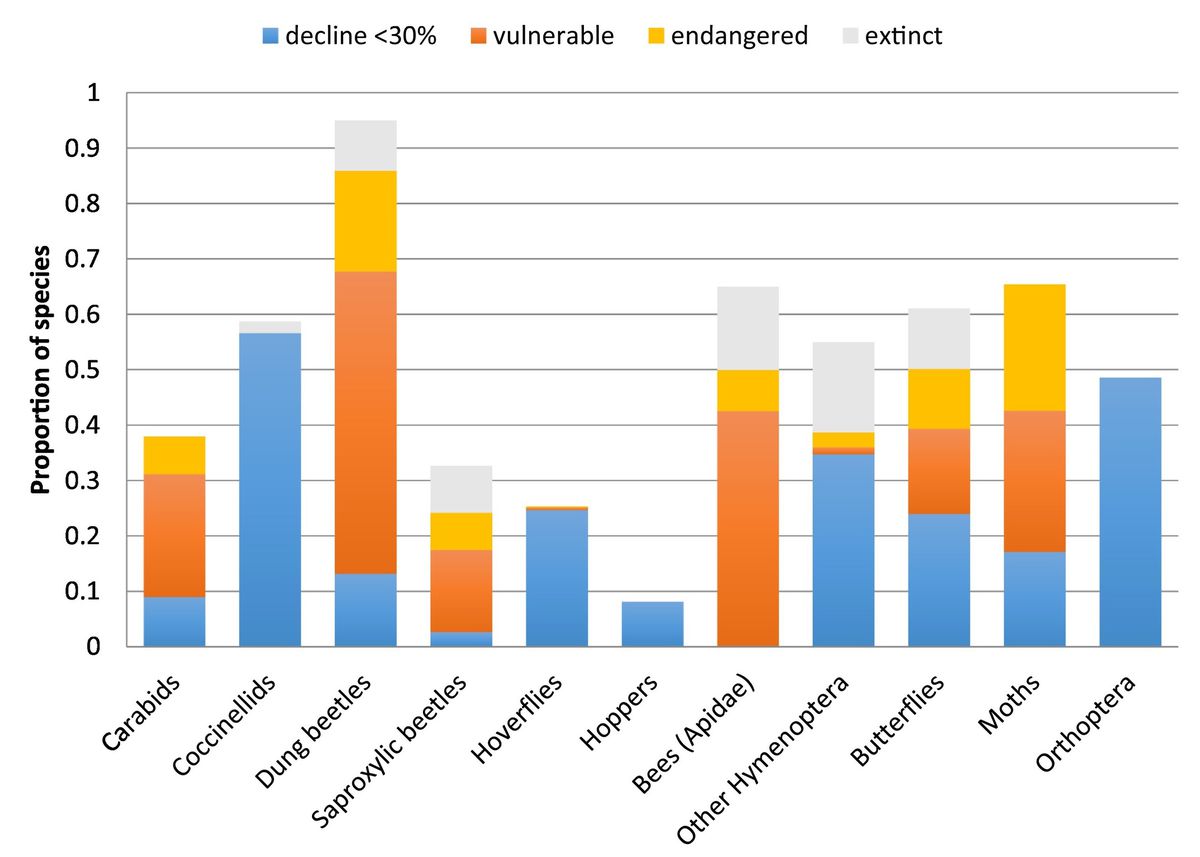
That’s one reason why insects are so important, and why we should be concerned that they’re in decline. One recent review found that over 40 percent of insects are threatened with extinction. Meanwhile, beekeepers in the US and Europe have been reporting high rates of colony collapse for years.
Scientists have long known that pesticides are part of the problem. These chemicals are literally designed to kill insects and we spray a billion pounds of them across the US each year. Now researchers are learning that they may be having an even larger impact on the natural worldthan previously known.
When different pesticides mix together, as they often do on farms, they can amplify the effect of one another, according to a new study published in the journal Nature. In deadly combination, they can be even more damaging to bees. Previous research has found that these “synergies” can harm fish and other creatures, too.
What’s most troubling is that regulators in the US and elsewhere don’t take the dangers of these interactions fully into account — even though they’ve long been aware of them. The Environmental Protection Agency, which oversees pesticides in the US, effectively ignored a recommendation to determine which chemicals farmers most commonly mix together, and what risk those combinations pose to bees. Europe is making more progress, but its regulations still fall short, experts say.
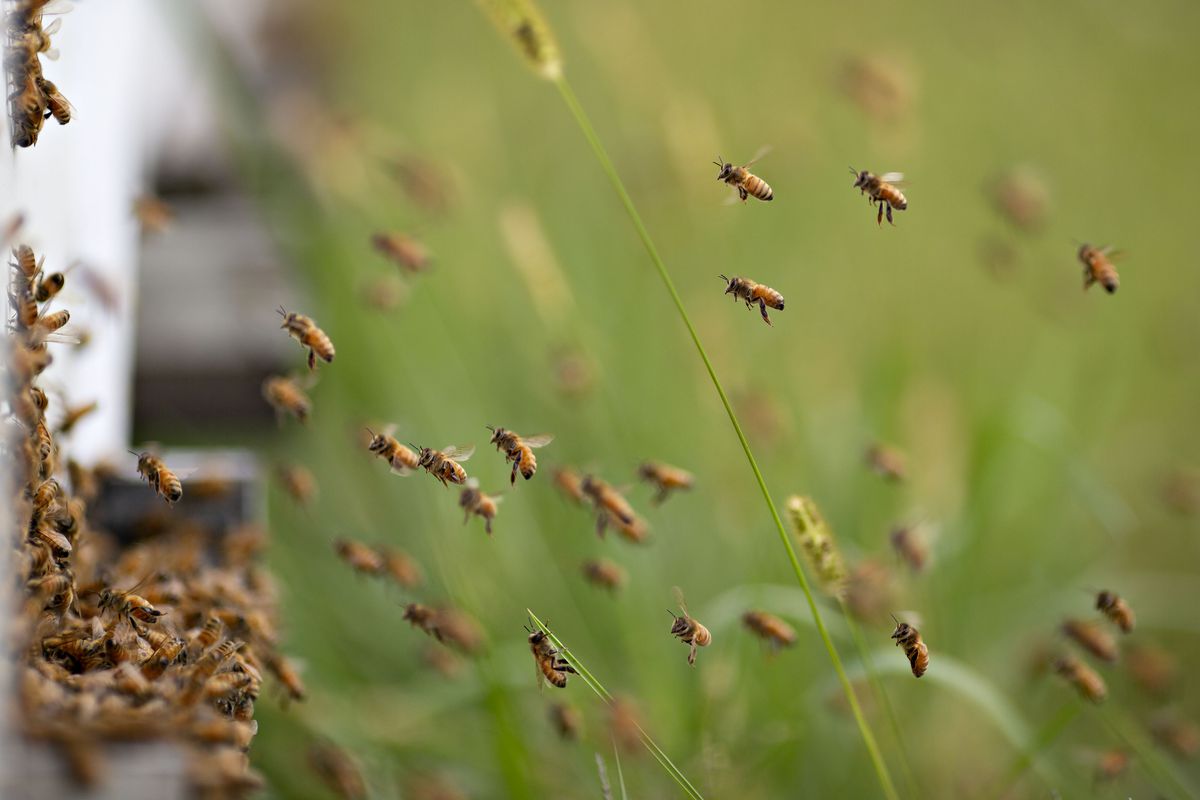
Buckfast honey bees flying near a beehive in Marengo, Illinois, in 2018.Daniel Acker/Bloomberg/Getty Images
“We know that these pesticides interact, we know that they’re used together, and we know that bees are exposed to them in combination,” said Harry Siviter, an entomologist at the University of Texas at Austin and the study’s lead author. Yet those interactions “aren’t really looked at,” he said.
The pollination benefits of bees and other insectsare worth an estimated $180 billion a year, not to mention the many other benefits they provide, from controlling pests to feeding other organisms. To protect them, a number of scientists are calling for a sea change in the regulation of agrochemicals.
“Death by a thousand cuts”
In late 2006, a large number of US beekeepers began noticing something alarming: Worker bees were mysteriously disappearing from hives in huge numbers, causing their colonies to collapse. That winter, beekeepers lost as much as 90 percent of their hives due to what became known as colony collapse disorder.
Today, a smaller percentage of hives suffer from colony collapse, but keepers are still losing about a third of their hives each year and find it increasingly difficult to keep them alive, according to Aimée Code, who leads the pesticide program at Xerces Society, a nonprofit focused on invertebrate conservation. That’s to say nothing of native wild bees — bumblebees, miner bees, and the like — which have suffered steep population declines.
The proportion of insect species in decline or locally extinct. “Vulnerable” indicates a decline of more than 30 percent and “endangered” means a decline of more than 50 percent. “Extinct” means that the species has not been recorded for at least 50 years. Francisco Sánchez-Bayoa and Kris Wyckhuys/Biological Conservation
Ultimately, scientists determined there was no one culprit behind colony collapse disorder. Instead, it was likely fueled by a combination of several factors, including disease, habitat loss, and various pesticides. The same can be said for the decline of insects more broadly — it’s “death by a thousand cuts,” as one scientific paper put it. Which is to say that the plight of insects isn’t about one stressor, but about how they fit together.
Pesticides are more harmfulthan the sum of their parts
So howexactly do things like pesticides and parasites interact to harm bees?
Siviter and his co-authors answered that question through a meta-analysis, which is essentially a study of studies. First, they combed scientific literature about how multiple stressors affect bees, ultimately turning up 90 papers that had relevant data. They then pooled the results in a large analysis in their own paper that shows which combinations are most deadly.
The analysis revealed especially bad news about pesticides. When present together, multiple chemicals can amplify the effect of one another, the analysis found, making them more deadly than you’d expect if you just added up the sum of their individual effects. (Pesticides, which includeinsecticides, fungicides, and herbicides, work in a variety of different ways; many insecticides target insects’ immune systems.)
You can think about it like this: If on its own, one chemical kills 10 percent of a bee population, and the other kills 20 percent, a synergy of pesticides is one that kills more than 30 percent, Siviter said. The researchers found that combinations of other stressors, like parasites and a lack of nutritious food, were more likely to have a simpler “additive effect” — meaning, equal to the sum of each individual effect.
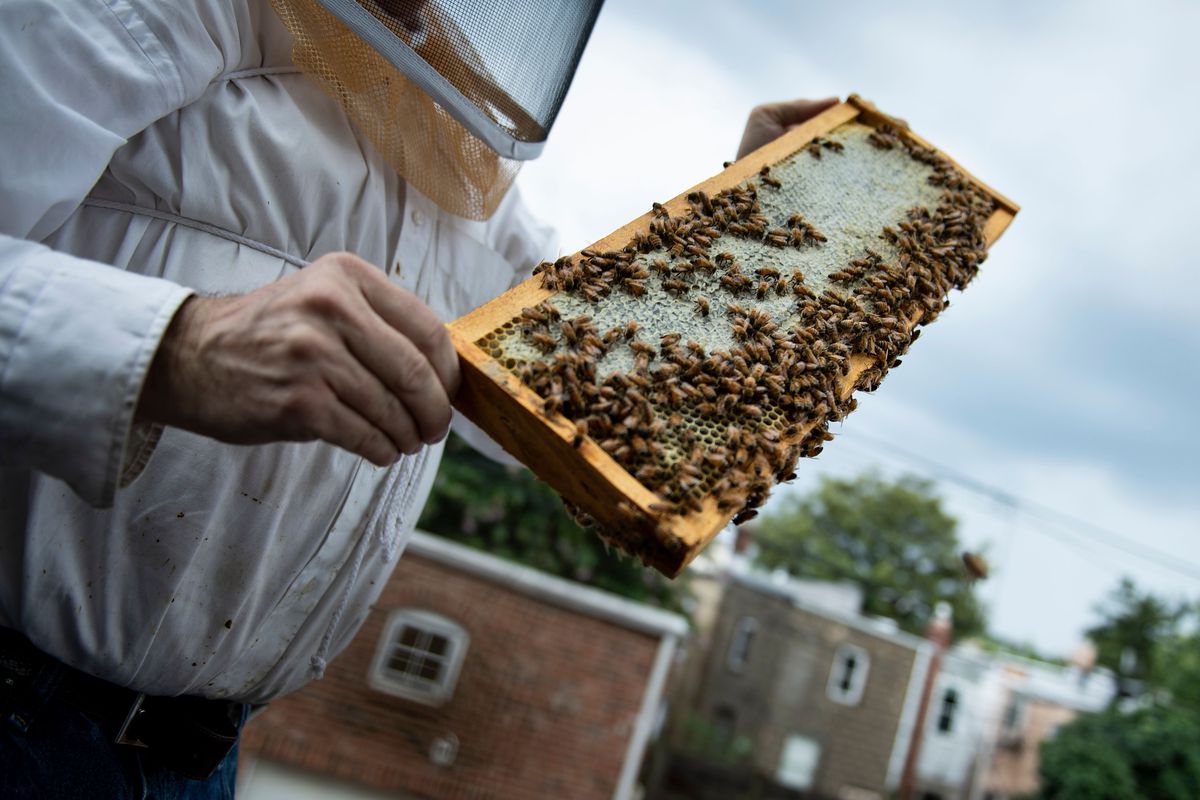
Beekeeper Del Voss looks at a beehive from his apiary above his garage in Washington, DC.Brendan Smialowski/AFP/Getty Images
One example of how these synergies can play out comes from a 2019 study on the relatively new insecticide flupyradifurone, which is sold as Sivanto by the pharmaceutical giant Bayer. Bayer says the compound can help “safeguard beneficial insects,” but the researchers found that its lethal toxicity quadruples when it’sused in combination with the common fungicide propiconazole — which can “impair bee survival,” the paper says.
Propiconazole and other similar fungicides, it turns out, inhibit bees’ natural ability to detoxify, experts say — in roughly the way that a drug that disrupts your liver might make you more likely to get alcohol poisoning. That means they have a harder time flushing agrochemicals from their system.
The label for Sivanto warns farmers against mixing the chemical with fungicides in the same family as propiconazole while crops are in bloom. Yet the study points out that bees can encounter both kinds of chemicals even if farmers don’t mix them together.
In a statement to Vox, Bayer said “pollinator health has been a focus for Bayer for decades,” and that it’s aware of the kind of synergies between fungicides and insecticides that the study reported. The company said it has implemented “restrictions” for using Sivanto with fungicides like propiconazole. Bayer added that regulators review studies of chemicals “under practical field conditions, which look at entire honeybee and bumblebee colonies,” and questioned whether the results from the 2019 study, which were based on lab work, would apply in the real world.
Simone Tosi, an assistant professor of entomology at the University of Turin in Italy and the lead author of the study, said that lab studies offer more control over various environmental variables, compared to field studies, “and can thus capture pesticide effects that would be missed in the field.”
Monarch butterflies are among the organisms that could be harmed by pesticide mixtures.Getty Images
Bees aren’t the only animals harmed by these kinds of synergistic interactions. They’re almost certain to impact other invertebrates like beetles, butterflies, and wasps, experts say. Scientists have also known for over a decade that they can harm fish. In a 2009 study by the National Oceanic and Atmospheric Administration (NOAA), researchers looked at how various combinations of five common pesticides in the Pacific Northwest harm coho salmon, a threatened species. Many of the agrochemicals defied the researchers’ expectations by amplifying each other’s effects.
“This deadly synergy made those particular pesticide combinations more harmful than the sum of their parts,” NOAA wrote at the time.
Why these interactions are such a big problem
All of this matters so much because study after study finds that insects are exposed to more than one chemical at a time. “When we look for pesticides, whether it’s in our water or on our pollinator plants, we’re finding them in mixtures,” Code said.
A study from 2018, for example, found as many as seven pesticides per sample of pollen collected by honeybees in Italy, while other research has found residue from more than 20 chemicals in US hives. Scientists have also detected dozens of pesticides in plants that at-risk species, like the iconic monarch butterfly, rely on for their development.
This won’t surprise people familiar with farming or ecology. Farmers commonly mix multiple pesticides together in a tank before applying them to the field. Even if they don’t, chemicals can drift from one farm to another, or mix together in local streams or wetlands as runoff, Code said.
The root of the problem may be bureaucracy, not biology. Regulations in the US and Europe have been slow to consider the impacts of pesticide mixtures on pollinator health. To register a chemical, companies typically don’t have to test how it might interact with other compounds found on a farm or in the environment, experts say. “A farmer or even a backyard gardener can use dozens of chemicals in any given growing period and the potential impact of these numerous uses is not part of registration — even if we’re only talking about additive effects,” Code said. In fact, companies aren’t necessarily required to test the full mix of compounds that make it into their commercial products, Siviter said.
Code pointed out that when doctors prescribe medicines, they’re carefully attuned to the ways that different drugs could interact. “We would not accept a doctor who didn’t understand the impacts of mixing those medicines,” she said. “We shouldn’t accept it for our pesticides either.”
In a statement to Vox, an EPA spokesperson said the agency “recognizes that synergistic effects of pesticides to wildlife is an evolving issue that will benefit from further studies and evaluation.” For all new active ingredients, “EPA reviews a search of patent claims to determine whether there are any claims and supporting evidence of these greater than additive effects.”
When a company files a patent for a pesticide, it may include claims about how chemicals in the product interact to enhance one another — in other words, synergies.This information actually helps the company’s case for patent protection. “There are a large number of US patents with assertions of interactions,” according to a publicly available EPA memo. That means that in at least some cases EPA will be able to evaluate synergistic effects before approving a chemical — assuming it’s included in existing, patented pesticides.
Companies, however, aren’t required to report those harmful interactions when they patent a product, so experts suspect thatregulators overlook many of them.And even when evidence of harmful interactions is available, there’s no mandate that the EPA reviews it, Siviter added.
In a follow-up statement to Vox, an EPA spokesperson said the agency doesn’t have information “on the extent to which such interactions may be underreported” in US patents.
A farmer in Malden, Illinois, replaces an insecticide container while planting corn seed, in 2017.Daniel Acker/Bloomberg/Getty Images
The European Union, meanwhile, has stricter pesticide regulations. “EU legislation on pesticides is one of the strictest of the world,” said a spokesperson for the European Commission, who pointed to EU legislation that requires risk assessments to consider known synergies. Companies also need to do risk assessments for their commercial products (and not just on individual active ingredients), the spokesperson said.
Then again, harmful interactions — some of which may be unknown — are still largely unaccounted for, said Tosi, who led the 2019 study on Sivanto and the 2018 paper that detected pesticide residue in pollen. “Often synergies are not tested because of lack of data or methods,” said Tosi, who’s studied bees for many years.
The pharmaceutical industry could be a model for pesticides
This is not an easy problem to solve, but experts highlighted a few things that could help.
At a minimum, regulators should require companies to test the mixture of ingredients in their products that end up on shelves, Siviter said. Even inactive ingredients — such as adjuvants, which are designed to make pesticides more effective — can impact the toxicity of chemicals, Tosi added. (In its follow-up statement, EPA said that for some risk assessments it does test the mixture of chemicals in “end-use” products, which includes both active and inert ingredients.)
Beyond that, regulators could pinpoint the most common pesticide combinations that insects are exposed to, for example, by asking farmers what they’re mixing in their chemicaltanks. “We should have a clear idea of the most common combination in the field, and those that can cause the greatest synergistic effect,” Tosi said.
The most important thing regulators could do, Siviter told Vox, is toadd another phase to the approval process, making it more like the way the Food and Drug Administration regulates prescription drugs. Once pesticides are licensed, “that’s it — they’re out there,” Siviter said — whereas pharmaceuticals go through a long-term safety monitoring process, called pharmacovigilance, once they’ve been licensed. That helps determine how they act in the real world, and on a large scale.
“Important insights into how pesticides can be better regulated come from the regulation and monitoring of pharmaceuticals,” authors of a 2017 perspective in the journal Science wrote. “An essential step for pesticide regulation in the future is to develop an equivalent to pharmacovigilance — perhaps called pesticidovigilance.”
The US has been slow to change
The EPAhas not acted on some of these recommendations, though it has known about them for years. In 2016, the US Government Accountability Office (GAO) recommended that the EPA should identify pesticide mixtures that farmers commonly use on their crops, to “determine whether they pose greater risks than the sum of the risks posed by the individual pesticides.” The EPA agreed with that recommendation, according to the report — but four years later, the agency had yet to make any relevant changes, a GAO official told Vox.
The importance of testing chemical mixtures was also raised by NOAA many years prior. “Regulators may need to further consider multi-chemical effects when setting exposure standards,” wrote the authors of the 2009 study on salmon. When asked if anything had changed in the time since, a NOAA spokesperson said, “Tests to evaluate potential ecological responses from exposure to pesticide mixtures are not a requirement for pesticide registration with EPA.”
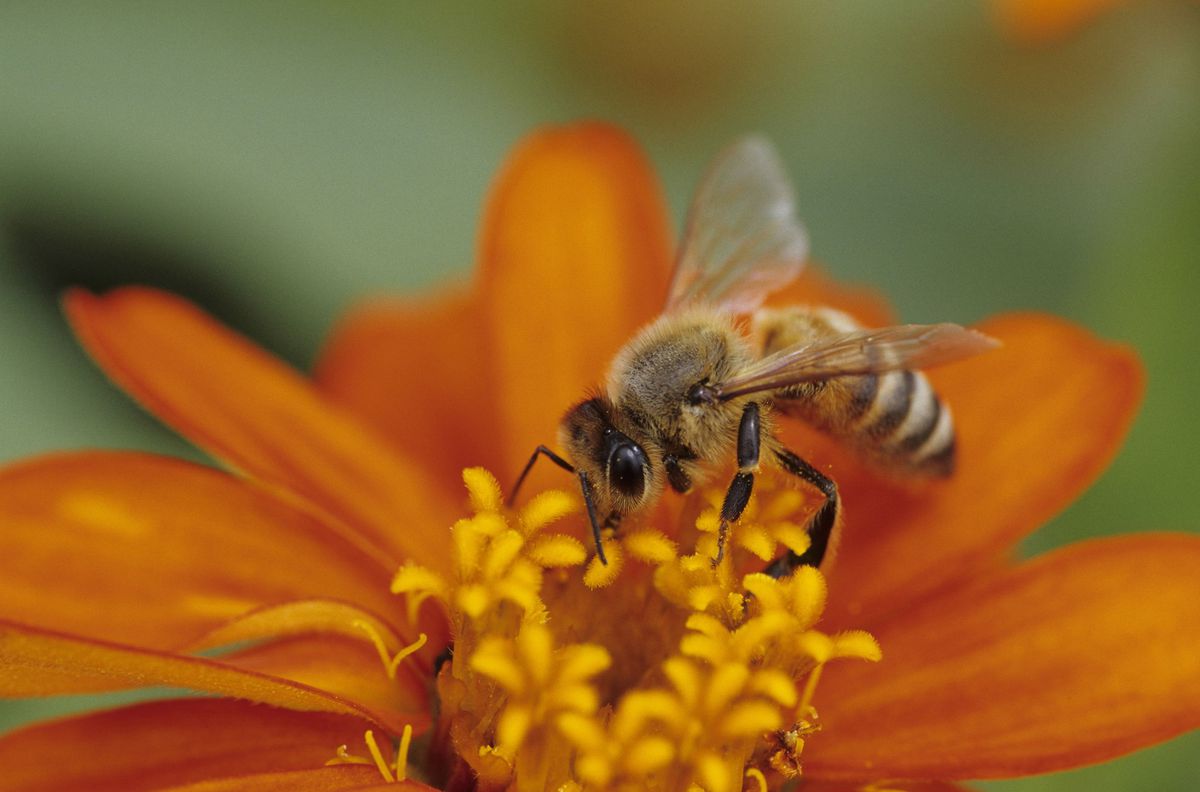
A European honeybee, the world’s most common honeybee (and the species found in most US commercial hives).Getty Images
European agencies have been making more progress. Earlier this year, the European Food Safety Authority, which advises the European Commission, proposed a new way to monitor the impacts of interacting stressors on bee health that sounds a lot like “pesticidovigilance.” It would use high-tech sensors to gather data inside and outside hives over time, which would then feed into computer simulations of honeybee colonies. “It would provide additional feedback to risk assessors that may use its results in their work,” said Tosi, who helped develop the framework. (The spokesperson for the European Commission also pointed to an action plan, published in February, for considering the risks posed by pesticide mixtures to human and environmental health.)
This kind of monitoring is essential, experts say. Ultimately, results from individual toxicity tests, whether from the lab or the field, don’t reveal much about what actually happens on farms, or in the complex ecosystems around them. Plus, companies on their own will never be able to test interactions between all the different chemicals used in agriculture.
“We need to have a feedback loop,” Code said, “where what’s actually being used on the landscape is what we’re evaluating.”
Millions turn to Vox to understand what’s happening in the news. Our mission has never been more vital than it is in this moment: to empower through understanding. Financial contributions from our readers are a critical part of supporting our resource-intensive work and help us keep our journalism free for all. Please consider making a contribution to Vox today from as little as $3.
Netflix will air the definitive story of seven-time Formula 1 World Champion Michael Schumacher in a brand new documentary ‘SCHUMACHER’ – out September 15.
This long-awaited film tells the story of the German F1 legend’s career, from karting in Kerpen to taking his record seventh championship in 2004 – with interviews from his wife Corinna, their two children Gina and Mick, and former F1 rivals and peers.
Schumacher promises unseen archive material showing the “many facets of his multi-layered personality”. His brother Ralf, former Ferrari boss Luca di Montezemolo, FIA chief Jean Todt, former F1 boss Bernie Ecclestone are featured along with F1 drivers Mika Hakkinen, Sebastian Vettel, and David Coulthard.
Schumacher’s long-time press officer and manager Sabine Kehm said: “Michael Schumacher has redefined the professional image of a racing driver and has set new standards. In his quest for perfection, he spared neither himself nor his team, driving them to the greatest successes. He is admired all over the world for his leadership qualities.
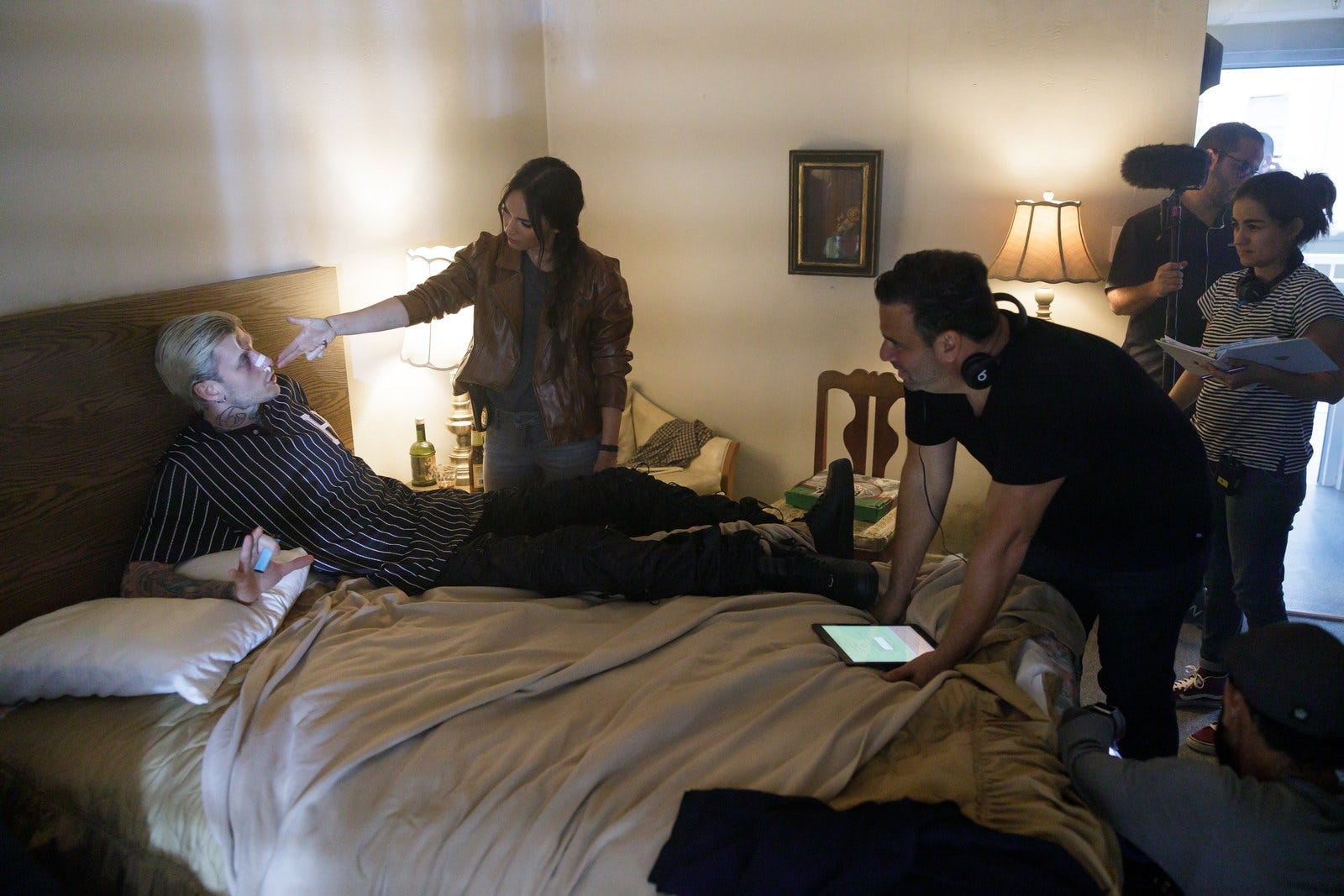
Megan Fox plays an undercover fed investigating, and beating up, a criminally sleazy motel owner played by Colson Baker (aka Machine Gun Kelly).
Somehow this was the love formula for the “Transformers” actress, 35, and the rapper, 31, who made a lasting connection on the set of “Midnight in the Switchgrass” in March 2020.
Hollywood’s current reigning red carpet PDA-forward couple is going strong more than one year later. But now fans can look at the movie that started it all, even if Fox says it was destiny that lit the fireworks rather than movie drama.
“It was just two people who were primed and supposed to be together,” Fox says. “We were meant to meet each other.”
Here’s what to know about the couple’s roles in director Randall Emmett’s “Midnight in the Switchgrass” (in theaters, digital and Blu-ray now), which critics have mowed down with a 16% positive review rating on Rotten Tomatoes.
Megan Fox: Reveals she quit alcohol after getting ‘belligerent’ on Golden Globes red carpet
Machine Gun Kelly threw shade at ‘Midnight in the Switchgrass’
As “Midnight” was released Friday, Baker explained his silence on the drama in which he appears in two lengthy scenes with Fox.
Emile Hirsch, who stars in “Midnight,” disagreed with Baker’s tweet, posting the disparaging tweet on his own Instagram account on July 24.
“We definitely disagree here, Colson!” Hirsch wrote in the caption. “Nothing but respect to you guys, though. Especially because you and Megan are so (expletive) great in this movie.”
Megan Fox on ‘quiet moments between the scenes’ with MGK
Fox’s undercover FBI agent Rebecca Lombardo accidentally tussles with criminally sleazy alleged sex trafficker Calvin (Baker) in one of his neon-lit motel rooms. He’s not the target of the sting. Lombardo’s FBI partner (Bruce Willis) keeps yelling in her earpiece, “He is not the target!”
But Calvin pulls a knife on Lombardo, who starts throwing the (6-foot-4) malefactor around, an improbable feat.
“He’s a lot bigger than me,” says Fox, who is 5 feet, 6 inches. “He’s like seven feet tall and I’m tiny, so this is not something that’s going to happen in real life. But it went OK. We didn’t know each other yet, so it was just like two actors doing a fight scene, but with a little added sparkle.”
Adding to that screen bling: Baker’s leopard-print leather pants. It’s not just for Florida motel-owning criminals. “That’s something he would wear to breakfast,” Fox says.
‘Ridiculous’: Megan Fox calls out criticisms of her age difference with Machine Gun Kelly
The two enjoyed some pre-production work on the Puerto Rican set before just two days of filming to get to know each other.
“It was more of the quiet moments between the scenes where all the magic was happening,” Fox says.
“But the first day I felt crazy. That energy was really overwhelming and super chaotic. I was having all these feelings and I wasn’t sure what they were, I just knew something intense was happening.”
The couple bonded after an intense fight scene
Lombardo finds Calvin again to shake him down for leads on a truck stop serial killer in the couple’s second scene. Lombardo gets Calvin to talk by placing her gun menacingly in Calvin’s face and even in his mouth.
Baker didn’t mind.
“He has a crazy high pain tolerance and he is obviously pretty reckless, so he’s good to go full-throttle with anything,” Fox says. “There weren’t any concerns.”
At the end of Day 2, Fox says the two got to know each other better chatting in her trailer, “when I brought him to actually talk to him, to get to know him more.”
After the scene, the film crew shut down due to the COVID-19 pandemic. Yet Fox and Baker blossomed during the pandemic before their red carpet debut at the November American Music Awards.
Megan Fox shuts down Lala Kent rumor
Fox is remarkably not curious about seeing her “Midnight” screen chemistry with Baker.
“That’s just something we were living in, so much has happened since,” Fox says. “The question of, ‘Did we have chemistry onscreen?’ isn’t necessary, because chemistry has gotten us this far.”
Neither Fox, nor Baker, nor Willis, attended the “Midnight” premiere in Los Angeles this week. Film representatives sent word for Fox that the missed premiere was due to COVID-19 concerns.
Following the premiere, some media outlets speculated on alleged shade thrown by model Lala Kent, Emmett’s fiancee, over Fox’s absence. Kent posted a (now-deleted) photo on her Instagram Story perfectly blocking Fox in the movie poster and wrote “So excited for this!” where Fox’s name would have appeared.
Fox didn’t catch the alleged shade (“I don’t see anything ’cause I’m not online”) but doesn’t buy the media hype.
“I really like Lala, so I can’t imagine she would be trying to do anything negative like that,” Fox says. “She’s a lovely person.”
Kent denied shading Fox in a statement to USA TODAY.
“My mother took the picture of a special moment in my fiancé’s life,” Kent said. “In no way was it meant to shade anyone. I like Megan; she has been nothing but kind to me. I’m grateful she supported Randall in his directorial debut. I’m very proud of them both.”
“I’m not very subtle when I shade people,” Kent said. “If I was upset, I would have just straight up said it. Unfortunately the headline is way more interesting than what I’m about to tell you.”
The “Vanderpump Rules” star said she accepted Fox’s COVID reasoning for missing the premiere.
“If anybody understands a COVID concern, it’s me,” Kent said. “If you have a concern, I want you to stay home. I want you to feel safe.”
‘It just is what it is’:Megan Fox has relatable working-mom moment as kids crash interview
(from left) Director Nia DaCosta and Yahya Abdul-Mateen II on the set of Candyman.
Alamo Drafthouse Cinema is proud to announce that Candyman director Nia DaCosta will participate in their “Guest Selects” series.
“Guest Selects” is the Alamo’s new and ongoing retrospective. The series invites filmmakers to draw on their diverse backgrounds and eclectic tastes. Basically, they get to program films that they think are essential big-screen experiences.
This September, Alamo Drafthouse audiences can experience School of Rock on the big screen. It was selected by filmmaker Nia DaCosta, the director and co-writer of the highly anticipated horror film Candyman.
In her “Guest Selects” video, set to run in Alamo Drafthouse theaters across the country, DaCosta discusses five films she loves that center around the creation of art.
The films are Black Swan, Phantom Thread, Portrait of a Lady on Fire, School of Rock, and Shadow of the Vampire—mirroring a central theme of Candyman.
“Thank you Alamo Drafthouse for the opportunity to participate in the ‘Guest Selects’ program. I’m excited for everyone to experience Candyman on the big screen, as well as these films I love about making art,” said DaCosta.
Watch the video here:
Candyman is DaCosta’s second directorial effort following her critically acclaimed debut film Little Woods. She is next set to helm Marvel Studios’ The Marvels with Brie Larson and Samuel L. Jackson starring.
Tickets are on sale now for Candyman and School of Rock at drafthouse.com.
Recent “Guest Selects” participants have included David Lowery with upcoming screenings of Bram Stoker’s Dracula. Sparks Ron and Russel Mael shared their love of Ishtar with sold-out audiences at Alamo Drafthouse. Lastly, M. Night Shyamalan programmed Raiders of the Lost Arc and Jaws, two of his “North Star” films that guide him as a filmmaker.
Will you be checking out the new Candyman later this month? Let me know on Twitter via @joshkorngut. I’m always down to talk about all things horror! Dread Central is now on Google News.