logo
Already a member? Login here

Movie Blog´s archives ↓

James Franco leverages the art and marketing power of the selfie

©Instagram / James FrancoBy Tony Maglio
TheWrap

James Franco has learned to harness the power of the selfie, and so can you!

The multihyphenate published an editorial in Thursday’s New York Times Arts section, where he almost academically breaks down the value — and proper usage — of the self-pointed snap-and-upload phenomenon. His analysis on the seemingly silly topic is far more enlightening than one might assume. It is also revealing, which Franco argues is the entire point of the selfie.

“In a visual culture, the selfie quickly and easily shows, not tells, how you’re feeling, where you are, what you’re doing,” Franco concluded in the piece.

“The likes spin out of control for selfies of me and my two handsome brothers, especially Dave, the other actor,” Franco began his explanation, while admitting his growing addiction to Instagram.

But his reasoning is not self-absorbed, just self-aware. The scholar in Franco has studied the trends from his own page. He continued in the piece, “I can see which posts don’t get attention or make me lose followers: those with photos of art projects; videos telling the haters to go away (in not so many words); and photos with poems.”

“But a well-stocked collection of selfies seems to get attention,” Franco added. “And attention seems to be the name of the game when it comes to social networking.”

So the once-called “king of selfies” has a plan: “For every photo of a book, painting or poem, I try to post a selfie with a puppy, a topless selfie or a selfie with Seth Rogen, because these are all things that are generally liked.”

JamesFrancoTV, the actor-writer-director’s official Instagram page has more than one million followers. Franco had 1,659 posts at the time of this writing — many of them are selfies.

Taylor Swift, One Direction Top List of 20 Most Charitable Celebrities
Seth Rogen, Rose Byrne and a Baby Face Off Against 50 Frat Bros in New ‘Neighbors’ Trailer (Video)
James Franco to Star in Indie Drama ‘The Fixer’ (Exclusive)

‘Hobbit: Desolation of Smaug’ hits $500M at worldwide box office

©Warner Bros.By Todd Cunningham
TheWrap

It came a day late, but “The Hobbit: The Desolation of Smaug” has given Warner Bros. a box-office Christmas present, blasting past the $500 million mark at the worldwide box office Thursday.

It’s a gift that will keep on giving and “Smaug,” from New Line and MGM, has a good shot at hitting the $1 billion mark at the global box office, as “The Hobbit: An Unexpected Journey” did last year.

The second film in Peter Jackson’s trilogy, which is a prequel to his “Lord of the Rings” series, was heading for its third straight U.S. box office weekend win, after finishing No. 1 Thursday with $10.5 million. That upped its domestic total to $160 million, and it has brought in more than $340 million from overseas since opening on Dec. 13.

“Smaug” is following the path of the first “Hobbit” film, which took in $714 million — roughly 70 percent of its total — from abroad, with $303 million coming from North America.

The biggest of the 57 foreign markets in which “Smaug” has played are Germany ($19 million) the U.K. ($15 million) and France ($13 million). It will open in Japan and China in February.

Hollywood poised for best-ever box-office year

quot;Iron Man 3quot;

LOS ANGELES (AP) — Despite a string of summertime flops, Hollywood is expected to have a banner year at the domestic box office, coming in just shy of $11 billion, the largest annual take ever. But because of higher ticket prices, actual attendance at North American theaters remained flat after a decade of decline.

With the current domestic box-office tally nearly 1 percent ahead of last year at this time, 2013 could surpass 2012’s overall haul of $10.8 billion by more than $100 million, according to box-office tracker Rentrak.

High-profile flops such as “The Lone Ranger,” ”After Earth,” ”R.I.P.D.” and “Turbo” were offset by mega-hits like “Fast Furious 6” and “Iron Man 3,” which consistently filled theaters last summer.

More recently, Warner Bros.’ space epic “Gravity” has earned $254 million domestically, Lionsgate’s sci-fi sequel “The Hunger Games: Catching Fire” has grossed $378 million and fantasy prequel “The Hobbit: The Desolation of Smaug” has brought in $150 million for Warner Bros.

A strong holiday slate is also boosting the year’s box-office total. “There has virtually been every kind of genre of film available,” said Rentrak box-office analyst Paul Dergarabedian. “You have Blockbusters like ‘Hobbit’ and esoteric, challenging films like ‘Nebraska,’ ‘Dallas Buyers Club’ and ‘Mandela: Long Walk to Freedom.’ All of these films get people to the movies.”

But the National Association of Theater Owners projects that the actual number of tickets sold domestically in 2013 will remain about the same as last year’s 1.36 billion. That’s down from the all-time high of 1.57 billion admissions in 2002.

In 2011, the domestic box-office gross sunk to a 16-year low, dropping 3.5 percent from 2010 to $10.2 billion. But 2012 saw the industry rebound with a $10.8 billion total, thanks to hits like Disney’s “The Avengers” and Warner Bros.’ Batman finale “The Dark Knight Rises.”

Both films screened in 3-D, a profit-boosting perk that saw a huge increase in popularity following 2009’s “Avatar.” But the public’s appetite for the heightened technology has eased, leaving Hollywood to search for other ways to counter audience drain.

Entertainment available on countless portable devices continues to threaten multiplex attendance, as do advanced home theater systems and video-on-demand services offering original premium programming and feature films the same day as their theatrical release.

But Hollywood is fighting back with the premium multiplex experience. Movie attendance may be tepid, but the audience is willing to pay more for theater extras, which keep the bottom line growing, even as admissions remain flat.

“Theaters are offering IMAX, bigger chairs, dine-in options and alcohol,” said Don Harris, head of distribution at paramount. “It’s kind of like the difference between staying at a Hilton or a Ritz Carlton. I think what you saw this year was a growth in a segment of the audience that isn’t as worried about the price of a movie ticket as they are interested in the out-of-home premium experience. I think you’re going to see that going forward.”

And with all of the bells and whistles now offered at theaters, movie-going is still one of the least expensive ways to be entertained, compared to concerts, sporting events and live theater,” notes Richie Fay, Lionsgate’s president of domestic distribution. (So far this year, the average cost of a movie ticket in North America has been $8.05, according to NATO.)

Social media has also helped boost sales, Fay observed, with Twitter and other services providing a powerful marketing tool for studios and a faster way for fans to spread that all-important word of mouth. “People don’t have to wait a day for a print story anymore. It’s an important part of the growth of the industry.”

Studios are hoping to continue that growth in 2014 with such anticipated releases as “Captain America: The Winter Soldier,” ”The Amazing Spider-Man 2,” ”X-Men: Days of Future Past” and “Transformers: Age of Extinction,” ”Dumb and Dumber To,” ”The Hunger Games: Mockingjay, Part 1″ and “The Hobbit: There and Back Again.”

“I think the fact that attendance is at least holding its own is impressive, given the number of other media options in the mix,” said Rentrak’s Dergarabedian. “Going out to the movie theater is clearly as attractive, relevant and viable as ever with audiences.”

Although year-end figures for the overseas box office are not yet available, foreign receipts are typically two to three times higher than domestic earnings. So fan-driven hits like “The Hangover Part III,” which grossed $112.2 million in North America, are expected to earn more than double their domestic takes overseas.

“With all of its ebbs and flows, ups and downs, the theatrical experience just continues to resonate,” said Rory Bruer, head of distribution at Sony.

Marty and Leo team up again for ‘Wolf of Wall Street’

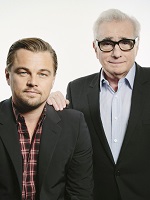
©AP / Leonardo DiCaprio and Martin Scorsese

NEW YORK (AP) — “Anything goes” was the guiding ethos for Martin Scorsese and Leonardo DiCaprio in making their extravagant dark comedy of Wall Street excess, “The Wolf of Wall Street.”

“We would look at each other and ask, ‘Are we going too far?'” says DiCaprio. Rarely was the answer “yes.”

The two longtime collaborators pushed the based-on-a-true-story tale to the limits of outrageousness, decency and MPAA approval. With pinstripe suits instead of togas, it’s their “Satyricon,” their “Caligula”: a nearly three-hour-long orgy of money, sex and drugs.

The partnership between the 71-year-old Scorsese and DiCaprio, 39, has now stretched over five films and more than a dozen years. They’ve together been able to carve out a space for the kind of daring Hollywood typically shuns. “Anything goes” is far from the mantra of today’s movie business.

“I don’t think people really quite understand how unique this movie is,” says DiCaprio, while Scorsese, sitting next to him, nods. “No matter what they think of the movie, you do not see films like this happening.”

Scorsese and DiCaprio recently sat down for a joint interview to discuss their latest film, which opens on Christmas Day. On the surface, they exude the dynamic of master and pupil. But they’re on more equal footing, bonded by a desire to make movies like those from the ’70s that DiCaprio grew up admiring and Scorsese actually made. In the last 13 years, Scorsese has made only one fictional film (“Hugo”) that didn’t star DiCaprio.

“Over the years, it’s been about learning more, fine-tuning the instruments together, so to speak, and discovering more from each other in the process,” says Scorsese. They co-produced “The Wolf of Wall Street,” which Warner Bros. turned down in 2008 before it was reborn with paramount Pictures.

Ironically, Scorsese was tipped off to DiCaprio’s talent from the actor he’s most associated with: Robert De Niro. After De Niro made 1993’s “This Boy’s Life,” he recommended an 18-year-old DiCaprio to Scorsese. That would spark a pairing that has grown to rival De Niro’s own with Scorsese (eight films).

DiCaprio was in his mid-20s when he sought out a part in Scorsese’s bloody New York tale, “Gangs of New York.” The Howard Hughes biopic, “The Aviator,” followed, a movie that DiCaprio (who landed his first lead actor Oscar nomination) suggested to Scorsese. Then came the Boston crime flick “The Departed” (earning Scorsese his first directing Academy Award) and the ’50s noir “Shutter Island.”

“It hasn’t been calculated at all,” says DiCaprio. “I brought projects to him. Projects have come to us. And we just kind of both said, ‘Yes, that’s the type of movie we want to do.’ It’s been this really natural progression. We’ve taken more and more chances. And, certainly I’ve grown more as an actor having a trusted ally.”

“The Wolf of Wall Street,” written by Terence Winter (“Boardwalk Empire”), is adapted from Jordan Belfort’s memoir about his heady rise from a Long Island penny stock trader to a wealthy stock swindler presiding over the brokerage firm Stratton Oakmont.

Schooled by an early boss (Matthew McConaughey) on the “fairy dust” that is high finance, Belfort recklessly plunders his clients’ pockets to make himself rich and to finance a parade of prostitutes, cocaine and Quaaludes. DiCaprio calls the movie “a biography of a scumbag.”

“It has to be seen. It has to be experienced,” says Scorsese. “If it raises the ire of some people, that might be a good thing because it makes you think about it.”

Though DiCaprio has spent much of his post-“Titanic” career taking on iconic, somewhat stiff roles like J. Edgar Hoover, Jay Gatsby and Howard Hughes, his performance as Belfort is wildly uninhibited more like he was in Woody Allen’s “Celebrity.” In scenes in front of hundreds of cheering extras playing sycophant employees, DiCaprio identified with Belfort’s swelling ego. He felt, he says, “like a rock star.”

“Jordan’s character had been brewing in me for a while,” says DiCaprio. “I had been thinking about this for six years, so I knew something was going to come out. Some beast was going to come out. I just didn’t know what it was going to be.”

“He was enjoying himself with the character,” says Scorsese. “I didn’t want to stand back and say, ‘This is bad behavior.’ It’s not for us to say, it’s for us to present. And obviously it’s bad behavior.”

The arc of the movie will recall for many Scorsese’s “Goodfellas.” It could be that Scorsese identifies with the voracious appetites of Belfort and Henry Hill because he shares it, only his taste is for movies. He paraphrases Frank Capra: “Film is a disease and the only antidote is more film.”

Though Scorsese remains an unusually prolific filmmaker, he signals an acceptance that his time is waning: “Who knows? You may have a couple of minutes left. You may have 20 years left.

“I want to do so much, and when you get to this vantage point, there’s not much time left.”

Scorsese compares new films to a diet of Big Macs being served to young people like his teenage daughter. “It’s not cinema anymore,” he says. “It’s a Blockbuster.”

“What’s their idea of what cinema is? A film that opens on a weekend and the money it makes on a Friday night,” he says. “The only way that can really be changed is if the audience changes. But how can you change the audience now because they’ve been raised on it? A young person won’t take it as seriously, maybe.”

For now, he and DiCaprio (their career together will be honored by the National Board of Review) hope to work together again, continuing to evade industry pressures as a duo. Says the Los Angeles-native DiCaprio: “I’ve been given an opportunity to finance movies based on my name and what am I going to do with that? … It’s an opportunity that I’d feel like an idiot to squander.”

Unlike the business of Wall Street, the results aren’t “fairy dust.”

“Good, bad or indifferent, we’re trying to make something so we can sit here and talk about it,” says Scorsese. “If you’re taking money from here and here and nothing comes out, what is it for? What are you creating?”

‘American Hustle’ a portrait of swank ’70s fashion

©Sony Pictures / 'American Hustle'

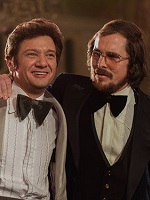
LOS ANGELES (AP) — From Christian Bale’s burgundy velour blazer to Amy Adams’ plunging sequin halter dress, “American Hustle” is a cinematic romp through the over-the-top styles of the 1970s.

Set in New York and New Jersey in 1978, the film tells the story of a pair of con artists (Bale and Adams) forced to work for a cocky FBI agent (Bradley Cooper) bent on bringing down powerbrokers and politicians. This decadent world of power, crime and big money comes to life through ostentatious fashions and outrageous hairdos. All the characters are reinventing themselves, and it shows in their clothes.

“They had ideas, they lived large and they took risks,” costume designer Michael Wilkinson said of the ’70s styles that inspired his designs. “Clothes were less structured, had less underpinnings it was like people didn’t give a damn.”

Though the Australian-born Wilkinson said his childhood was drenched in American pop culture, “I approached this as a research project, just like you would study about the Greek ruins or outer galaxy.”

He scoured Cosmopolitan magazine, along with advertisements, movies and TV shows of the era. “Goodfellas” and “Atlantic City” were particularly influential films.

“And ‘Saturday Night Fever’ from 1977,” Wilkinson added. “(That) had the most pertinence to Bradley Cooper’s character. He’s a guy from the Bronx, and he lived life as a black-and-white moral shooter working for the FBI, and wears a cheap polyester suit that doesn’t fit him so well.”

The character ups his fashion game after meeting the dapper con-couple.

“He ends up in a silk shirt and silk scarf, which are pop-culture references,” Wilkinson said. “And then he wears a leather jacket to the FBI.”

The designer relished in Halston’s vintage vault, to which he was granted access for the film, and he dressed Adams in authentic pieces from the ’70s.

“The lines (of clothing silhouettes) of the late ’70s, with designers like Halston, were reinventing the wardrobe of women,” he said. “It was about being comfortable in your skin and walking tall.”

Hair is so prominent in “American Hustle,” it’s practically another character. Lead hairstylist Kathrine Gordon studied old issues of Playboy and high-school yearbooks from the ’70s for inspiration.

She and Bale worked together to create his character’s elaborate comb-over, complete with fuzzy, glue-on hairpiece. The film opens with a scene of its careful construction.

“I came up with this idea to stuff it,” Gordon said of the comb-over she cut into Bale’s real hair. “And then (director) David (O’Russell) rewrote the script, and I taught Christian how to do it on camera.”

Adams wears styles reminiscent of disco parties, Studio 54 and “the Breck girl” ads of the era. Jeremy Renner, who plays a New Jersey politician, has a fluffy bouffant. Jennifer Lawrence, an unhappy wife in the film, wears bouncy, sex-kitten updos whether she’s going out or not. And Cooper rocks a tight perm: He’s shown wearing curling rods in one scene.

Wilkinson, whose film credits include “Man of Steel,” ”Tron: Legacy” and “The Twilight Saga: Breaking Dawn, Part II,” said he especially loved playing with fabrics, colors and prints for Bale’s charming con-man.

“I’m really proud of Christian Bale,” the designer said. “It shows the possibility of an expression of personality in menswear. He explores his character in his clothes and he’s a man of the world. He mixes prints!”

‘Wolf of Wall Street’ can’t kick ‘The Hobbit’ at Christmas Day box office

©<a href='http://www.movierental.com/link/paramount'>paramount</a> / 'The Wolf of Wall Street'By Todd Cunningham
TheWrap

The Wolf of Wall Street,” Martin Scorsese’s searing take on the sex-and-drug-fueled excess of the 1980s stock market boom, couldn’t top reigning champ “The Hobbit: The Desolation of Smaug” in its debut at the Christmas Day box office.

The black comedy starring Leonard DiCaprio came close, taking in $9.1 million Wednesday, just behind the $9.5 million of Peter Jackson’s Tolkien tale. But paramount’s R-rated “Wolf’ received just a “C” CinemaScore from first-night audiences, so it could have a tough time making up ground on “Smaug” over the holiday weekend.

If “Hobbit” hangs on, it will be the third straight weekend win for the Warner Bros. Blockbuster, which has taken in $150 million domestically — and $425 million worldwide for Warner Bros.

The Will Ferrell comedy “Anchorman 2: The Legend Continues” brought in $8.1 million for paramount and was third, just ahead of another of the six wide openers, Fox’s surprisingly strong “The Secret Life of Walter Mitty.”

The comedy directed by and starring Ben Stiller brought in a better-than-expected $7.8 million for Fox and audiences gave it a “B+” CinemaScore. It beat out holdover “American Hustle,” David O. Russell’s quirky tale of Abscam con men, which was fifth with an estimated $7.4 million for Sony.

Universal’s “47 Ronin,” the samurai action epic starring Keanu Reeves, debuted with $7 million. That was ahead of very low expectations and it received a “B+” CinemaScore, too. But it’s clear already that it won’t come near offsetting its $170 million production budget.

The weakest of the wide openers was the Sylvester Stallone-Robert De Niro boxing comedy “Grudge Match,” which took in $4 million. It received a “B+” CinemaScore and a slow start for the mature-skewing comedy from Warner Bros. isn’t a major surprise.

It finished ninth, behind two Disney films. The 3D animated kids film “Frozen” was seventh with $6.3 million after Wednesday, but look for the Disney Animation hit to move up the ladder as families come out this weekend. “Saving Mr. Banks,” starring Tom Hanks and Emma Thompson in the story behind the making of “Mary Poppins,” was eighth with $5.1 million.

Justin Bieber’s concert documentary “Believe” didn’t get much of a boost from his Christmas Eve tweet announcing his retirement. It brought in a soft $1.2 million from 1,037 theaters in its debut for Open Road.


‘Saving Mr. Banks’ Director to Rewrite MGM’s ‘Magnificent Seven’; Tom Cruise No Longer Involved (Exclusive)
10 Biggest Christmas Day Box Office Openers (Photos)

Ricky Gervais named PETA’s Person of the Year

Ricky, you disappoint me.

PETA sucks.

Jimmy Stewart museum rebounds from adversity

INDIANA, Pa. (AP) — For a time it looked like the Jimmy Stewart Museum wasn’t going to make it.

It’s in the actor’s hometown of Indiana, Pennsylvania — an hour’s drive from Pittsburgh and off the radar of many fans who might want to attend. And the pool of fans is shrinking as those who grew up during the era of Stewart’s films die out.

The number of tour buses that made special trips to the museum began to decline in 2009 and 2010, said Timothy Harley, the museum’s director. “The situation became very dire. That caused some pretty considerable concern, he said.

But the outlook has improved, at least of the next few years he said, thanks to loyal fans who began sending donations as the word got out about the plight of the museum.

It turned out that many people still had warm feelings for the star of “It’s a Wonderful Life,” the 1947 Christmas classic that featured Stewart considering suicide, but being talked out of it by a guardian angel named Clarence.

The donations ranged from small to substantial, Harley said. One was in an envelope containing a single dollar bill and a return address of “Clarence.” And last year, Ken and Carol Schultz, a San Diego couple originally from western Pennsylvania, began making yearly $25,000 donations, which matches what the Stewart family gives.

Harley said the donations have stabilized funding problems for the small museum with a limited staff and budget. But they’re not a long-term fix, he said.

The museum isn’t fancy, which is partly why Stewart gave his blessing to the project before he died in 1997. It’s full of displays not just about movies, but about Stewart’s service as a bomber pilot in World War II, his well-to-do ancestors, and his family life.

Stewart flew more than 20 combat missions over Europe even though he was initially too thin to qualify for the military. Harley said Stewart’s no-nonsense military service resonates with many young people who have served in Iraq or Afghanistan.

Stewart was awarded the Distinguished Flying Cross, The Air Medal, and the French Croix de Guerre, and by the time the war was over, he had risen from private to the rank of Colonel.

Pauline Simms, president of the museum’s board of directors, said the displays that go beyond Hollywood are part of the attraction.

“The museum isn’t just about the man, it’s about the whole era. If fact, it’s why some people come,” said Simms, a native of the town who remembers getting Stewart’s autograph at the end of World War II.

Still, there’s plenty in the museum to satisfy movie fans. Harley notes that Stewart didn’t just play the nice guy in some early films. “He played the heavy or the gangster” in some of the 1930s films, Harley said, and the museum has dozens of movie posters on display.

There’s also a re-creation of Stewart’s boyhood bedroom, and items from the hardware store his father ran until his death 1961.

The J.M. Stewart Co. hardware store was founded in 1848, and Harley said Stewart’s father was attached to the business even after his son became a world-famous Hollywood star.

Harley said the family’s practical, small-town roots played a role, too.

Stewart’s father, Alexander Maitland Stewart, wasn’t ever entirely sure the movie business would work out for his son, so keeping the store made sense.

5 lessons Jonah Hill learned from Martin Scorsese on ‘Wolf of Wall Street’

Jonah Hill By Steve Pond
TheWrap

When Jonah Hill talks about working with Martin Scorsese on “The Wolf of Wall Street,” he does not call him Marty. This is unexpected, because everybody calls the 71-year-old director Marty — everybody, it seems, except for a comic actor who remains so in awe of Scorsese that he would never presume to be familiar.

Hill’s performance as Donnie Azoff, a crack-smoking, fast-talking, morally unhinged stock-market hustler is one of the things that makes “Wolf” such a wild, excessive, divisive ride. And while the actor, who just turned 30, is amazed at the debauchery that Scorsese was able to put onscreen, he remains more stunned by the fact that he got to be in a movie by the man he says is “my favorite artist of all time in any form.”

Also from TheWrap: Martin Scorsese on ‘Wolf of Wall Street’: I Wanted It Big and Ferocious

“To get to work for Martin Scorsese in any way, let alone play this kind of character in this kind of film, was and is the ultimate goal for me as an actor,” he said in a recent lunch interview with TheWrap. “It still doesn’t seem real to me.”

He paused. “I mean, there are moments when I watch the film and think, I’m in a Martin Scorsese movie. I’m on drugs in slow motion in crazy ‘Casino’ sunglasses in a Martin Scorsese film. This is the best. Stop the tape right now, I want to ‘Groundhog Day’ this for the rest of my life.”

Along the way, Hill said, he learned a number of lessons working with the guy he still can’t call Marty. Here are five of them:

1. Embrace the ugliness.
Leonardo DiCaprio, who is appearing in his fifth Scorsese movie as Jordan Belfort, a real-life broker who became rich swindling investors with penny stocks, came to Hill with the news that they were interested in him playing the part of Donnie Azoff, a fictionalized version of Belfort’s second-in-command, Donny Porush.

“They sent me the book and the script, so I read both a few times,” said Hill. “And Donnie just popped off the page to me, even though he’s someone I genuinely dislike. I met with Leo first, and I said, ‘I have to play this part. I’m the best person in the world to play this part. I know who this person is within society. He’s what’s wrong with society. He’s an animal, he doesn’t care about people’s feelings, he will do anything to further himself in the things that are not important, and I’m dying to play that.’

“About two days before the movie started, Leo and I went to dinner with Jordan Belfort, and I still was missing one key element of Donnie. You know, Jordan just seems to want to be a cult leader — he seems to be obsessed with having power over everybody, having that god-like stature. But Donnie doesn’t want that. He wants the more primal things — the money, the drugs, the women. And I asked Jordan at dinner, I said, ‘How do you feel about what you did to these people’s lives?’

More: Leonardo DiCaprio’s notable roles

“And he said, ‘At the time I just kind of blocked it out. And if I could do it over again and become rich without hurting anybody, I of course would.’ And then he’s like, ‘Jonah, your character, he liked the fact that he was hurting people.’ And that, to me, opened everything up, of why this person does the things that he does. And it disturbed me. The sickness of enjoying doing that to people is really sadistic.”

2. Take it to the limit.
Much of the three-hour film chronicles, with unbridled energy and without much restraint, the unbelievably excessive lifestyles of Belfort and Azoff, who spend their waking hours awash in drugs, sex and money. One of the most startling scenes comes at a party, when Azoff — who is, as usual, out of his mind on a combination of drugs — sees the woman who will become Belfort’s second wife, and begins openly masturbating while staring at her from across a crowded room.

“As an actor, that’s probably the most extreme thing you can see yourself do onscreen,” said Hill with a grin. “But I think it was important to show. It really happened, first of all. And second of all, this film is a complete copout and a disaster if you do not show the actual depravity of what went on.

“The biggest challenge of that scene was that it’s a big party scene, so you have a lot of background extras who don’t know the context. So I just asked them, ‘Please take this seriously.’ It’s hard not to laugh at such a ridiculous, insane action, but I had to take it as seriously as it was to this person.

“To do a scene like that in a broad comedy would be to be shocking, and I wouldn’t do it. Whereas this wasn’t to be shocking, it was trying to show what these people actually did. And that was important to me. If they were willing to do it in real life, and I wasn’t willing to do it as an actor, then I don’t deserve to be playing the part.

“What I loved about this movie is that it felt grimy, it felt slimy, it felt criminal.”

3. Relax.
Hill auditioned with the scene in which his character meets Belfort in a diner, an uproarious intro that begins with a conversation and ends with the two men smoking crack together. He spent two months studying the scene before he auditioned, another two months rehearsing it in pre-production, and then a month or two thinking about it before Scorsese shot it. But he neglected to give much thought to the following scene, when Azoff calls up his employer and quits to work for Belfort.

“I did it for, like, an hour. I don’t even know how many takes,” he said. “And I started getting a small anxiety attack, because he was saying, “do it again, do it again,” but not saying what to change. I don’t know what to do differently, and I get in my own head and start freaking myself out.

Also: ‘The Wolf of Wall Street’ movie stills

“And finally his assistant comes up to me and says, ‘Jonah, are you OK?’ Which then spiralled me a million times deeper into my anxiety attack, because it means that everyone is noticing that I’m not nailing it. So my performance gets worse and worse.

“And finally, Scorsese goes, ‘We’re going to take a break. Everyone step off set. Kid, come here.’ And we go to his monitor setup, I sit down next to him, and he just starts reading the paper for about 20 minutes. Doesn’t say anything to me. I sit there for 20 minutes, go through every range of emotion you can go through in life, and I finally just start to relax. Then he goes, ‘All right, kid, let’s try one.’

“We do one, and it’s the take that’s in the movie. I always think about, what was he trying to do? And I guess it meant, don’t think about the other people, don’t think about it not going right. Just relax and take a minute and realize that you’re free to be good here.”

4. But don’t relax too much.
Hill said he really did feel as if he was the best person to play the role, but that never made him totally comfortable with the idea that he’d landed the part.

“I felt that I knew what he wanted from the part, and I’d be able to provide that. But any time I started to feel like I belonged there, something would happen to remind me that I was in a Martin Scorsese movie. And it was more of a struggle to act as if you were not acting for Martin Scorsese than to accept the fact that you were.”

He shrugged. “It was even harder when we were in rehearsals and I would have lunch with him and with Leo. Because then we were just talking about our lives – and what would I have to contribute to that kind of conversation with them? So I talked a lot about my favorite movies, and tried not to mention ‘GoodFellas’ too much.”

In the end, he said, the insecurity worked for him. “I work better from a place where I feel like I shouldn’t be somewhere. I feel like I have to fight to deserve a seat at the table, and that’s good for me. Any time I get comfortable I feel like I don’t do my best work.”

5. Don’t worry about awards.
When Hill landed a Best Supporting Actor Oscar nomination for “Moneyball,” he knew nothing about awards season. The morning he got a SAG  nomination for that film, he said he had no idea what the award was or that nominations were being announced.

This time around, though, things are different (and not just because Hill wasn’t nominated by SAG for the late-screening “Wolf”). “It’s become this uncomfortable thing where people say to you, ‘You could get awards recognition in this movie,'” he said.

“So that’s in your head when it shouldn’t be. I’m just proud of this movie, and if I don’t get nominations, am I some sort of failure who let everyone down? With the first one, it was, ‘He’s never going to get anything, he’s a comedic actor,’ and then when I did everyone was happy.

“Now with this one, there’s almost an expectation, because it’s a Martin Scorsese film, and they put in the trailer, ‘Academy Award nominee Leonardo DiCaprio’ and ‘Academy Award nominee Jonah Hill.’ It makes me nervous.

“We were shooting ‘Wolf of Wall Street’ last year when ‘Django Unchained’ came out, and I had a really interesting experience getting to watch Leo during that time period. Because I thought he was absolutely brilliant in ‘Django Unchained,’ and he ended up not getting nominated for an Academy Award. It felt almost like it was awkward that he didn’t. When he walks in a room, do you mention it? Do you say, ‘Sorry you didn’t?’

“So I really try and tune that stuff out. I don’t want to fee like I messed up if nothing happens, you know?”

How ‘Wolf of Wall Street’s’ Producers Revive Movies That Died in the Studio System

Martin Scorsese on ‘Wolf of Wall Street’: I Wanted It Big and Ferocious

‘Shame on You!’ Says Academy Member to Martin Scorsese at ‘Wolf of Wall Street’ Screening

‘The Wolf of Wall Street’ Review: For Scorsese and DiCaprio, Nothing Exceeds Like Excess (Video)
Vin Diesel confirmed for Marvel’s ‘Guardians of the Galaxy’

©AP / Vin Diesel

WENN

Vin Diesel has been confirmed to play a walking, talking tree in upcoming superhero film “Guardians Of The Galaxy.”

The “Fast Furious” actor will join a star-studded cast to provide the voice of Groot in the sci-fi film based on the fictional superhero team which appear in books published by Marvel Comics. Director James Gunn confirmed the news by posting a snap of Diesel on Twitter posing with a model of the character. He captions the photo, “Vin Diesel is a super awesome dude. I can’t tell you how much I like this guy,” adding in a later post, “Yes, Vin Diesel is OFFICIALLY Groot in Guardians of the Galaxy.”

The action man will join Bradley Cooper, Chris Pratt and Zoe Saldana in the movie which is due for release in August next year.

Page 74 of 285:« First« 71 72 73 74 75 76 77 »Last »