logo
Already a member? Login here

Harry Potter´s archives ↓

ICYMI: 6 Scenes From Harry Potter Books That Are Missing From The Movies

The ‘Harry Potter’ books are an emotion. Back in 1997, the first book of the Harry Potter series was released. The series stirred a worldwide trend of wand fighting, spell chanting, wearing capes and pointed hats, and whatnot. The books were later redeemed into films, which ended up being a Blockbuster hit. Even today, the passion and craze for ‘Harry Potter’ haven’t gone down even a bit. Usually, films don’t live up to the standards of the books, but it wasn’t the case with Harry Potter. That being said, there is some interesting stuff for Potterheads. Here are a few Hogwarts Express scenes that were mentioned in the books but were missing from the movies.

  1. Ginny being a member of ‘Slug club’

In the ‘Half-Blood Prince’ movie, Ginny Weasley is shown as a member of Horace Slughorn’s ‘Slug Club’. Unfortunately, the film did not explain why is it so. According to the book, Slughorn had witnessed Ginny using a Bat-Bogey Hex on Zacharias Smith. He was so impressed that he decided to enlist her.

  1. Hermione and Ron Were Made Prefects

In the novel, Hermione and Ron were made the prefects. In one of the scenes, mentioned in the book – Harry’s mood is worsened when Ron and Hermione are forced to sit away from him on the Hogwarts Express as they have been made prefects. Harry finds himself seated in a carriage along with Ginny, Neville, and Luna Lovegood.

  1. Dursleys being threatened by Order of Phoenix

According to the ending of ‘Order of the Phoenix’ in the book, just as Harry gets off the Hogwarts Express, he is left stunned to see Alastor Moody, Nymphadora Tonks, and Mr. and Mrs. Weasley waiting for him. The book showcases the order of the phoenix threatening the Dursleys and tell them they will visit them if Harry is mistreated. It appears as a sweet moment, especially when Harry is dealing with the death of Sirius.

  1. Harry gives up his Triwizard cup money

Don’t we all remember the successful business of Weasley brothers – Wizard Wheezes. At the end of the ‘Goblet of Fire’, Harry was heartbroken after Cedric Diggory’s murder. Following this, he gave up his entire Triwizard Tournament prize money to Fred and George.

  1. Sirius’ Letter and Pidwidgeon

At the end of ‘Prisoner of Azkaban’ book, Ron gets a replacement of Scabbers in the form of an owl, Pigwidgeon. The owl was sent by Sirius along with a sweet letter, wherein he promises to be there for Harry throughout the rest of his life. Sirius had also included the Hogsmeade permission slip, giving his consent so that Harry can visit the wizarding village.

  1. Wormtail’s redemption and death

Harry Potter movies had also ignored Wormtail’s redemption and death. Wormtail’s original death has a lot more meaning and importance as he managed to reach a second redemption before being killed for betraying. His death in the book also featured that there was a part of him that regretted what he did to his friends. But the movies decided to ignore his redemption and death.

Read all the Latest News, Breaking News and Coronavirus News here.

See ‘Harry Potter’ Stars Daniel Radcliffe, Emma Watson, Rupert Grint ‘Return to Hogwarts’

The wizarding world of Harry Potter is getting its magic back.

In the first official trailer for the retrospective special Harry Potter 20th Anniversary: Return to Hogwarts, the beloved franchise’s star players Daniel RadcliffeEmma Watson, and Rupert Grint reunite for a journey through life-changing memories. The special premieres on HBO Max on Jan. 1 when the clock strikes midnight.

“The thing that scared me the most was the implication that the most meaningful thing was done,” Radcliffe recalls in the trailer. “And there’s something so joyous about seeing everyone, and be like, ‘It wasn’t though.’”

For the first time since Harry Potter and the Deathly Hallows: Part 2 brought the film series to a close in 2011, Return to Hogwarts reassembles not only the Gryffindor trio of Harry Potter, Ronald Weasley, and Hermione Granger, but also makes room for the full cast of characters that carried the films forward. In the trailer, Helena Bonham Carter whips out a set of old prop teeth to really feel the memory and the stage is set for additional appearances from Robbie Coltrane, Ralph Fiennes, Jason Isaacs, Gary Oldman, Tom Felton, and more.

The collection of actors recalls the early days of filming and the lasting impact of the eight-film series in the years since its conclusion. During a close sit-down in the trailer, Grint tells Watson: “It’s a very heartwarming thing ‘cause I’ve watched you grow up and I’ve seen kind of every stage of your life.”

She sums up the feeling simply: “When things get really dark and times are really hard, there’s something about Harry Potter that makes life richer.”

Also returning for the special filmmakers Chris Columbus, Alfonso Cuarón, Mike Newell, and David Yates as well as producer David Heyman, among others.

“There’s magic in the air here with this incredible cast, as they all return home to the original sets of Hogwarts, where they began 20 years ago,” executive producer Casey Patterson said in a statement. “The excitement is palpable as they prepare to take their fans on a very special and personal journey, through the making of these incredible films.”

From Rolling Stone US.

Harry Potter reunion: Richard Harris believed Fawkes was a real bird

  • Chris Columbus said Richard Harris thought Fawkes was a real bird in the second “Harry Potter” film.
  • Fawkes the phoenix was actually an animatronic that could move. 
  • Daniel Radcliffe said that no one wanted to “break the spell,” and made the bird react to Harris. 

Director Chris Columbus said that Richard Harris, who played Dumbledore in the first and second “Harry Potter” films before his death, believed that the animatronic Fawkes the phoenix was a real bird.

“So you and I had one of our greatest laughs together with Richard Harris,” Columbus told actor Daniel Radcliffe during the “Harry Potter” 20th anniversary special, which premiered Saturday on


HBO Max

. “We had an animatronic version of Fawkes the phoenix, and it was this big red bird that doesn’t exist in real life.”

“Richard came in, and looked at the phoenix, and said, ‘Wow, they train these animals marvelously these days,'” Columbus added.

Fawkes is Dumbledore’s pet phoenix who first appears in “Harry Potter and the Chamber of Secrets.” Harry first meets the bird in Dumbledore’s office on a “burning day,” where the phoenix bursts into flame and arises from its ashes anew. Later in the film, Fawkes brings Harry the Sorting Hat (and thereby the sword of Godric Gryffindor) and blinds the Basilisk. 

According to Radcliffe, those in control of the bird were unwilling to “break the spell” for Harris, making it react to him.

“That, of course, got into a cycle where Richard was like, ‘The bird is responding to me,'” Radcliffe said. “We never told him.”

“No, we never told him,” Columbus said. “He just thought it was a real bird.”

In a previous interview with Insider, Columbus called Harris’ death “a devastating loss” for the film series. He explained that Harris was his first choice to play Dumbledore and he “couldn’t imagine anyone else” in the role. After Harris died, Columbus told Insider, the director had had “long” conversations with Peter O’Toole about taking over the role, but O’Toole “eventually decided, because he was best friends with Richard, that he didn’t feel it was right to step into those shoes.”

Harris died at age 72 of Hodgkin’s disease, The Guardian reported, only a month before the premiere of “Harry Potter and the Chamber of Secrets” in 2002. That was his last appearance in the franchise, and he was succeeded by Michael Gambon as Dumbledore in the subsequent Harry Potter films. 

“Richard was classic, probably one of the funniest men I’ve ever met,” Columbus said later in the HBO Max reunion special. “He was this devilish 11-year-old trapped in a 70-plus-year-old man’s body. He just had that glint in his eye, which made him the perfect Dumbledore, by the way. He was brutally hilarious.”

Harry Potter 20th Anniversary: Return to Hogwarts” is available to stream on HBO Max now.


HBO Max Monthly Plan (ad-free)

Artpark teaming with BPO for ‘Harry Potter and the Prisoner of Azkaban in Concert’

Audiences will experience next chapter of ‘Harry Potter’ film concert series with Buffalo Philharmonic Orchestra performing John Williams’ music from entire film live to picture

√ Tickets available starting March 18 at ticketmaster.com

The “Harry Potter Film Concert Series” returns to the Artpark Mainstage Theater with “Harry Potter and the Prisoner of Azkaban in Concert,” the third film in the “Harry Potter” series. On July 9, the Buffalo Philharmonic Orchestra is performing this magical score live while the entire film plays in high-definition on a 40-foot screen.

In 2016, CineConcerts and Warner Bros. Consumer Products announced the “Harry Potter Film Concert Series,” a global concert tour celebrating the “Harry Potter” films. Since the world premiere of “Harry Potter and the Sorcerer’s Stone in Concert” in 2016, more than 3 million fans have enjoyed this magical experience from The Wizarding World, which is scheduled to include more than 1,434 performances across more than 48 countries worldwide through 2022.

Event organizers said, “Earning an Oscar nomination for the score, the spellbinding and masterful music composed by John Williams became a celebrated classic, conjuring beautiful, soaring motifs continuing the adventures of Harry Potter and his friends on their magical journey.”

Justin Freer, president of CineConcerts and producer/conductor of the “Harry Potter Film Concert Series,” explained, “The ‘Harry Potter’ film series is a once-in-a-lifetime cultural phenomenon that continues to delight millions of fans around the world. It is with great pleasure that we bring fans for the first time ever an opportunity to experience the award-winning music scores played live by a symphony orchestra, all while the beloved film is simultaneously projected onto the big screen. This is truly an unforgettable event.” 

Brady Beaubien of CineConcerts, the concert producer for the “Harry Potter Film Concert Series,” added, “ ‘Harry Potter’ is synonymous with excitement around the world, and we hope that, by performing this incredible music with the full movie, audiences will enjoy returning to The Wizarding World.”

Tickets go on sale at 10 a.m. Friday, March 18, via www.ticketmaster.com for “Harry Potter and the Prisoner of Azkaban in Concert.” For more information on the series, visit 
www.harrypotterinconcert.com.

Artpark is teaming with the Buffalo Philharmonic Orchestra for a presentation of Warner Bros’ hit “Harry Potter and the Prisoner of Azkaban.” (Images courtesy of the Buffalo Philharmonic Orchestra/Tellem Grody PR/CineConcerts/Warner Bros Consumer Products)

Harry Potter Author Slams Putin After Russian President Includes Her In ‘Cancel Culture’ Rant

The United States’ top diplomat and defense chief are set to make their first wartime visits to Kyiv since Russia launched its unprovoked war on Ukraine two months ago, as intense fighting continues in the eastern part of the country.

Ukrainian President Volodymyr Zelenskiy announced on April 23 that he would meet in the capital the following day with U.S. Secretary of State Antony Blinken and Defense Secretary Lloyd Austin as he seeks more weapons to repel Russia’s invasion.

Live Briefing: Russia’s Invasion Of Ukraine

RFE/RL’s Live Briefing gives you all of the major developments on Russia’s invasion, how Kyiv is fighting back, the plight of civilians, and Western reaction. For all of RFE/RL’s coverage of the war, click here.

The visit would mark the highest-profile arrival by U.S. officials to war-ravaged Ukraine and follow a series of visits by European leaders, including British Prime Minister Boris Johnson and the presidents of Poland, Lithuania, Latvia, and Estonia.

The U.S. visit is an attempt by the Biden administration to “show personal support for Zelenskiy and Ukraine,” Bill Courtney, an analyst at the Washington-based RAND Corp and a former U.S. diplomat, told RFE/RL. The visit “suggests a level of confidence that Kyiv is safe enough for foreign leaders.”

Russian forces sought to capture Kyiv in the first weeks of the war, shelling parts of the capital and sending hundreds of thousands of residents fleeing the city. However, the Russian forces retreated after facing strong resistance.

The Kremlin is now refocusing its military campaign on capturing the Donbas region in the east.

Ukraine has requested heavy artillery from the West for the new phase of the war, which will take place on the region’s vast plains.

In his daily video address late on April 23 , Zelenskiy said he was “expecting specific things and specific weapons” from the meeting with the U.S. officials.

The Biden administration has already announced several billion dollars in military and economic aid to Ukraine since the war began, including another $800 million on April 21.

Austin may use the visit to get a better understanding of how Ukrainian military leaders see the new phase of the war progressing and gauge their future weapon needs, Courtney said.

Peace Effort Dead?

Russian President Vladimir Putin appears set on seizing as much Ukrainian territory as possible, having given up on peace talks, the Financial Times reported on April 24, citing three people briefed on conversations with the Russian president.

Putin told people involved in trying to end the conflict that he sees no prospects for a settlement, the paper said. Talks stalled after Zelenskiy earlier this month accused Russia of committing war crimes, the paper reported.

Russian forces have continued to press their attacks in the east, including on the besieged port city of Mariupol, the Ukrainian military said on April 24.

Ukraine’s General Staff said the Russians fired on Ukrainian positions along the entire line of contact on the war’s 60th day. It also said the Russian military intensified its offensive and assault operations in the Severodonetsk, Kurakhiv, and Popasna directions.

Russian forces also intensified their assaults on cities and towns in southern and eastern Ukraine.

Luhansk region Governor Serhiy Hayday said on April 24 that eight people were killed and two others were wounded in a Russian barrage the day before.

In the strategic Black Sea port of Odesa, government officials said a Russian missile strike hit a military facility and two residential buildings, killing at least five people and injuring 18, although the reports could not immediately be confirmed.

The Ukrainian presidential office said a 3-month-old child was among those killed.

“Among those killed was a 3-month-old baby girl. How did she threaten Russia? It seems that killing children is just a new national idea of the Russian Federation,” Zelenskiy said.

Ukraine’s Prosecutor-General’s Office said on April 24 that at least 213 children had been killed in the war, and 389 wounded.

The Prosecutor-General’s Office added that the figures were not final and that work was under way to establish them in areas of hostilities.

In the eastern Donetsk region, the governor said two children were killed on April 24 in shelling by Russian forces.

Pavlo Kyrylenko said in a post on Telegram that the children, girls aged 5 and 14, had died in the Ocheretynsk community after the building where they lived was destroyed.


Meanwhile, the Ukrainian military said on April 23 it destroyed a Russian command post in Kherson, a southern city that fell to Russian forces early in the war.

The command post was hit on April 22, killing two generals and critically wounding another, the Ukrainian military intelligence agency said in a statement. The Russian military did not comment on the claim.


British military intelligence said on April 24 that Ukraine had repelled numerous Russian assaults along the line of contact in Donbas this week.

Despite Russia making some territorial gains, Ukrainian resistance has been strong across all axes and inflicted a significant cost on Russian forces, the U.K. Ministry of Defense tweeted in a regular bulletin.

“Poor Russian morale and limited time to reconstitute, re-equip and reorganize forces from prior offensives are likely hindering Russian combat effectiveness,” the update said.

In its latest analysis, the U.S.-based Institute for the Study of War said Russian forces did not appear to be pausing to refit or mass their troops as they redeployed and were likely to step up their offensives.

“Russian forces will likely increase the scale of ground offensive operations in the coming days, but it is too soon to tell how fast they will do so or how large those offensives will be,” it said.

Senior Ukrainian negotiator and presidential adviser Mykhaylo Podolyak said on April 24 that Russian forces were continuously shelling Mariupol and urged Moscow to agree a “real Easter truce.”

Russia has largely reduced Mariupol to rubble as it seeks to crush the last vestiges of resistance holed up at the massive local steel plant.

The UN’s Ukraine crisis coordinator, Amin Awad, on April 24 called for an “immediate stop” to fighting in Mariupol to allow the evacuation of trapped civilians in the battered city “today.”

“The lives of tens of thousands, including women, children, and older people, are at stake in Mariupol,” Awad said in a statement. “We need a pause in fighting right now to save lives.” Awad said Orthodox Easter provided an opportunity to halt hostilities.

His call came after the latest of many attempts to evacuate civilians from Mariupol failed on April 23.

The UN statement said there was an estimated 100,000 civilians trapped in the city, which has been heavily devastated after being besieged by Russian forces for weeks.

The International Committee of the Red Cross said on April 24 that it was “deeply alarmed” by the situation in Mariupol, calling for unimpeded access to help residents, including hundreds of wounded.

“Each day, each hour that passes has a terrible human cost,” the ICRC said in a statement.

With reporting by AP, AFP, and Reuters

Podculture: Northwestern University’s knitting club creates for a cause


MUSIC: Broke for Free – Something Elated

Northwestern’s Knitwestern loves knitting, good music and (obviously) puns. In this episode of Podculture, find out how Knitwestern came to be, what the club’s mission is and what keeps students coming back to knit another day. 

[Knitwestern meeting] 

ESTHER LIM: At Northwestern, students often gather in groups. 

MIKA ELLISON: To share stories —

ESTHER LIM: Listen to music —

MIKA ELLISON: And occasionally, knit hats based on 20th-century abstract artists. 

[music]

MIKA ELLISON: From The Daily Northwestern, I’m Mika Ellison. 

ESTHER LIM: And I’m Esther Lim. This is Podculture, a podcast about arts and culture on campus and beyond. Today, we’re talking about Northwestern’s very own knitting club, Knitwestern. Listen in, and we’ll take you to a world of fluffy skeins of colorful yarn, clicking needles and crochet hooks.

[music]

MIKA ELLISON: Before the club was officially recognized, Knitwestern got its modest start on the ground floor of the Norris (University) Center during the fall of Founder Sarah Eisenman’s freshman year.

SARAH EISENMAN: I had made a couple of friends through my dorm and through my PA group, and we were like, let’s just start. So we met at Norris, just like in the area by Patty Squared. We would just sit at a table, and I would teach people, and we would just talk — and it was just a small group of people at first. 

ESTHER LIM: She said that after the club received official ASG recognition, the idea of building community through knitting really took off.

MIKA ELLISON: But the club doesn’t just seek to build an insulated knitting community within Knitwestern. 

ESTHER LIM: That’s true. And you can really see the club’s emphasis on contributing to a larger community outside of Knitwestern reflected in one rule that every attendee must follow. For Weinberg freshman Maya Vuchic, it was this rule that made the club stand out. 

MAYA VUCHIC: All of their supplies are intended for other people. If you use their yarn, it’s going to be to make something to be donated. 

MIKA ELLISON: Although Maya hasn’t been able to find the time to be as active in the club since Fall Quarter, she was so drawn to this mission while researching Northwestern that she wrote her “Why NU” essay about Knitwestern. Here’s her reading an excerpt:

MAYA VUCHIC: Beyond the classroom, there are so many opportunities for me to engage with my fellow Northwesterners as well as the greater off-campus community. Take the Knitwestern club, for example. I can embrace my teenage grandma and teach others to do the same. 

ESTHER LIM: According to Sarah, the club has donated hats, mittens, scarves, beanies and even socks to various organizations. 

MIKA ELLISON: For example, they’ve donated to Inspiration Corporation, a group that helps unhoused and formerly incarcerated people get back on their feet. 

ESTHER LIM: — And Broadway Youth Center, which provides resources like homework help, support for writing job applications and healthcare to queer Chicago youth.

MIKA ELLISON: Right now, the club is donating their creations to SOLR, or Students Organizing for Labor Rights, a Northwestern group that advocates to improve working conditions and fairness for campus service workers. 

ESTHER LIM: Sarah considers Knitwestern her “baby.” She said service through knitting is a vision she’s had since high school, when she established Kids Knitting it Forward, her Girl Scouts Gold Award project during her senior year. 

MIKA ELLISON: But even before then, Sarah was captivated by the art of knitting. When she was younger, her aunt bought a “knitting party” —  a professional came over to her house to teach Sarah, her aunt and her aunt’s friends how to knit. 

ESTHER LIM: And, she’s been hooked ever since.

SARAH EISENMAN: Nine-year-old me was absolutely enthralled by this. I don’t really even know what drew me to knitting in the first place. I just know that I always loved crafting. I really love using my hands, and I especially love the idea of using a skill that you have to help someone else — I’m really big on that.

ESTHER LIM: Many club members are drawn to knitting because despite how complicated it can seem, it’s surprisingly easy to get the hang of. Weinberg junior Emma Estberg doubles as Knitwestern’s current president and an applied math major. She said knitting sometimes reminds her of doing math problems. 

EMMA ESTBERG: I feel like knitting is very detail-oriented, which I think math is as well. I wouldn’t say that when I’m knitting, I’m like, ‘Oh, I’m missing math,’ but it’s really interesting. There’s a lot of STEM people in Knitwestern. 

MIKA ELLISON: Knitwestern brings students together from all across campus. Weinberg junior Kaylo Ro says Knitwestern’s schedule makes it accessible to all on-campus students. 

[music]

MIKA ELLISON: Knitwestern’s community includes new learners and veteran knitters alike. Weinberg sophomore Fannie Liang started knitting with her mother and sister and joined knitting clubs in high school. She said Knitwestern was a natural extension of that. 

FANNIE LIANG: It’s definitely a nice space where you can go and relax and knit with other people, and if I need help with something, I can come and ask for that help.

ESTHER LIM: Kayla said she loves Knitwestern because of the flexibility of its schedule. Every week, the club changes their location between North and South Campus. They also alternate between an hour and a half of pure knitting bliss in the afternoon or in the evening to accommodate people’s schedules. But it’s the people in the club that keep her coming back every week. 

KAYLA RO: I have so many good moments of just hanging out and vibing with people. And you get such a diverse group of people who knit and you’re like, I never would have guessed that you knit, but we’re all here now. And you can hear about what everyone’s projects are and also rant about Harry Potter for half an hour as well. 

MIKA ELLISON: The communal aspect of Knitwestern is also tied to its mission of building an on-campus community through the power of intentional, mindful hand-crafting where every stitch, every purl is made with purpose. 

ESTHER LIM: Maya likened the process to making a prayer shawl, where the knitter thinks very consciously about a message or a prayer they want to imbue the shawl with as they knit.  

MAYA VUCHIC: To carry that into a communal setting, when you’re knitting with people and enjoying that time with people, I think that kind of translates a little into what you’re making. You’re able to knit love, as I like to say. You’re able to translate that sense of community into what you’re making. So instead of knitting being a solitary action, you’re making it something that many people can experience together, and that many people can contribute to in a more spiritual sense.

ESTHER LIM: Emma agreed that Knitwestern is special not only because of the atmosphere, but because it’s open to anyone at any time. There is no application, nor is there pressure to attend every meeting. 

EMMA ESTBERG: There’s a great community. Everyone is so nice. We love helping everyone out. We just love chatting about whatever. It’s also very inclusive and open.

MIKA ELLISON: Emma also told us one of her favorite aspects of Knitwestern’s approachable environment. 

EMMA ESTBERG: We have a Knitwestern playlist and anyone can add to it. And this one person in our club adds such funny songs. And I swear, every single meeting, I always press shuffle, every single meeting, — “Cotton Eye Joe” comes on. 

ESTHER LIM: So of course, we had to see for ourselves what knitting was all about  — and maybe even start our own projects — at a Knitwestern meeting. 

[nat sound] 

MIKA ELLISON: I even learned how to knit! I started by casting on a row of stitches… 

[nat sound]

MIKA ELLISON: And moved on to knit a whole two rows of a headband!

ESTHER LIM: Oh yeah! How’s that going?

MIKA ELLISON: I messed up in the middle, and now the headband has a rather large hole in the middle, unfortunately. 

ESTHER LIM: Aw man Mika, I’m sorry to hear that! But you know what, Sarah did tell me that it does take a little while to get knitting truly down to your fingers. But once you do, it’s a whole new world. Like many of the members that we saw at the Knitwestern meeting, you won’t even have to look down at your fingers while you knit. In fact, a whole bunch of them held full-on conversations while they knit!

MIKA ELLISON: We even got to hear the endless collaborative Spotify playlist that plays at every Knitwestern meeting. 

ESTHER LIM: We didn’t hear “Cotton Eye Joe,” but a Minion song did make an appearance. 

MIKA ELLISON: The playlist is a reflection of how tightly KNIT the community is as a whole. Emma also told us Knitwestern has connected her to the wider world of knitting. 

EMMA ESTBERG: I’ve learned a lot more about a community of knitters because I guess before I kind of just wouldn’t do it on my own. But now, like, I’ve learned, there is such a large community out there. Like there’s like, a whole website that’s just for sharing patterns that has these so many members. There’s a bunch of YouTubers and Instagrammers. Like, it’s just a very large community, which I didn’t really know about before this.

ESTHER LIM: Sarah said she feels Knitwestern’s growth has been a reflection of the growing community of knitters everywhere. She appreciates how both the greater knitting community and Knitwestern are breaking traditional images of who a knitter can be. 

SARAH EISENMAN: It’s cool to see the trend that we were experiencing here through the founding of Knitwestern — is kind of modeling and mirroring the pattern in the greater community too, as people realize that I don’t have to be a certain kind of person to access this kind of hobby. 

MIKA ELLISON: Want to learn how to knit, take your mind off of school and surround yourself with the eager chatter of fellow knitters? Knitwestern is ready for you with bins of overflowing yarn. 

EMMA ESTBERG: I currently have all the yarn in my storage unit at my apartment. It’s like six giant bins of yarn because we got a huge donation last year. We’re trying to get a space in Norris to store that because I won’t be here forever.

ESTHER LIM: From The Daily Northwestern, I’m Esther Lim. 

MIKA ELLISON: And I’m Mika Ellison. Thanks for listening to another episode of Podculture. This episode was reported and produced by me and Esther Lim. The audio editor of The Daily Northwestern is Lucia Barnum, the digital managing editors are Will Clark and Katrina Pham, and the editor in chief is Jacob Fulton. Make sure to subscribe to The Daily Northwestern’s podcasts on Spotify, Apple Podcasts or SoundCloud to hear more episodes like this. 

Email: [email protected]

Twitter: @EshL1213

Email: [email protected] 

Twitter: @MikaEllison23

RELATED STORIES: 

Knit 1, Purl 2: Knitwestern makes its first year count this winter

Students find ways to pass time during Wildcat Wellness

Medill senior’s knitting business raises mental health awareness

Daniel Radcliffe Explained Why He Doesn’t Want To Play Harry Potter Again For Now

Editor’s Note: BuzzFeed does not support discriminatory or hateful speech in any form. We stand by the LGBTQ+ community and all fans who found a home in the Harry Potter series and will work to provide a safe space for fans. If you, like us, feel impassioned about trans rights, learn more or donate here.

What Happened to JK Rowling? Why She’s Cancelled From ‘Harry Potter’

First things first. I am not here to debate whatever “cancel culture” means to you today because, frankly, I do not care. But I am interested in why the need to separate the art from the artist is suddenly crystal clear when it comes to J.K. Rowling and the Harry Potter universe—in a way that it’s not for other once-beloved creators. We’ve been urged to stop streaming Travis Scott’s music following the Astroworld tragedy. And who doesn’t have extremely messy and uncomfortable feelings about revisiting Woody Allen’s filmography?

And yet somehow the internet, as a general vibe, has been able to sever Rowling and her transphobic screeds from the magical world she created with surgical, unambiguous precision. 

Particularly for millennials who grew up alongside the books and then the movies, the series and its characters occupy a uniquely personal place in people’s hearts in the way that only children’s books can. I was nine when I first read The Sorcerer’s Stone just the right age for the richly-drawn world to more than half convince me to expect a Hogwarts letter in two years, and I was 11 when the first film premiered, the same age as Harry, Ron and Hermione. I remember reading an interview with Emma Watson sometime around 2002, when she and I were both about 12, in which she said something like, “it’s a world you want to be real.” And it was. 

Every kid has a special, magical world they live in in their imaginations—Narnia, Middle Earth, Green Gables. It just so happened that this particular generation all had the same one: Hogwarts.

Image: Warner Bros.

Honestly revisiting the books as adults, the holes and problematic aspects of the Wizarding World become more clear. The economic system, for instance, has rightly been called feudal. The Gringotts goblins are uncomfortably close to anti-Semitic charicatures. And no, Quidditch has never and will never make real sense. But none of that really penetrates when you’re 12. The world’s strict sorting and caste system could be seen with adult eyes as slightly fascistic—but when you’re a kid, these are the elements that allow you to put yourself into this world and personalize your experience in it. Hogwarts Houses that reflected your best personality traits and talents, bespoke wands that respond to your unique abilities, and animal patronuses that reveal your soul’s true core—all these things appeal to our need for self-definition and categorization, like your Astrology sign or love language or Meyers-Briggs test results. (I am a Gryffindor with an acacia and unicorn hair wand and my patronus is a Siberian cat, thank you.)

Harry Potter is now, frankly, a world too big and too rich for any one person to have built single-handedly, least of all Rowling herself. 

Because of this, I feel a personal ownership over Harry Potter in a way that I don’t over, say, Louis C.K.’s Louie, a show that I once loved. While other artists are indelibly connected to their own work—how do you separate Bill Cosby from The Cosby Show?—Harry Potter feels, in some ways, like it’s mine alone. Not that Rowling hasn’t tried to claim supreme ownership of the World she generated. 

Image: Warner Bros.

On Twitter, when Rowling isn’t grousing about pronouns and spewing hateful nonsense about trans women, she’s dropping random new canon into the Harry Potter universe. Dumbledore is gay! Hermione could be Black! Hogwarts has no tuition! Uncle Vernon loves Top Gear! She likes to wish happy birthday to Harry and Ginny’s fictional children, and suspects that Lord Voldemort would have evolved beyond the need to eat food. 

But hard as she tries to reclaim it, the Wizarding World is, in many ways, lost to her. Harry Potter fan-fiction has flourished online, becoming a genre of its own. Quidditch is now a real-world sport with gameplay rules edited for logic and, ironically, extremely progressive regulations on gender homogeneity within individual teams. People have gotten Harry Potter tattoos and themed weddings—including my own sister. And many have taken the actors and film creators as Harry Potter standard-bearers rather than Rowling herself. She was not even invited to the 20th Anniversary Reunion Special on HBO Max

I admit that at first, I had a hard time reconciling the world that meant so much to me as a child and adolescent with the more troubling one I see as an adult—and especially its creator. But Harry Potter isn’t just a series of books anymore. It’s a commercial industry, a media conglomerate, a culture, and a community. It is now, frankly, a world too big and too rich for any one person to have built single-handedly, least of all Rowling herself. 

Our mission at STYLECASTER is to bring style to the people, and we only feature products we think you’ll love as much as we do. Please note that if you purchase something by clicking on a link within this story, we may receive a small commission of the sale.

Harry Potter and the Secrets of Effective Taxonomy for Digital Experience


PHOTO:
Ryan

Digital experience done well looks a bit like magic. Poof! Your DXP or content platform just delivered personalized content to the right customer at the right moment. Amazing.

But magic isn’t effortless. Look at Harry Potter, who spent six years at Hogwarts perfecting his spells and potions. Just like Harry, marketers and content strategists need to put in some grunt work before they can do fantastic things. They need to build a foundation for digital experience, and that foundation is taxonomy.

Harry Potter and his world of wizards and beasts, as it turns out, can help us understand how to create an effective taxonomy. Read on to reveal four taxonomy secrets.

Why You Need a Taxonomy for Digital Content

First a quick primer: A taxonomy is a scheme of classification, a way to organize digital content using clear, logical categories and associated tags. You create a taxonomy by assembling a vocabulary of terms, placed into a hierarchy with different levels of categories and subcategories. Then that taxonomy is baked into the back-end of your CMS or digital platform, allowing you to categorize and tag every content element or asset — by product line, by topic, by content type, by customer journey stage, and so on.

A non-Harry Potter example of a multi-hierarchical taxonomy, with four separate hierarchies, each up to four levels deep.PHOTO: iStockphoto

With a taxonomy in place, you can unlock the magic of your digital platform. Here are just a few of the possibilities:

  • Deliver personalized content experiences to each visitor, based on their behavior or customer attributes.
  • Create dynamic pages that bundle and reuse content, assembling them by topic.
  • Add “related content” CTAs to pages, driving further engagement.
  • Help chatbots and other AI-powered tools to answer questions effectively.

But remember the grunt work I mentioned at the beginning? You have to get through that first before you can deliver these types of content experiences. Creating a taxonomy isn’t a simple task that you can wrap up in one afternoon. It takes effort and a smart approach.

So where do you start?

Related Article: Why the Lift-and-Sift Approach to Content Migration Doesn’t Work

Taxonomy Secret #1: Enter the Mind of Your Customer

Start with your customers, both internal and external. A good taxonomy captures how they think about your content and how they might organize it — rather than how you’d organize it. If you build your taxonomy in a vacuum, without customer input, it won’t reflect how your users will look for information once they reach your platform. It won’t incorporate the terminology they prefer.

You can enter the minds of your customers in one of two ways:

  • Use legilimency, a form of magic that allows you to probe another person’s mind and read their thoughts, like Voldemort did to Harry in Harry Potter and the Order of the Phoenix.
  • Or just ask them to help! Would they be willing participate in a little taxonomy exercise or stakeholder interview? Maybe sweeten the deal with a Starbucks gift card.

Taxonomy Secret #2: Let Your Cards Reveal the Truth

A range of tools and techniques can help you build a customer-centric taxonomy. My favorite approach to getting customer input is through card sorting. This time-tested exercise asks participants to organize content topics — one on each “card” — into groups that make sense to them, and then to name each group in a way that they feel accurately describes the content. This is called an open card sort.

To illustrate how it works, let’s dive into a Harry Potter card sort exercise. Imagine a pile of index cards, each with the name of a human or beast from the Harry Potter universe.

PHOTO: iStockphoto

What are all the ways you could group the characters together? In a complex fantasy world like Harry Potter, you’ve got lots of options.

PHOTO: iStockphoto
PHOTO: iStockphoto
PHOTO: iStockphoto

Taxonomy Secret #3: Embrace Agreement … and Disagreement

The three Harry Potter examples above reveal several important takeaways for your own taxonomy development:

  • Expect a diversity of categorizations and groupings. Sorting by job (students, teachers, etc.) isn’t necessarily more correct than by magical type (beings, beasts, etc.). When you perform a card sort with your stakeholders, you’ll likely get a diversity of approaches. That’s a good thing.
  • Agreement and disagreement are both helpful. Strong agreement (for example, if most participants categorize Harry Potter characters by magical type) may indicate consensus around a single categorization framework. But disagreement allows us to understand alternative ways to categorize the same information.
  • There is room in your taxonomy for multiple approaches. In a multi-hierarchical taxonomy (see example above), you don’t have to make hard choices and jettison a well-defined grouping. Your digital platform can organize content in as many ways as you need: by product line, industry, journey stage … or Hogwarts house.

Taxonomy Secret #4: Analyze and Test

The process of taxonomy development is both art and science, with a sprinkling of magic. But don’t shortchange the science and research part. Your card sorting results will require a rigorous analysis to identify areas of agreement around classifications. For example, a similarity matrix can reveal the cards your participants paired together in the same group the most often. Dendrograms and cluster analyses can illustrate potential groupings.

Example of a similarity matrix for taxonomy analysis.PHOTO: iStockphoto

Once you’ve mapped out your taxonomy’s hierarchies and categories, it’s time to test them. Take individual pieces of content and apply your taxonomy tags and categories. Does the system work consistently? Are any terms redundant? Is there any content that doesn’t fit your labels?

PHOTO: iStockphoto

Hermione passes the taxonomy test! (And if you know anything about Hermione, this is no surprise.)

Related Article: How You Can Learn to Love Content Optimization

Final Taxonomy Takeaways for Muggles

In my experience, taxonomy is one of the most overlooked elements of digital strategy. That’s too bad, because the effort applied in developing a solid taxonomy pays off in profound ways. Digital content is the centerpiece of your marketing strategy, and a taxonomy allows your content to be:

  • Accurate: The standardized nomenclature provides consistent labels for all your content and assets across all formats.
  • Flexible: Using a tagging system means that content can be reused more easily — for example, bundles of topical theme-driven content can be gathered instantaneously and related content accurately associated.
  • Found: When a taxonomy is used to standardize copy and tag content, it means that your site is more likely to have accurate search results and get users what they want.
  • Easy: When the editorial and production staff has a clear sense of the content and how to use it, they are more likely to maximize its potential.

If you’re convinced that taxonomy is worth the trouble, then wave your magic wand and get started. Good luck!

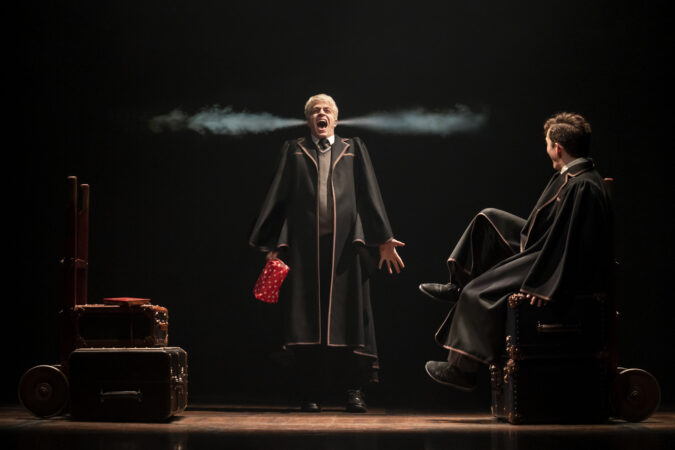
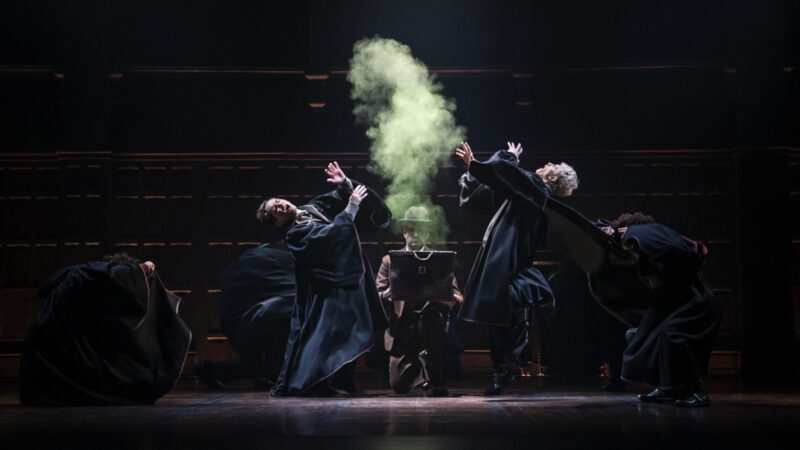
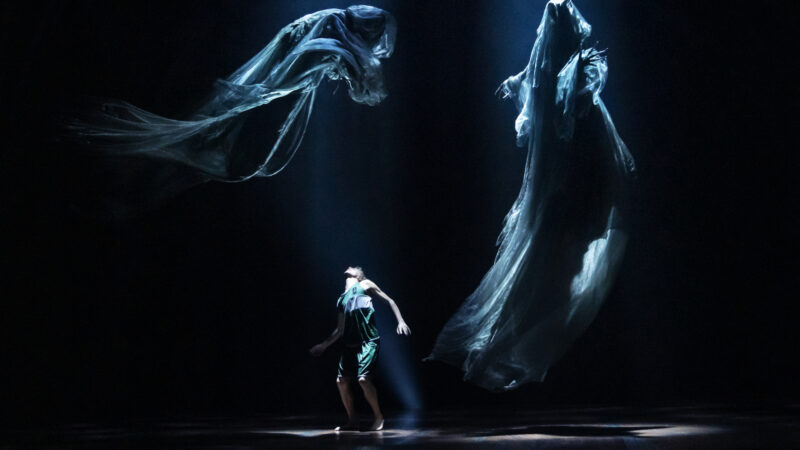
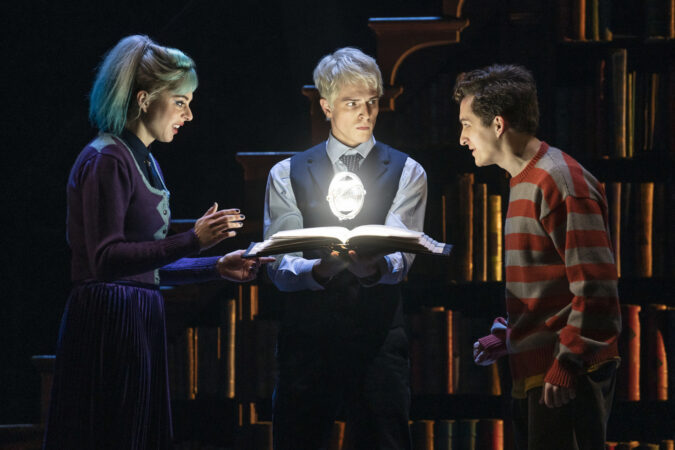
Broadway’s Harry Potter and the Cursed Child Will Celebrate Each Hogwarts House With a Special Performance

The Tony-winning Broadway production of Harry Potter and the Cursed Child will again celebrate the four Hogwarts houses with a special performance dedicated to each house.

For the uninitiated, Gryffindor, Slytherin, Hufflepuff, and Ravenclaw are the four living and learning communities for Hogwarts students, named after the wizarding school’s four founders. Ravenclaws will be celebrated March 23, Hufflepuffs on March 30, Slytherins on April 6, and Gryffindors on April 13 at the Lyric Theatre.

Ticket buyers will have access to a limited number of $79 orchestra and dress circle seats. The first 100 audience members who arrive early on each Wednesday evening will receive early admission to the theatre at 5:30 PM with access to concessions, the gift shop, and AR experiences. They will also receive a special gift and the opportunity to participate in the house pride costume contest. Tickets for these performances can be purchased by clicking here.

The newly condensed, one-part production of Harry Potter and the Cursed Child opened December 7, 2021, at the Lyric Theatre following the COVID-19 pandemic. Previews began November 12.

Harry Potter and the Cursed Child first opened on Broadway as a two-part experience April 22, 2018. The production would go on to be nominated for 10 Tony Awards, winning five, including Best Play.

Based on a new story by J.K. Rowling, Jack Thorne, and John Tiffany, Harry Potter and the Cursed Child is a play by Thorne, directed by Tiffany.

The production also features movement by Steven Hoggett, set by Christine Jones, costumes by Katrina Lindsay, music and arrangements by Imogen Heap, lighting by Neil Austin, sound by Gareth Fry, illusions and magic by Jamie Harrison, and music supervision and arrangements by Martin Lowe. U.S. casting is by Jim Carnahan.

<a href='http://www.movierental.com/link/potter'>Harry Potter</a> and the Cursed Child_Broadway_Production Photos_2021_James Romney and Brady Dalton Richards_HR

Check Out New Photos of Harry Potter and the Cursed Child on Broadway

8 PHOTOS

<a href='http://www.movierental.com/link/potter'>Harry Potter</a> and the Cursed Child_Broadway_Production Photos_2021_David Abeles, Jenny Jules, and Nadia Brown_HR
<a href='http://www.movierental.com/link/potter'>Harry Potter</a> and the Cursed Child_Broadway_Production Photos_2021_Brady Dalton Richards and James Romney_HR
<a href='http://www.movierental.com/link/potter'>Harry Potter</a> and the Cursed Child_Broadway_Production Photos_2021_Brady Dalton Richards, Michela Cannon, and James Romney_HR
<a href='http://www.movierental.com/link/potter'>Harry Potter</a> and the Cursed Child_Broadway_Production Photos_2021_James Romney and Brady Dalton Richards_HR
<a href='http://www.movierental.com/link/potter'>Harry Potter</a> and the Cursed Child_Broadway_Production Photos_2021_James Romney, Brady Dalton Richards, and cast_HR
<a href='http://www.movierental.com/link/potter'>Harry Potter</a> and the Cursed Child_Broadway_Production Photos_2021_Brady Dalton Richards_HR
<a href='http://www.movierental.com/link/potter'>Harry Potter</a> and the Cursed Child_Broadway_Production Photos_2021_Lauren Nicole Cipoletti, Brady Dalton Richards, and James Romney_HR
<a href='http://www.movierental.com/link/potter'>Harry Potter</a> and the Cursed Child_Broadway_Production Photos_2021_Edward James Hyland_HR
Page 42 of 141:« First« 39 40 41 42 43 44 45 »Last »