The real world just felt too small when I stepped out of Denis Villeneuve’s Dune. There weren’t any enormous spaceships ready to rocket off to planets in distant galaxies. No Brutalist palaces amid endless desert vistas. No building-sized sandworms roaming about, eager to devour anyone who disturbed them. Just me and traffic on Atlanta’s I-285.
This latest Dune adaptation isn’t perfect — it’s at times emotionally empty, and it’s basically set up for a second movie we may never see — but it successfully transported me to the universe Frank Herbert created over half a century ago. The film focuses on half of the novel, telling the story of Paul Atreides (Timothée Chalamet), a sheltered baron’s son who moves to the desert planet of Arrakis. It’s an important post, since it’s the only world that produces the melange, or spice, which powers interstellar travel. But as Paul quickly learns, it’s also a dangerous place for his elite family, and it’s where he learns he may also be a potential messiah. You know, typical teen boy stuff.
After being wowed by Dune in the theater, I plan to rewatch it at home on HBO Max, where it’s also being released today. But I’m certain the experience won’t be the same, even on my 120-inch projector screen. This Dune demands to be seen on something even bigger—a place where your very sense of being can be dwarfed. Dune made me feel like Paul Atreides standing in front of a skyscraper-sized sandworm, waiting to be consumed. And I welcomed it.
Of course, it’s no simple thing to trek out to the cinema these days, not with coronavirus still raging and fellow theatergoers refusing to take basic safety precautions. (The vaccines are safe. Masks work. Please protect yourself and others.) But if you can manage to safely see it in theaters — perhaps by renting out a private screen with friends — you’ll be reminded of what makes that experience so special. I watched it in the second row of a fairly typical multiplex theater, and it still floored me. I can only imagine what it would be like on a full-sized IMAX screen, which can reach up to 98 feet tall.
Dune is at its best when Villeneuve and cinematographer Greig Fraser let you soak in the vistas, the regal-yet-alien costumes and the wealth of background details. It’s pure visual world-building. At one point, a character’s eyes briefly flash white when he’s asked to compute the cost of an imperial envoy’s trek through the stars. It’s never explained, but you get it. This style of slow burn sci-fi isn’t for everyone, but if you enjoyed Arrival or Blade Runner 2049, Villeneuve’s previous genre forays, there’s a good chance you’re primed for this brand of storytelling.
Even before I saw anything on the screen, though, I felt Dune in my gut. As I waited for my screening to begin, an alien voice began speaking out of nowhere, sounding like it came entirely from the theater’s subwoofers. It posed a question about the power of dreams, but really, it was as if the movie was saying, “Sit up, pay attention, you’re not on Earth anymore.”
While Congress leader Rahul Gandhi on August 3 questioned why did “the RSS not hoist the Tricolour at its headquarters for 52 years”, AIMIM’s Asaduddin Owaisi on August 4 tweeted that the “RSS had rejected independent India the Indian flag.”
The RSS and the BJP have hit back, saying Independence Day celebrations “should not be politicised” and that “every fibre of the RSS is full of patriotism”.
What is the latest controversy about, why didn’t the RSS hoist the Tricolour at its Nagpur headquarters for 50 years, and why had MS Golwalkar, the second RSS Sarsanghchalak, called the adoption of the Tricolour “just a case of drifting and imitating”? We explain.
What is the latest RSS-Tiranga row about?
As part of the ‘Har Ghar Tiranga’ campaign, the BJP government is encouraging people to hoist the national flag at their homes and to use it as their social media display pictures (DP). While several senior BJP leaders and ministers, led by Prime Minister Narendra Modi, have changed their Twitter DPs to the Tricolour, the RSS is yet to do so. This has led to the Opposition questioning the organisation’s motives.
कर्नाटक खादी ग्रामोद्योग के सभी साथियों से मिलकर बहुत खुशी हुई।
इतिहास गवाह है, ‘हर घर तिरंगा’ मुहीम चलाने वाले, उस देशद्रोही संगठन से निकले हैं, जिन्होंने 52 सालों तक तिरंगा नहीं फहराया।
आज़ादी की लड़ाई से, ये कांग्रेस पार्टी को तब भी नहीं रोक पाए और आज भी नहीं रोक पाएंगे। pic.twitter.com/tp2fjLki75
Congress MP Jairam Ramesh has tweeted in Hindi: “We are putting the DP of our leader Nehru with the Tricolor in his hand. But it seems the PM’s message has not reached his family. Those who did not hoist the flag at their headquarters in Nagpur for 52 years, will they obey the Prime Minister?”
The RSS, on its part, has not said whether it will change its DP from the current saffron flag, but has spoken out against the “politicisation” of the Har Ghar Tiranga campaign.
“Azadi ka Amrit Mahotsav is a national festival and the entire country has to celebrate it together. On July 9, the RSS had announced its support to all programmes being organised by the Government of India, state governments or other organisations. The RSS has called upon all its workers to enthusiastically participate in all such programmes. There should be no politics over Azadi ka Amrit Mahotsav. All should rise above politics and focus on celebrating the festival,” RSS publicity in-charge Sunil Ambekar said recently.
No tiranga at Nagpur RSS headquarters for 52 years
The RSS shakhas fly the Bhagwa Dhwaj, or ‘saffron flag’.
The national flag was hoisted at the RSS’ headquarters in Nagpur on August 15, 1947 and on January 26, 1950. After that, there was a gap of five decades, and the flag was next hoisted on January 26, 2002. Some RSS members have claimed this was because India’s Flag Code, before 2002, restricted the hoisting of the national flag by private organisations.
On January 26, 2001, the Tricolour was forcibly hoisted at the RSS Smruti Bhawan in Nagpur, by three members of the Rashtrapremi Yuwa Dal. A Press Trust of India report from August 14, 2013, says, “The incharge of the premises Sunil Kathle first tried to stop them from entering the premises and later tried to prevent them from hoisting the Tricolour.” The three were booked, and discharged in 2013 due to lack of evidence.
RSS leaders on the Tricolour, over the years
In 2018, RSS Sarsanghchalak Dr Mohan Bhagwat, at an event in New Delhi’s Vigyan Bhavan, had said, “The question is raised, why the Bhagwa Dhwaj at shakha and not the national flag? The Sangh is closely associated with the honour of the Tricolour since its birth…”
In 2015, however, the RSS at a seminar in Chennai had said that “saffron should have been the only colour on the national flag as other colours represented a communal thought.”
In his book Bunch of Thoughts, MS Golwalkar writes: Our leaders have set up a new flag for our country. Why did they do so? It is just a case of drifting and imitating. How did this flag come into being? During the French Revolution, the French put up three stripes on their flag to express the triple ideas of ‘equality’, ‘fraternity’ and ‘liberty’. The American Revolution inspired by similar principles took it up with some changes. Three stripes therefore held a sort of fascination for our freedom fighters also. So, it was taken up by the Congress.”
The idea of the three colours being “communal” can be found in Golwalkar’s following lines.
“Then it was interpreted as depicting the unity of the various communities-the saffron colour standing for the Hindu, the green for the Muslim and the white for all the other communities. Out of the non-Hindu communities, the Muslim was specially named because in the minds of most of those eminent leaders, the Muslim was dominant and without naming him they did not think that our nationality could be complete! When some persons pointed out that this smacked of a communal approach, a fresh explanation was brought forward that the ‘saffron’ stood for sacrifice, the ‘white’ for purity and the ‘green’ for peace and so on.”
PremiumPremiumPremiumPremium
In 1947, RSS mouthpiece Organiser had found another problem with the Tricolour. On August 14, 1947, the Organiser wrote that while Indian leaders “may give in our hands the Tricolour but it will never be respected and owned by Hindus. The word three is in itself an evil, and a flag having three colours will certainly produce a very bad psychological effect and is injurious to a country.”
S K Srinivasan (45), a former district leader and office-bearer of RSS, was attacked by a six-member gang at his motorbike shop in Melamuri near here, police said.The incident occurred less than 24 hours after a SDPI leader was killed in a village near here, allegedly by the BJP.
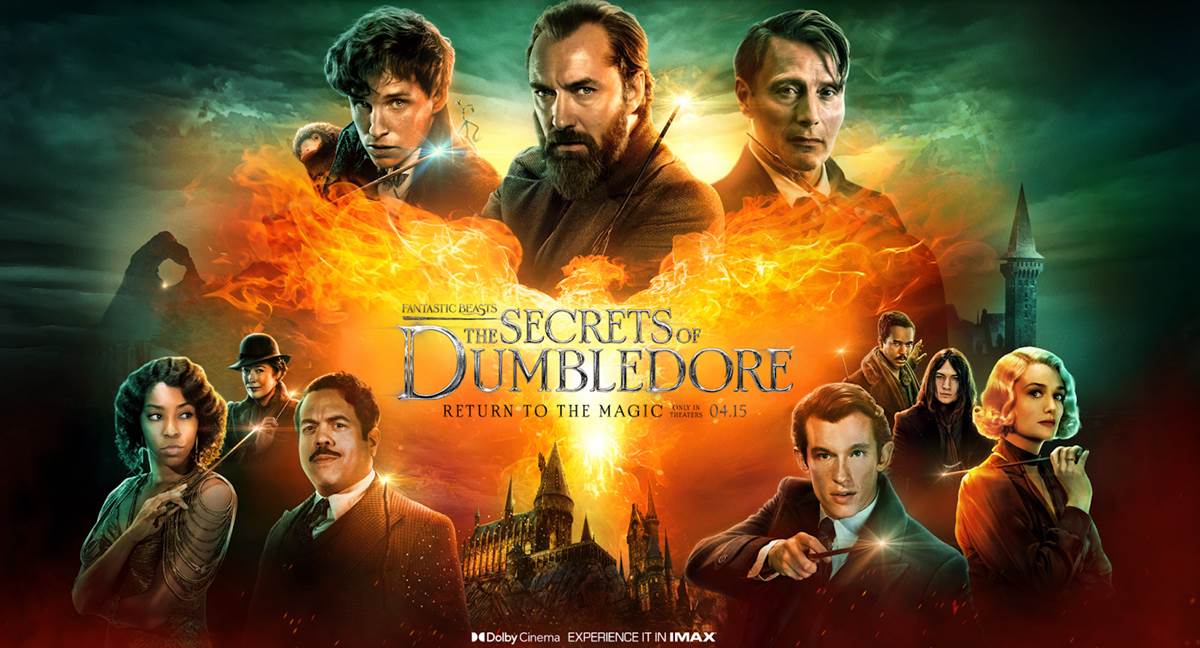
As a Harry Potter fan, it’s easy to get caught up in a desire to want more. That is, after all, why the Fantastic Beasts series was born, out of a desire to give the hungry fans who have read all seven books numerous times and sat through many a Freeform movie marathon weekend something new to cling to. While the spin-off franchise got off to a great start with Fantastic Beasts and Where to Find Them, centering on the author of one of the textbooks taught at Hogwarts, the ending made it very clear: this is the story of Dumbledore and Grindelwald told through Newt Scamander. Planed as a five-part series, the second installment, Fantastic Beasts: The Crimes of Grindelwald, was met with both critical detestation and fan disappointment. With the future of the franchise potentially hanging on a thin thread, I went into Fantastic Beasts: The Secrets of Dumbledore wearing both hats; that of a critic, but also that of a massive Harry Potter fan and a Hufflepuff who has relished in having one of my own at the center(ish) of this franchise.
(Warner Bros.)
My first impression is that The Secrets of Dumbledore course-corrects the series in many ways and also rights a few of the wrongs that made me feel underwhelmed by The Crimes of Grindelwald. Chief among them, Newt Scamander feels like the central character again. Sure, the narrative spends enough time away from him to feel a little unfocused, mostly following the titular wizard and his nemesis/heart’s desire, but overall, this one feels like it’s Newt’s movie again. The other joyous element of this Fantastic Beasts entry is that the beasts are back. In the last installment, Newt’s occupation as a magizoologist felt barely part of the series. Here, it’s what ultimately drives him back on a path that intersects with Grindelwald and therefore, his old Hogwarts professor. The nifflers and bowtruckle continue to follow Newt on his adventures, sadly the only recurring magical creatures we see him care for this time around. There is, however, a wondrous new entry as well, an adorable and charming creature called a Qilin that fans of the series are sure to fall in love with. There’s also a creature from the Harry Potter books that briefly appears for diehard fans (never named in the film, but if you know you know) and, overall, the return of these moments restores some much-needed lighthearted and whimsy to the series, another complaint of the last entry.
With a four-year gap between installments, partially due to the pandemic, partially due to other challenges, it’s hard to overlook some of the overhauls present in The Secrets of Dumbledore. Chief among them is the recasting of Gellert Grindelwald, formerly portrayed by Johnny Depp and henceforth performed by Mads Mikkelsen. It takes about twenty minutes to get used to the change and while Mikkelsen takes his own approach, making his own unique mark on the character, it is different. I actually prefer his take to Depp’s. Visually, he’s less offputting, striking a more natural hair and eye color and becoming someone that’s easier to believe the masses would follow as a leader. He feels darker and more menacing in the role as well, with Depp perhaps too recognizable with caricatures like Captain Jack Sparrow and Willy Wonka to truly break free of them at this point.
Far from perfect, the film falters in a number of ways. The plot is weighed down by too many characters, including the development of a few new ones while bringing ones you thought we were done with back into the fold. The consistent inciting incident for the series thus far has also surrounded Credence, with the heroes trying to protect him and Grindelwald trying to turn him into a weapon. He’s back again and in The Secrets of Dumbledore (the title, at least in part, referring to him), he ultimately feels inconsequential here. It evokes the same level of disappointment Star Wars fans hold against the sequel trilogy, feeling like Rey’s parents would be of importance.
Another issue with the third installment is that it does little to refresh viewers on the events of The Crimes of Grindelwald, requiring it to be fresh in your mind or you will be lost at times. Such was the case with my moviegoing buddy, who casually enjoys Harry Potter films but has never had a Pottermore or Wizarding World account. The few refreshers included often come well after they were required, making the film feel half-baked at times.
As a fan, it’s fun to see new corners of the Wizarding World. The first entry brought with it MACUSA and mentions a U.S.A. version of Hogwarts (Ilvermorny, which we will likely never see on screen). The second took us to Paris and this time around, the compass has been set for Berlin. With each film depicting a new locale, it feels like part of the vision is to give fans around the world a piece of the Wizarding World that they can claim as their own. At the same time, the parallels between Grindelwald and Hitler are hard to miss and Germany in the 1930s is not exactly a magical place to be. The franchise seems bent on giving fans a Wizarding World Tour, but this stop feels like a questionable choice.
The biggest problem, however, is that Fantastic Beasts: The Secrets of Dumbledore doesn’t do much to move the needle towards the finish line. You don’t have to be a huge Harry Potter fan to know where this is all heading, which takes some of the excitement out of it. If you had to sum up the plot of The Crimes of Grindelwald, it’s simply that the titular wizard breaks free and gains power. This one, despite the title not including his name, is basically Grindelwald gains even more power in spite of a few setbacks. If there are to be two more films, the next will likely be more of the same, unless J.K. Rowling has some serious tricks up her sleeve that have yet to be properly set up. The million-dollar question for Warner Bros. is whether or not they will invest in that future, or merely count their losses and try to stop this niffler from pocketing more galleons.
I give Fantastic Beasts: The Secrets of Dumbledore 3 out of 5 entries in a story based off the back of a chocolate frog card.
Fantastic Beasts: The Secrets of Dumbledore opens in theaters on Friday, April 15th.
Sonic the Hedgehog 2 has earned $71M in its opening weekend at the US box office, making it the biggest ever opening weekend for a video game adaptation.
That’s higher than the $58m 3-day opening record achieved by the original film, and when combined with overseas revenue (Sonic 2 opened a week early in Europe, Australia and other markets) of $70 million, the sequel’s global total is reportedly now $141 million.
David A. Gross, who runs movie consulting firm Franchise Entertainment Research, commented: “This is an outstanding opening. With solid reviews and very good audience scores, ‘Sonic’ is going to have a strong run.”
Commenting on what has made the film franchise such a success following Sonic’s middling gaming reception in recent years, paramount’s president of domestic distribution Chris Aronson said: “This film did such a great job in service of the fans while not excluding general audiences.”
Sonic the Hedgehog 2 reportedly cost around $90 million to create, not including marketing spend.
Toby Ascher, who was a producer on 2020’s Sonic film and the upcoming sequel, previously commented on plans for a “Sonic cinematic universe” in production notes released to coincide with the lifting of the Sonic 2 review embargo.
Further reading
“We’re creating a Sonic cinematic universe, so we knew we were going to add characters, like Tails and Knuckles; new to the films but beloved by gamers all over the world,” he said.
VGC’s Sonic the Hedgehog 2 movie review called it a much better film than the original and said there’s a pleasant surprise to be found in the chemistry between its new characters.
The essence of the cinema is the symbol—the filming of action that stands for something else, that gets its identity from what’s offscreen. There’s plenty of action in Jordan Peele’s new film, “Nope,” and it’s imaginative and exciting if viewed purely as the genre mashup that it is—a science-fiction movie that’s also a modern-day Western. But even that premise bears an enormous, intrinsic symbolic power, one that was already apparent in a much slighter precursor, Jon Favreau’s 2011 film, “Cowboys Aliens.” Like “Nope,” Favreau’s film involves the arrival of creatures from outer space in the American West; there, it was already apparent that what the genres share is the unwelcome arrival of outsiders from afar (aliens are to Earth as white people are to this continent). Peele takes the concept many ingenious steps further.
“Nope” is a phantasmagorical story of Black people in the American West, the unwelcome among the unwelcome, and it’s set in the present-day West, namely, Hollywood and the Hollywood-proximate, the very heart of Wild West mythology. “Nope” is one of the great movies about moviemaking, about the moral and spiritual implications of cinematic representation itself—especially the representation of people at the center of American society who are treated as its outsiders. It is an exploitation film—which is to say, a film about exploitation and the cinematic history of exploitation as the medium’s very essence.
Peele’s film is set mainly on a horse farm in California, Haywood Hollywood Horses, that provides the animals as needed for movies and TV shows and commercials. Its owner, Otis Haywood, Sr. (Keith David), dies mysteriously after being hit by a bullet-like piece of space debris that showers the property. The farm is taken over by his two children, Otis, Jr., called O.J. (Daniel Kaluuya), and Emerald (Keke Palmer). Neither of the heirs, though, is entirely cut out to fill Otis’s shoes. O.J., who loves the horses and works devotedly with them, is something of an introvert; he isn’t the communicator—the on-set presence—that his father was. Emerald, who is very much a communicator, is an aspiring filmmaker and actor for whom the horses are just a job, and not a very pleasant one. To address the farm’s financial troubles, they sell horses to a nearby Western theme park. But, when the source of the space debris—a monstrous U.F.O. that sucks humans and horses into its maw and eats them—makes its appearance, O.J. and Emerald are forced to fight it. They’re also inspired, for the purpose of saving the farm financially, to film it, in the hope of selling the first authentic footage of a U.F.O.
I’m being especially chary of spoilers in discussing “Nope”; I greatly enjoyed the discovery of the plot’s daring and inventive twists and turns, along with the discerning and speculative ideas that they bring to light. By remarkable design, the movie is as full of action as it is light on character psychology. There’s no special reason why O.J. is taciturn or Emerald is ebullient, or why they’re able to marshal the inner resources for mortal combat with invaders from outer space. “Nope” offers the characters little backstory—at least, not of the usual sort. Rather, Peele pushes even further with a theme that he launched in “Get Out” and “Us”: the recognition of history—especially its hidden or suppressed aspects—as backstory. With “Nope,” Peele looks specifically to the history of the cinema and its intersection with the experience of Black Americans to create a backstory that virtually imbues every frame of the movie.
For the Haywoods, the crucial backstory goes to the birth of the cinema: the real-life “moving images,” created by Eadweard Muybridge in the eighteen-seventies and eighties, that are often considered the primordial movies. Muybridge was commissioned to study the movement of a galloping horse; the name of the Black jockey he photographed riding one of those horses went unrecorded. In “Nope,” Peele creates a fictitious identity for the rider—Alistair Haywood, the family’s forebear. Emerald tells the crew on a TV commercial, who are relying on one of their horses, that, when it comes to movies, the Haywoods have “skin in the game.” Acknowledging and extending cinema’s legacy while also redressing its omissions and misrepresentations of history is the premise of “Nope”: the responsibility, the guilt, the danger, the ethical compromise of the cinematic gaze.
The film-centric symbolism of “Nope” gives rise to the film’s distinctive, surprising sense of texture. “Get Out” and “Us” are films of a thick cinematic impasto, crowded with characters and tangled with action. “Nope,” made on a much higher budget, is a sort-of Blockbuster—but an inside-out Blockbuster. If the first two films are oil paintings, “Nope” is a watercolor of the kind that leaves patches of the underlying paper untinted. It’s set in wide-open Western spaces, and what fills their emptiness is power: political, historical, physical, psychological.
The movie is also filled with images—imagined ones, and also real ones, a visual overlay of myth and lore that fills the Western landscape with the history of the cinema. What embodies the invisible lines of power is the gaze, of the eye and of the camera alike. Peele has been, from the start of his career, one of the great directors of point-of-view shots, of the drama and the psychology of vision, and he pursues the same idea to radical extremes in “Nope.” Point-of-view shots are at the center of the drama; again, avoiding spoilers, the spark of the drama turns out to be, in effect, eye contact—the connection of the seer and the seen (including when they’re one and the same, in reflections). Alongside the intrusive intimacy of the naked eye, Peele makes explicit the inherently predatory aspect of the photographic image—the taking of life, so to speak—and the responsibility that image-making imposes on the maker.
There’s another bit of backstory that puts the filmmaker’s responsibility front and center. The movie begins with a scene in a TV studio, where an ostensibly trained chimpanzee performing with human actors on a sitcom runs amok. (This subplot reminds me of the horrific accident on the set of “Twilight Zone: The Movie,” in 1982.) A survivor of the chimp’s attack, which took place in 1996, is an Asian American child actor (Jacob Kim) who now, as an adult (played by Steven Yeun), is the owner of Jupiter’s Claim, the Western theme park to which O.J. has been selling horses. The jovial owner, called Jupe, has also had some contact with the U.F.O. and is also trying to profit from it, indifferent to the risks involved. Jupe’s space-horse show (something of a mysterious, invitation-only event) makes uncannily clear the predatory connection between viewers and, um, consumers.
Peele is seriously playful with the technology of movies in ways that recall Martin Scorsese’s “Hugo.” The action of “Nope” pivots on the power and the nature of movie technology—the contrast of digital and optical images—and the creative rediscovery of bygone methods, as reflected in its very cast of characters, which includes a young electronic-surveillance nerd and U.F.O. buff (Brandon Perea) and a grizzled cinematographer (Michael Wincott). The TV commercial for which the Haywoods rent a horse is being shot in a studio, in front of a green screen (another empty visual space shot through with power), where a melancholy horse is standing still, stripped of its majestic energy, reduced to a mere digital emblem of itself, ridden by no one but manipulated by a desk jockey with no onscreen identity at all. Peele presents the C.G.I. on which “Nope” itself depends as a dubious temptation and a form of dangerous power.
Yet the crucial bit of backstory remains unexpressed: the question of why, of all the horse farms in California, the space creatures chose to target the one that’s Black-owned. The answer to the question is one that both demands expression and faces a silencing on a daily, institutional basis. The movie opens with a Biblical quote: a scourging prophecy, from the book of Nahum. In transferring the politics of “Nope” to the intergalactic level—a sardonic vision of the universality of racism—Peele also transfers them to an overarching, spiritual, metaphysical one. He offers a scathing, exuberant vision of redemption. ♦
An earlier version of this article misstated the name of the Western theme park Jupiter’s Claim. It also incorrectly described the space debris that killed Otis Haywood, Sr.
As many as 191 new COVID-19 cases and two deaths have been reported in Maharashtra’s Thane district, a health official said on Thursday.
With the addition of the latest cases and deaths on Wednesday, the district’s infection tally has gone up to 7,43,233 and the fatality toll has reached 11,950, he said.
Thane, which is part of the Mumbai Metropolitan Region, currently has 1,512 active COVID-19 cases, he said, adding that the recovery count in the district has reached 7,30,328.
Now fans will be delighted to know that the Harry Potter 20th anniversary: Return to Hogwarts reunion special is now finally available to watch.
UK fans initially had many sleepless nights worrying how they were going to watch the reunion, given that HBO Max is yet to be made available on our shores.
Sky TV and its streaming service NOW are currently showing the reunion special and from the same day as HBO Max in the US.
Ahead of the reunion special, Hermione Grainger actress Emma Watson shared an emotional tribute on Instagram, writing: “I am proud not just of what we as group contributed as actors to the franchise but also as the children that became young adults that walked that path.
“I look at my fellow cast members now and I am just so proud of who everyone has become as people.
“I am proud we were kind to each other that we supported one another and that we held up something meaningful.”
Fans had already been treated to a first look at the reunion, showing Radcliffe, Watson and Grint chatting together just like old times in the Gryffindor common room at Warner Bros. Studio Tour London.
Well, now we no longer have to wait, but how does one watch the reunion special?
See the details below, while if you want to know how to watch theHarry Potter films in order, see our guide.
Harry Potter 20th anniversary: Return to Hogwarts is out now in the UK on Sky Max and NOW.
The special has been released on the same day as the release in the US on HBO Max.
If you want to watch the reunion on NOW, you’ll need an Entertainment Pass, which costs £9.99 per month – but there’s also a seven-day free trial if you’re a new subscriber.
The trailer for the event is available to watch below.
The official synopsis from Sky notes: “Old memories shared. New memories made.
“Come celebrate the magic when Harry Potter 20th Anniversary: #ReturnToHogwarts arrives on New Year’s Day, on Sky Max.
“Starring Daniel Radcliffe, Rupert Grint, Emma Watson and more.”
And that’s not all.
Sky NOW have also aired the Harry Potter: Hogwarts Tournament of Houses from the 29th December 2021.
The special four-part event, hosted by Dame Helen Mirren, sees Wizarding World fans have their Harry Potter knowledge put to the test in an attempt to be named House Cup Champion.
In addition, Sky and NOW are also the exclusive home of Fantastic Beasts and Where to Find Them and Fantastic Beasts: The Crimes of Grindelwald, which have joined the full collection of the Harry Potter Movie Series on a Wizarding World 20th Anniversary pop-up channel set to go live on 19th December 2021.
Zai Bennett, Sky MD of Content UK and Ireland, said: “20 years ago we welcomed a little bit of cinema magic into the world as Harry Potter and the Philosopher’s Stone had its big screen debut.”
“It’s a franchise like no other, enchanting generations of children and adults alike. We’re marking the occasion by adding every film in the Wizarding World film series to our cinema line-up this festive season and we’re thrilled to be the exclusive home of the next piece of Hogwarts history.”
It’s not unusual for HBO titles to air in the UK on Sky and streaming service NOW on the same day they release on HBO Max.
This was the case with Friends: The Reunion special which was released in May earlier this year, and is also planned for the upcoming Sex and the City sequel series, And Just Like That…, which premiered on the 9th December 202
But fans need not fear for, as detailed above, following in the footsteps of HBO’s Friends: The Reunion, the Harry Potter special will air in the UK on Sky Max via Sky TV.
Harry Potter 20th Anniversary: Return to Hogwarts is available now on Sky Max and NOW in the UK, while the special is available in the US on HBO Max.
Looking for something to watch? Check out our TV Guide.
“We’re letting our imagination get the best of us.” 1091 Pictures has revealed an official trailer for an indie horror creature feature titled Nix, the latest from a genre filmmaker named Anthony C. Ferrante. He is the very same director who made all three of the Sharknado movies for Syfy Channel, but that’s not all he can do! Nix is Ferrante’s first dramatic horror film since his 2005 hit Boo. A family finds themselves on a dark, scary journey into their own self-created madness when a mysterious entity manifests itself. It is described as “a modern-day horror movie dealing with trauma and addiction and how a tragedy twenty years prior tears apart a family.” The indie horror film stars James Zimbardi, Michael Paré, Skyler Caleb, Angie Teodora Dick, and Dee Wallace. The gnarly lake creature in this isn’t that scary, just a man in some latex prosthetics. But I like the themes involving the question of whether they manifested this horror themselves.
Here’s the first official trailer (+ poster) for Anthony C. Ferrante’s Nix, direct from YouTube:
Inspired by Germanic folklore, a tragedy at a mysterious lake continues to haunt a family years after the incident. While Jack Coyle (James Zimbardi) struggles to keep his shattered family together, a strange and powerful entity reveals itself again, opening the wounds for another tragedy to occur. As Jack deals with the consequences, he also must protect his young niece from this frightening creature which threatens to destroy everyone.Nix is directed by genre filmmaker Anthony C. Ferrante, director of the Sharknado trilogy, plus the films Boo, Headless Horseman, and Zombie Tidal Wave, and lots of other junk TV movies previously. The screenplay is written by Skyler Caleb, Anthony C. Ferrante, Woodrow Wilson Hancock III, and James Zimbardi. This hasn’t premiered at any festivals or elsewhere, as far as we know. 1091 Pictures will release Ferrante’s Nix in select US theaters + on VOD starting September 27th, 2022 later this year.
Lisa Tsotsos has been trying to bury her father for eight months now — and as the emotional weight of the ordeal and her legal bills pile up — she says she’s starting to lose hope.
Her dad, Louis, died of COVID-19 complications on Jan. 15. But instead of being buried next to his father at a Richmond Hill cemetery north of Toronto like he wanted, his body is decaying above ground at a nearby funeral home.
And despite a court order directing that the Toronto-area man be buried in a family-owned plot at the Headford Cemetery, members of the Tsotsos family, alongside the Bereavement Authority of Ontario (BAO), remain locked in a legal battle with the cemetery’s owner.
The BAO and family say the landowner and representatives from the Nativity of the Mother of God OrthodoxChurch are continuing to bar access to the gravesite, in breach of a court order which stated Louis’s remains must be buried by Aug. 31.
The church says it is not part of the dispute, but still alleges the family doesn’t have all the required documents to confirm their rights to the plot. The church is not named in any court order, yet much of the logistical correspondence for the family has taken place with representatives from the church.
The Nativity of the Mother of God Orthodox Church and adjoining cemetery in Richmond Hill are owned by September 12 Inc. (Craig Chivers/CBC)
Lisa says the stress of the situation is mounting. Some days she just crashes, weeping under the weight of the ordeal.
“Other times I just get so angry that I’m digging my heels in,” she said.
But trying to advocate for her father from the U.K., where she now lives, is taking a toll.
“I know life is not a movie, and I’m likely going to lose,” she said.
Lengthy legal fight
The Tsotsos family has owned its plot at the Headford Cemetery since 2014, and two other family members are already buried there. But when the cemetery and church were sold in 2020 to an entity called September 21 Inc., no one told the family, who no longer have any relatives in the area.
The situation escalated in January when church officials called police, accusing funeral home employees, who tried to prepare the burial site, of trespassing, according to York Regional Police. The family says it has been trying to organize a burial ever since, but to no avail.
The Tsotsos family says it has provided maps and ground-penetrating radar scans confirming the location of the grave, which had been marked and already bears a headstone with the family name. (Craig Chivers/CBC)
The church has repeatedly denied any involvement in the situation to CBC News.
Yet in an email to the Tsotsos family’s lawyer, Rev. Art Lambert, who is also a lawyer, said he is legally representing September 21 when it comes to the burial conditions. Lambert’s exact role within the church remains unclear.
Corporate records don’t reveal who owns September 21. The records name the secretary and treasurer as well as the president, but CBC News was not able to reach them. Church officials did not respond to repeated requests for contact information.
In an email sent to CBC News — signed by an unnamed board of directors, and sent shortly after the Aug. 31 deadline passed — the church alleges the family doesn’t have the required documents to confirm their rights to the plot, and is “trying to inter the body in the grave that belongs to another person.” It did not provide specifics.
“The cemetery owner thinks it has a legal and moral duty to ensure that when a family buys a burial plot in the cemetery, that family gets to use the plot. Otherwise, no one is protected from losing the family’s grave or discovering strangers in a parent’s grave,” the email said.
The family, meanwhile, has provided maps and ground-penetrating radar scans confirming the location of the grave, which had been marked, and already bears a headstone with the Tsotsos name.
David Brazeau, spokesperson for the Bereavement Authority of Ontario, says the church and landowner are showing ‘complete disregard for a grieving family.’ (Craig Chivers/CBC)
“We have provided all the documents,” Lisa told CBC News.
The statement from the church also says that interment “seems imminent,” but officials did not respond when asked about any specific dates.
‘Downright cruel’
The Tsotsos family has interment rights at the site and the right to bury Louis there, says David Brazeau, head of communications for the BAO. He said the organization, which regulates licensed cemeteries, funeral directors and similar establishments, has never seen anything like this situation.
“It’s highly unusual, and downright cruel when you think about it. Eight months [with] the deceased family member lying in cold storage in that time, decomposing … and this is causing a lot of anguish for the family,” he said.
“We don’t know the reason they’re doing this, it makes no sense to us.”
The Tsotsos family says church officials and their representatives have been throwing up barriers to the burial at every turn — either through disappearing from correspondence for days on end, not responding when asked for documentation required by the funeral home or, in August, telling the family that while a burial can take place, a religious ceremony at the gravesite cannot.
David Thompson, a litigation lawyer at Scarfone Hawkins LLP in Hamilton who is not involved in the dispute, says he doesn’t think any attempts to impose conditions around a judge’s order will go over well in court.
“This picking of nits, I don’t think it will be viewed favourably by a court at all. I think they’ll say ‘Let’s get this done, let’s allow this family to have some closure, and let’s stop this runaround,’ because it’s really, really unfair to those who are personally affected.”
Thompson says if a judge finds that a party to the case is in contempt of court, the court can impose a fine, jail time, or both. In the case of a corporation, the court can do the same on an officer or director, he said — though he noted that in civil contempt cases jail sentences are rare, and fines are “typically relatively low.”
The court could also order a “writ of sequestration,” he said, which is when a sheriff takes control of a property for a period of time to ensure a court order is carried out. It’s also possible that a sheriff’s officer could go to the cemetery, likely with the support of local police, to see that the burial is properly carried out, he said.
As the conflict continues, Lisa says she feels like she’s being painted into a corner, and needs to soon choose whether to cremate her father, despite his wishes on religious grounds, or try to keep fighting indefinitely.
“You have to honour the dead, to me it’s very important,” she said.
“I may not be religious, but if it’s someone’s final wishes and that’s what they want, they’re not here to do it for themselves, and they trusted you to execute it.”
Louis, right, is seen here on a trip with his daughter Lisa in Greece from 2019. (Submitted by Lisa Tsotsos)