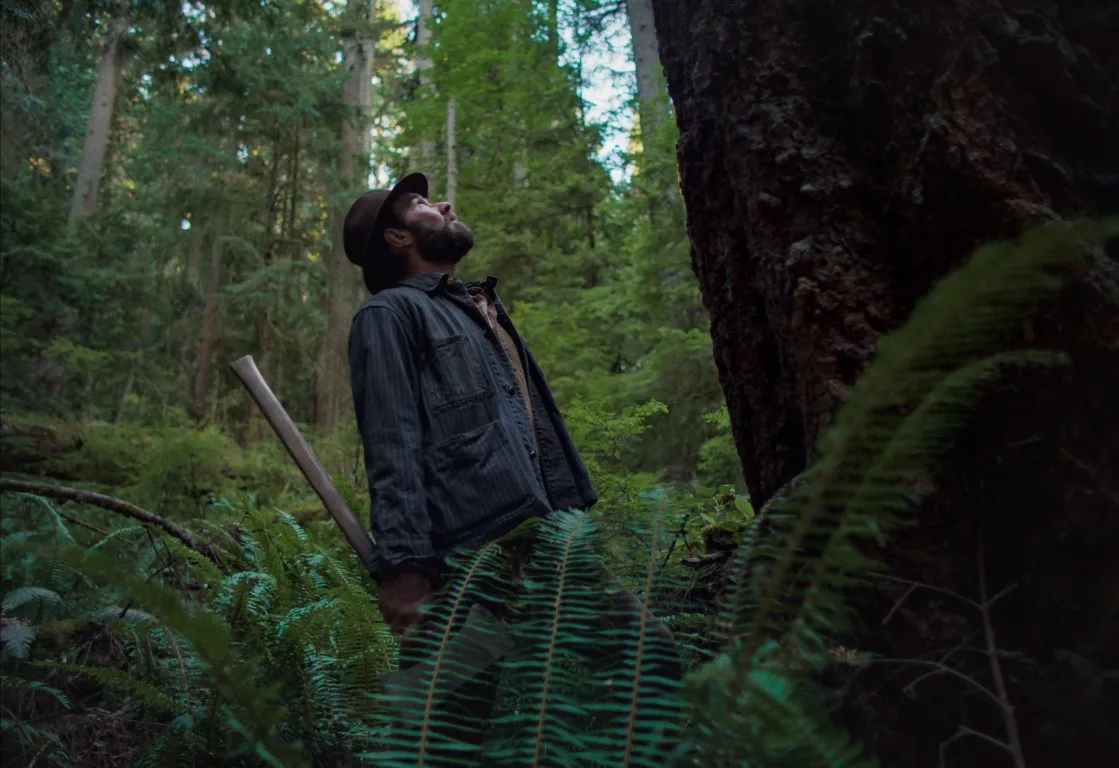
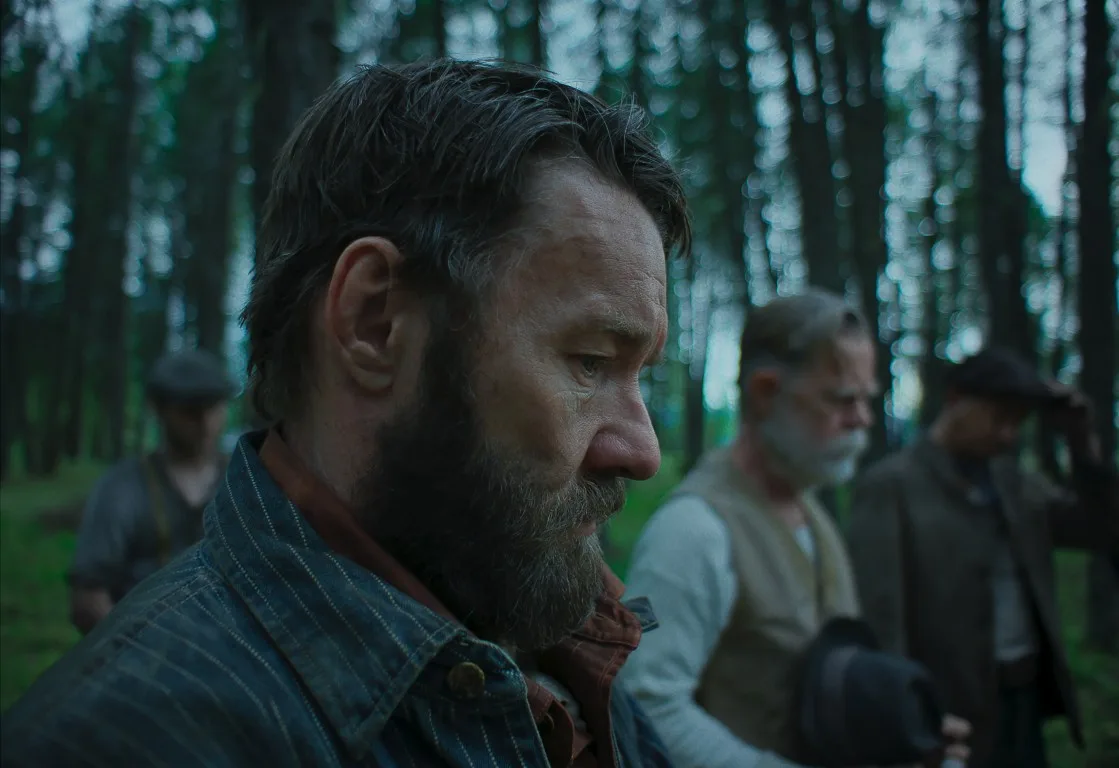
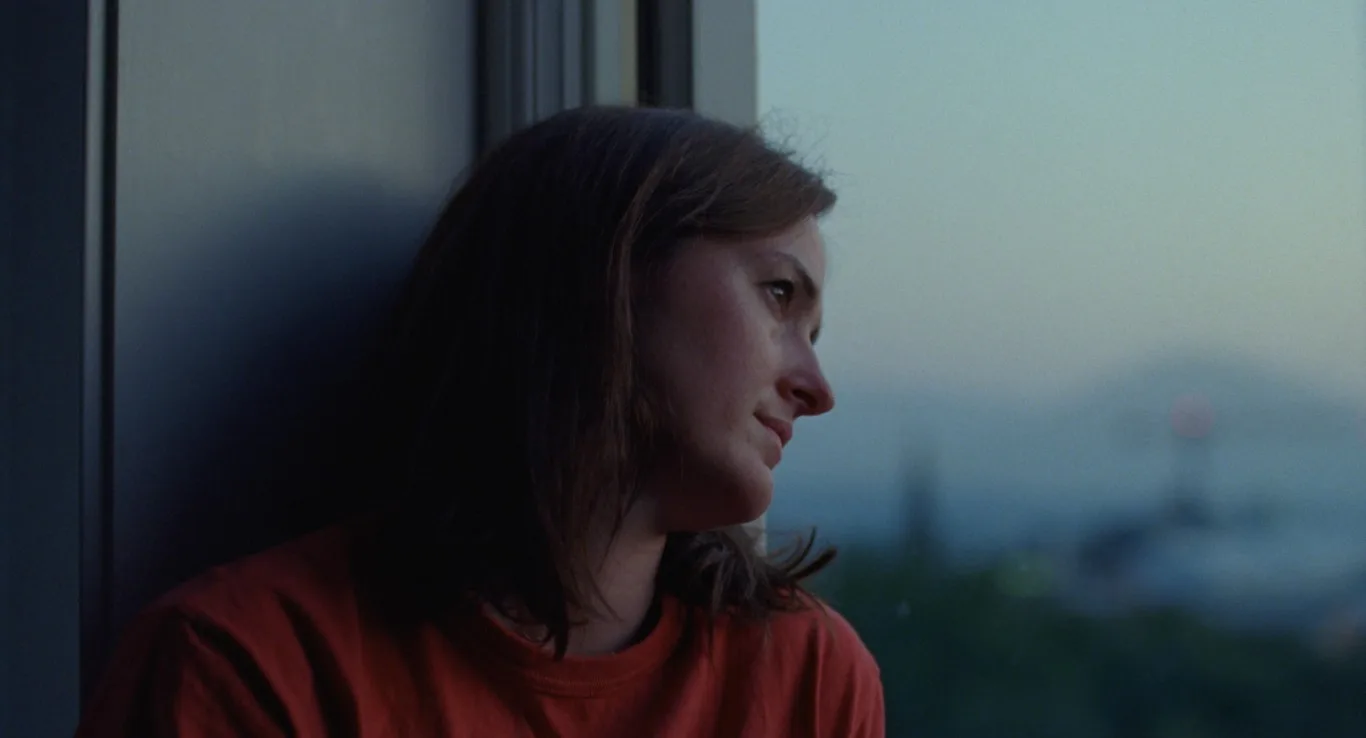
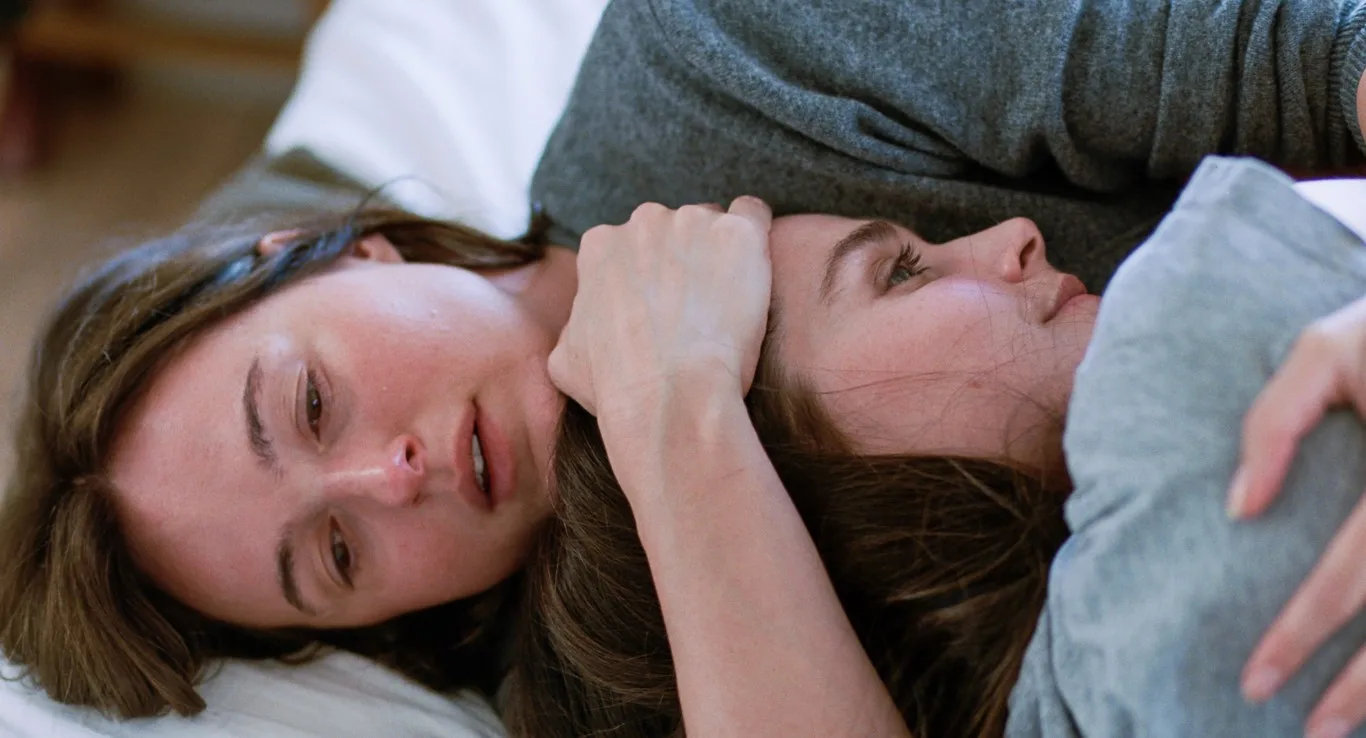
Lyrical and elegiac even while being rooted in hope and tenderness, director Clint Bentley’s “Train Dreams” moves with the grace of a liturgy.
The film centers on a logger, Robert Grainier (Joel Edgerton), whose work building railroads tames America’s vast landscape into something manageable. The seasonality of his work means he rarely gets to see his wife, Gladys (Felicity Jones), or his daughter, Katy, and his life oscillates between the beauty and harshness of his vocation and the joy of being reunited with his family.
One day, Granier witnesses and is unable to stop a fellow worker, Fu Sheng (Alfred Hsing), from being the victim of a brutal and racially-motivated murder. In the aftermath, Granier believes himself to be cursed in some way, and it isn’t long before Job-like tragedies befall him. Amidst his hardships, he learns how to make sense of his place in an ever-shifting world that’s all too ready to leave him behind, and in his struggle, he learns to rely on the restorative company of good friends.
For Bentley and Edgerton, human beings’ abilities to rebuild after loss are something they wanted to celebrate.”It’s a real sign of regrowth when someone, despite their gloominess, finds the joy of living in the moment where they start responding to jokes again and their mirth returns,” Edgerton shared. Likewise, for Bentley, the project was a way to reckon with the inherent finitude of existence, how “you give up something for everything you get,” and that that’s important to remember amidst the “hustle culture we have that’s very in fashion right now in the US.”
Over Zoom and at a red carpet event, Bentley and Edgerton spoke with RogerEbert.com; about the beautiful unpredictability of working with animals, how the film challenged the false notion of linear healing, and how Granier’s struggle with the industry can guide creatives through the proliferation of generative AI.
This conversation has been edited and condensed for clarity.
Joel, you’ve had your own formative experience with Denis’ book, having gotten it as a wrap gift from “Boy Erased.” I believe you considered directing an adaptation at some point. Literature can speak to people in so many different ways, so was there any conversation about merging your interpretation of the book with what Clint was trying to bring to life?
Joel Edgerton: You’re right, a book speaks to different people in different ways. I had read Denis’ book years before Clint reached out to me, and when he did, I reread it, which I usually don’t do. Rereading the book meant so much more to me because when Clint and I started speaking about the movie, I had become a father. This idea of loss and grief was so much more potent for me.
The novella tells the story of an ordinary person who creates his own heroic journey; I really connected with that idea. The simple things in life, such as love, family, and work troubles, as well as darker experiences like grief and loss, are moments that an ordinary person goes through. It’s epic to live a normal life, but we often don’t see it when we’re in the mire and myopia of it all.
Speaking of rendering the ordinary with a sense of loftiness, Clint, I’m struck by the ways you depict–and sometimes choose not to depict–violence in the film. We see Apostle Frank get shot from a distance; we don’t see the impact of Fu Sheng’s body when he’s thrown off the tracks.
Clint Bentley: The interesting thing is that I can say some things that have struck me since, but the thing about making films is that a lot of times what ends up becoming stylistic choices come from just trying to solve problems and limitations. To make these moments of violence look real–especially on an independent budget– it’s easier to showcase them from a distance.
Especially living in that world, though, I did want to make it feel like death is always just kind of there around the corner; it doesn’t always announce itself in a big way. It just steps in, has its moment, and then steps out, kind of like that scene with the cowboy who walks in, shoots, and then leaves. The proximity of death is true for all of us in life, but it was less sanitized back then, and there was less distance from it than there is now.
I also think of that scene where the boy falls dead, seemingly out of nowhere, and the narrator says how had he been born a few years later, he would have been fine because the condition that killed him could have been treated. I was trying to get into Granier’s mindset and portray that for his world: a big part of it is the reality that death steps in at every moment, so he’s very accustomed to it. At least in the United States at this moment in time, we’re more separated from that and don’t have to encounter it as much.
Speaking of “death stepping in,” I think about how you and cinematographer Adolpho Veloso framed Fu Sheng’s death, how there are these men who step into the frame suddenly and then throw him off the bridge.
CB: Nobody seems to know why this is happening to Fu Sheng, even the guys who are doing it are moving as if there’s a force carrying them along. Going back even earlier, there’s that scene where Granier sees a Chinese family being thrown out of a store, and he’s baffled by the casualness of it. Not to put too fine a point on it, but today, you have groups of men in masks grabbing people off the street, and people are screaming at them and trying to get them to stop. It’s tragic.
To sit with that sequence for a bit, I’ve been chewing on the fact that the first thing Granier says when he sees this violence happen is “What did he do?” It’s such an honest response and speaks to how, as humans, we need to rationalize why bad things happen, when in reality there’s often no good or adequate reason why tragedy strikes.
JE: One of the great things about the novella in general is that there’s this philosophical and spiritual religiousness around nature itself that’s separate from the classic religion of Christianity. It’s this idea that the bad things we do follow us around, and there’s a counterbalance to one’s guilt or complicity in a terrible act. Robert put his hands on Fu Sheng, then Fu Sheng was killed, and somehow, Robert owes a debt, and the world is going to justice for this situation. He feels like death is coming for him, even if the audience may not judge him or think what happened was entirely his fault.
We all, since the beginning of time, have tried to make sense of our place in the world. That’s the reason why religion even became a part of our culture; it was to make sense of this world we’re living in and to get close to these questions of “What is life? What’s its purpose? What are we owed and what do we owe as a result of having this privilege or curse of being a person?” There’s something naive in a view of the world that doesn’t try to answer questions, but just poses them, and I think that’s very special.
It’s made me think about how a film like this is a celebration of the divinity of everyday life. The thing about Robert, though, is that he’s a receiver throughout this film; things happen to him rather than him instigating change. I’m curious about both of you: where is this line in life? How are you discerning when to practice contentment and embrace limits, while also honoring your ambitions for more?
JE: Clint, you’ve put it really nicely a couple of times. At some point, you realize, you’ve just got to put one foot in front of the other. Unless you make the big choice to give up on life and tap out, you’ve got to keep moving because the world asks you to keep moving; you can’t just sit in one place forever. The question of ambition versus pure existence is an interesting proposition.
Robert is not someone who is going to take his own life necessarily. So he needs to, as Clint has said, put one foot in front of the other. What’s beautiful is that, like the forest is regrowing itself after a fire, characters like Ignatius Jack and Claire come into Robert’s life, and they’re the soil that helps regrow him by bringing things out of him. They offer him food, company, and warmth, and let him know there’s support. That’s a lofty idea: that, as human beings, while we can drag each other off the street and be part of the violence of culture, we can also be part of each other’s regrowth and rebirth. That, to me, shows the heart of human nature.
CB: That’s a wonderful way to put it. These questions around ambition versus contentment versus acceptance … it’s not an either-or. You give up something for everything you get, and I think that’s an important thing to remember, especially in this ridiculous hustle culture we have, which is very in fashion right now in the US. By pursuing something, you’re giving up time with your family, and by staying home with your family, you may be giving up opportunities. The answer’s different for everybody, but finding your place in all of this and settling into acceptance … that’s the epic journey of your life.
JE: I was with my kids this morning, and they went through contentment and discontentment about ten times before they went to school. They were drawing a fairy, which was great, but then my son, Jack, drew the wings wrong, and he thought the world was coming to an end. I was trying to teach them this expression: “That day is the first day of the rest of your life.” At any moment, we can slip away from contentment and happiness into the opposite. Life is a constant struggle between good and evil, but rebirth and reset can happen at any moment.
Clint, I want to follow up on what you shared about the hustle culture we find ourselves in. Constant stimulation is the norm, yet “Train Dreams” invites people into a more meditative, thoughtful mindset. I do think its rewards are evident after first viewing, but it can be a hard wavelength to tap into. How do you contend with the fact that art like this will live long after you, or its benefits may take longer to blossom and be fully appreciated?
JE: I literally sent a message to Clint last night, telling him that what’s special to me about the film is that I think it will live forever. You can’t say that of every film, but thematically and aesthetically, I feel like it sits on a nice high shelf. It’s a positive message in the world, and ironically, I was watching an Instagram video where a guy was teaching people about how to spend less time on Instagram. He was encouraging people to stop doomscrolling and to find pleasure and stimulation in seeking the opposite of overstimulation and quiet.
Joel, I could hear the audience swoon and breathe a sigh of relief when they saw you playing with dogs. I’m wondering if you can talk about what working with animals, with all their adorableness and unpredictability, does for you as an actor. With human beings, there can be some form of conversation and compromise about the performance, but you can only control animals so much.
CE: (Laughs) Well, you can’t really control humans either.
JE: (Laughs) Yeah, W. C. Fields should have changed his quote to “Never work with animals, children, or actors.” I think it’s actually pleasurable if you just choose not to throw the script away, but to at least ask yourself, “What is the moment you need?” and then explore how you go about finding your own version of that moment with animals or children, who are not robots that can repeat moments or learn lines? That’s the beauty of someone like Clint coming in; he doesn’t sit there saying, “Why won’t this dog or child do what I want it to?”
CE: I grew up on a cattle ranch with horses and working with cows and horses, cows, and dogs; each has their own personality and has things it’s good at and not great at. If you can set up your film in such a way that you can kind of guide them in a direction, and then we can all kind of follow them, that’s ideal. The puppies you can’t control, but they bring so much joy to the work. They brought an element of life you can’t replicate.
In filmmaking, you can try to control everything about it; you can control the frame, you can try to control the people in it, take out the animals, do everything on a green screen so you can control the way the light comes in, but doing all that means you lose life out of what you’re making.
To bring life to the audience, you have to put things in there that are unpredictable and that you’re not able to control. It’s about bending with them; something more magical comes from that kind of collaboration.
JE: I think Granier’s daughter, Katy, gets the biggest laughs in the film because she throws a pot in the river and yells. There are things you couldn’t script. Clint embraces those moments. For a film that undulates through some beautiful highs and some pretty low valleys of life, the reminder of innocence that animals and children bring is kind of extraordinary for an audience, and it just reaches into people’s hearts in a special way.
It speaks to the ambience you’ve created on set, Clint, that welcomes and invites that freestyling and experimentation. I’m curious about how working on this film has challenged the linear timeline we often place on healing. Robert rebuilt his house after the fire, but he didn’t rebuild the bedroom. Healing, as shown in the film, isn’t always about “going back” to the way things were.
JE: I’ll tell you, one of the great sounds I’ve ever heard is hearing the laughter of a friend after they’ve gone through a really tough and gloomy period. The first time you hear them laugh or genuinely smile … there’s nothing like that. As human beings, we can often flatline, and our joy goes away. It’s a real sign of regrowth when someone, despite their gloominess, finds the joy of living in the moment, where they start responding to jokes again and their mirth returns.
It reminds me of the speech in Hamlet where he says, “I have of late, but / wherefore I know not, lost all my mirth.” We find joy again. That’s the one hopefulness we can offer to some people. There is a light at the end of the tunnel. That sound of a person’s first laughter after a period of devastation is quite a special reminder of how we can rebuild ourselves.
That’s why I love the silly debate about the chief wolf and red dog conversation that Ignatius Jack and Robert have by the fire; we are sustained by those seemingly pointless conversations we have with good company.
JE: Exactly, that’s what I’m talking about. We finally go, “Oh, Robert has a chance. Thanks to a friend.”
CB: Greg Kwedar and I were writing this script as we were in the midst of and then coming out of COVID, where people had lost their family members and their jobs. I wanted to get across this idea that life is never going to go back to the way it was, and that’s okay. There can still be loveliness ahead, and the way that you heal, to Joel’s point, is through and with other people. They can lift you, and you can also lift them.
That moment where Ignatius Jack and Robert are sitting around the fire, chitchatting and dozing off together, I could have sat there all night. We were filming that scene at a place that had been wiped out by the Medical Lake Fire a few months earlier. We were in the midst of this very tragic place on this bed of ash, and yet we were filming this wonderful moment between two friends. It felt so special to film, and these are the things I hold onto. You can’t stop tragedy from coming in from life, but you can hold on to these moments.
A core provocation of the film is the reality that Robert feels displaced in his industry during his lifetime. The world’s resources were being used to fuel growth, leaving people like him on the wayside. It’s made me think about generative AI and how its proliferation is harming not just the environment but also the people in the industry. Robert left logging, but you guys are still planning to act and direct, I’d imagine. How are you finding your place in this industry as it goes through this massive change?
CB: (Jokingly) Actually, I’m looking for an exit out of this business right now.
JE: It is interesting. The filmmakers that really impress me are doing things that are new and indelible in their own way. The theory is that AI will learn and absorb everything and start thinking in its own elliptical, cryptic ways. But I just love when I see stories and I go, “There’s no way that this could be created by anything other than a human being, having an elastic imagination.”
The thing humans do very well is that we’re good at knowing ourselves. What’s important in a story is that we watch it because we want to see human relationships; who’s better to describe, observe, and depict them than human beings? I want to challenge my creativity and create things that are indelible and new; I want to put stories out in the world that people know are bespoke.
CB: I agree. I think we are doing something now in a medium that’s very specific to our time with cinema, but it’s a very timeless thing where we’re connecting. We’re telling each other stories to help each other, whether we’re just trying to entertain and give a good time, or to share a message that helps other people along. The novel was the vessel for that connection in the 1700s and 1800s, and in the early 1900s, it was an ancient Greek theater.
With AI, I don’t fucking know… I think we’re looking at the steam engine version of this, and we can’t even imagine what the rocket technology will be if we stick to this analogy. But I do think we will always need that connection to each other through storytelling, in whatever form it takes.
JE: Clint would actually like the phone number for Tilly Norwood. (Laughs)
I can’t wait to see her in “Train Dreams 2.”
“Train Dreams” is now in theaters via Netflix and will stream on that platform on November 21st.
My eighth-grade teacher’s name was Mrs. Hughes. She always told us not to be a bump on a log if she saw that we weren’t using our energy to its full potential. I thought she’d coined the phrase until we read S. E. Hinton’s The Outsiders as a class. It’s right there on the fourth page of the book: 14-year-old narrator and protagonist Ponyboy Curtis is cornered by a group of Socs and scared stiff: “I stood there like a bump on a log while they surrounded me,” he says, comparing himself to his Greaser friends who might have made a weapon of the trash around him.
It wasn’t just that phrase but also other terms she used that felt as though she was talking like the Greasers. She said “savvy” often. A few days before we began reading the book, Mrs. Hughes told us she used to be a rebel in high school, back in the ‘60s. In my mind, she became a corollary of Hinton herself. The day we began reading the book as a class, she recited the first line from memory: “When I stepped out into the bright sunlight from the darkness of the movie house, I had only two things on my mind: Paul Newman and a ride home.” My jaw dropped.
It’s not a complicated line, though it is important for Hinton’s story, which begins and ends with it. The line’s recitation, in hindsight, was nowhere near as objectively impressive as my high school English teacher’s recitation of the Hamlet soliloquy. But it was cool to me because it was the first time I saw that you could commit the words you loved to memory. Mrs. Hughes so obviously adored The Outsiders and got us excited about it, too. As we moved through the book section by section, she stoked our curiosity about the ending, maintained the interest of the least enthusiastic reader among us by promising we would watch the 1983 film when we completed the book, and had us fall as deeply in love with the characters and Hinton’s words as possible. We spent many days close-reading passages, thinking about why certain words appear and others don’t. She did all this not only by speaking the book’s language, but also by understanding our emotional one and reflecting it to us—this understanding came intuitively, from a lively memory.
Often, when we talk about teenagers, we otherize. “As soon as teenagers were invented, they were feared,” writes American journalist Derek Thompson, noting the cultural fear in the middle of the 20th century that the nascent group of “teen-agers” inspired with their loud social presence and financial power. When we talk about teenagers, we talk about them as though they were a different breed, as though we’ve forgotten that we’re talking about ourselves. Even Thompson is guilty of a slight othering: “The last 60 years have made teenagers separate. But are they really so different? Or are teens just like adults — but with less money, fewer responsibilities, and no mortgage?” Teens aren’t just like adults, they are a moment in adults’ lives.
Teens become this unknowable group about whose differences we wonder in the same way we wonder about a dolphin’s similarity to us. Teens are separate and legible only in reference to or comparison to adults, so seldom acknowledged in their own right as complex beings, as past versions of ourselves. Mrs. Hughes was able to get us excited about a book decades older than us because she didn’t otherize its subject matter, because she continued to see herself in its pages. And Hinton—her work continues to be read by kids across North America because she wrote from experience and memory.
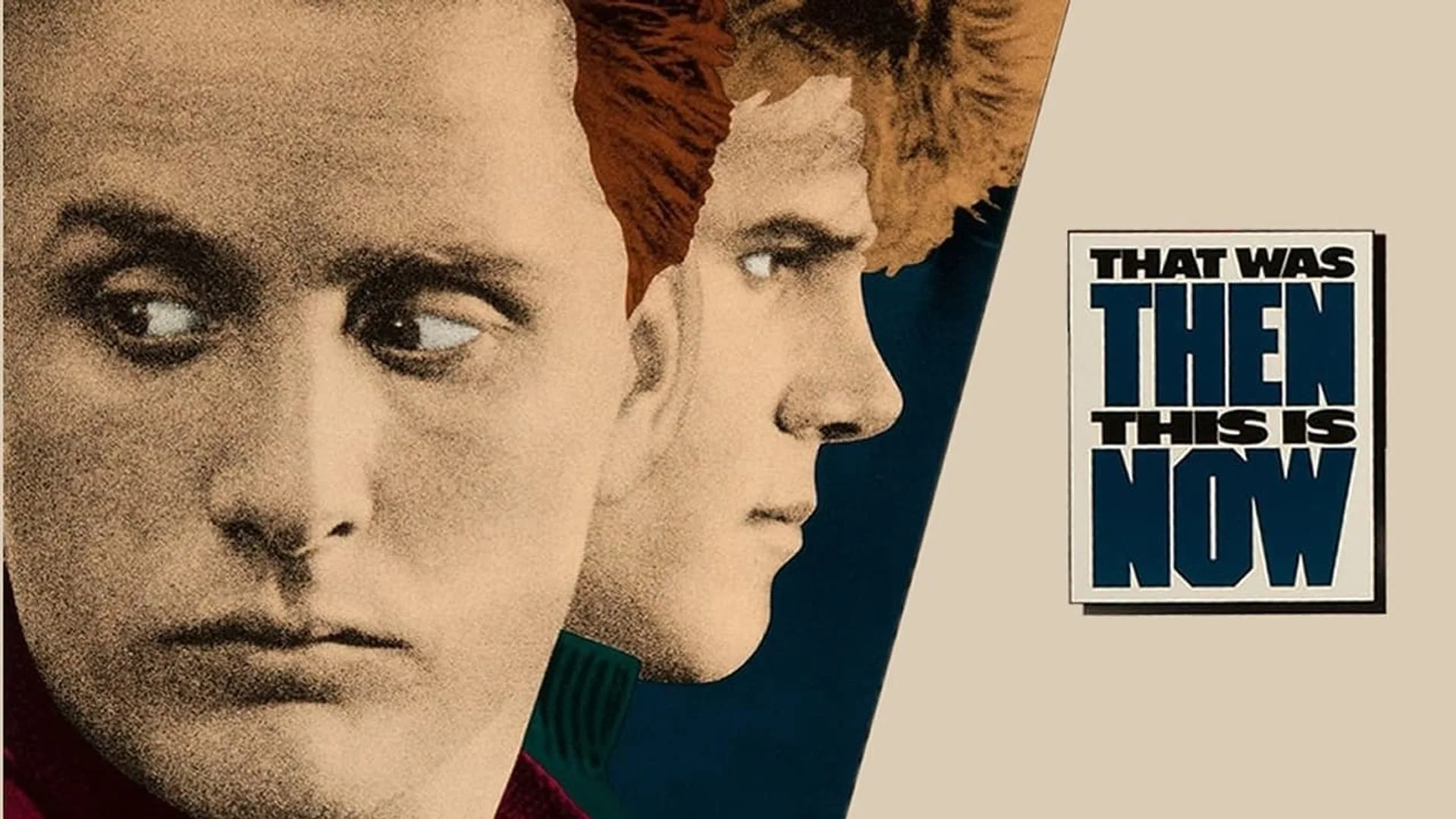
Often, when we talk to teenagers, we tell them that one day what they are feeling will not matter as much, which is another way of saying they will forget they were teenagers. We tell them, in so many words, that they will grow to become alienated from their younger selves. Hinton and the films inspired by her writing, like Francis Ford Coppola’s “The Outsiders” and Christopher Cain’s “That Was Then… This Is Now,” refuse to forget. Rather, her worlds dig their heels into the nowness of being a teenager, at once burdened with power and rendered disenfranchised and powerless, something more visceral than representation: empathy without a desire to correct. Hinton’s touch is an allowance of and lingering in the big mayhem of teenage feeling, an acknowledgement of that cataclysmic moment before we come of age.
Teenagers have a distinct temporal emergence as a social group. Beginning with the Industrial Revolution and industrial capitalism, when people began moving to cities to be closer to the factories where they labored, many took their kids to work with them. Other kids found semi-skilled jobs, which they easily secured because kids were seen as cheap labor. There was as yet only a distinction between childhood and adulthood. Many children from the working class worked into the 1930s. Already, by the early 1900s, people, like photographer Lewis Hine, were working to raise awareness around the horrifying conditions under which children were made to work. Alongside various labor movements and workers’ reforms, which enforced labor standards, there were calls to end child labor. Liberal thinkers and artists, among them Hine and his photographs, spearheaded a societal moral objection to child labor. Widespread criticism and counter-movements meant that, by the mid-century, child labor was much more regulated and legislated against.
No longer able to work, the kids had to go somewhere, and so public education was made mandatory. “Between 1920 and 1936, the share of teenagers in high school more than doubled, from about 30 percent to more than 60 percent,” writes Thompson. As most groups do, kids in school developed their own culture—a language, etiquette, and value system. By the ‘50s, a period of great economic expansion for America, older teens and adults received higher wages, allowing the latter to pass more money to their kids. Younger people had more money and leisure time than ever before, and their spending power was recognized and tapped by the commercial industry. The world around teenagers began to mirror teens’ culture, giving them things to buy and consume that reaffirmed their unique being in space and time.
It wasn’t long before mainstream society began to see teenagers’ power—their social and financial capital—as a threat, as something nefarious. Teens became a problem. Thompson quotes a New York Times critic: “The abolition of child labor and the lengthening span of formal education have given us a huge leisure class of the young, with animal energies never absorbed by tasks of production.” The juvenile delinquent (JD) became a looming specter of social destruction. In 1953, J. Edgar Hoover warned of an increase in crime rates brought on by teens, and the JD became a “nationwide problem.”
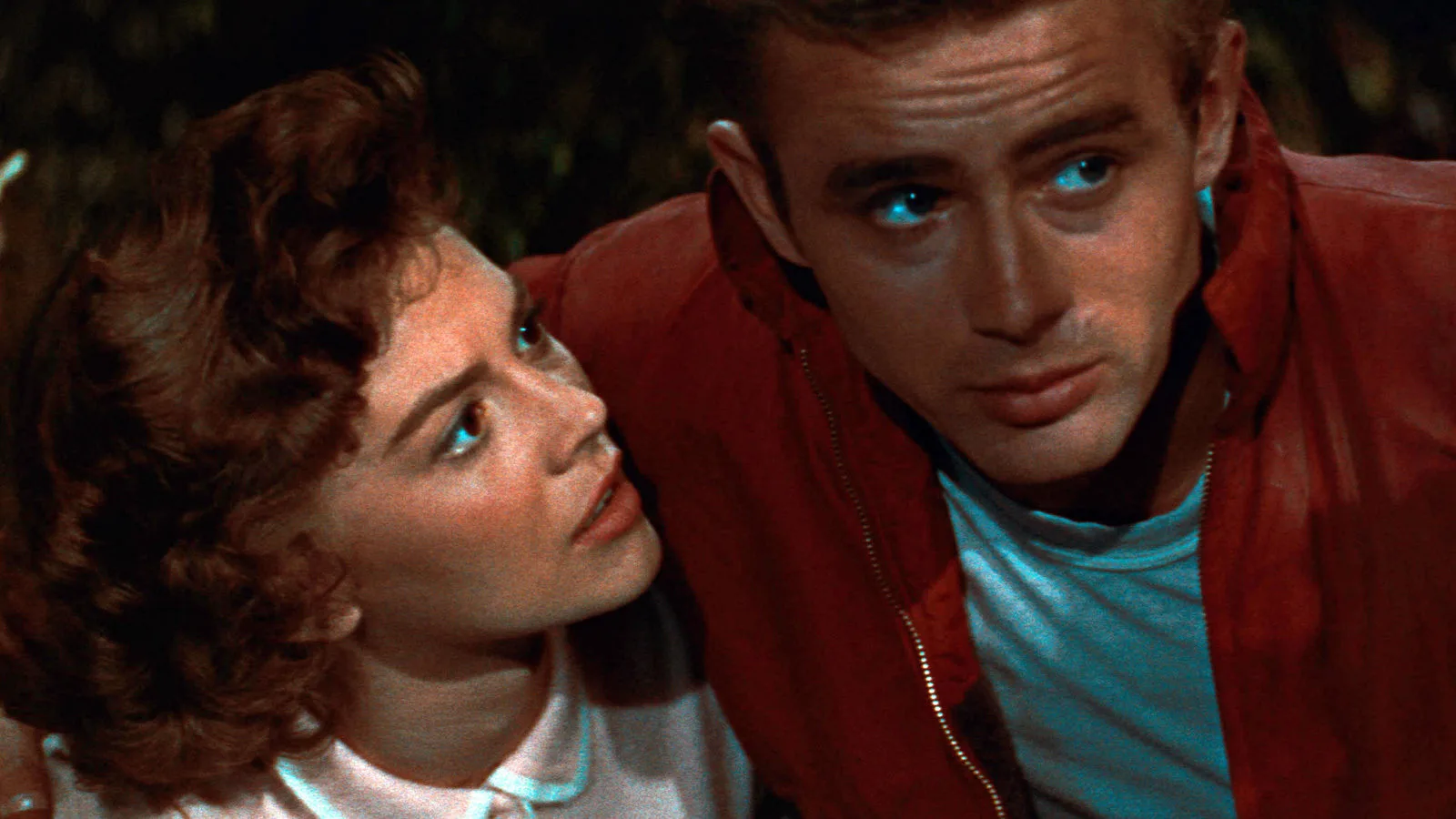
It was within this anxious climate of the ‘50s that “Rebel Without A Cause” was released. Directed by Nicholas Ray, the film stars James Dean, Natalie Wood, and Sal Mineo, and follows Jim, a teenage boy, over the course of his first full day in a new town and high school. Jim, who has a troubled past (he is known for fighting anyone who calls him the emasculating term “chicken”), is determined to make good in his new home. Jim has an overbearing mother and resents his father for not standing up to her—in Jim’s eyes, his father is emasculated, too sensitive, too housewife-like. Wood’s Judy, meanwhile, has a father who isn’t sensitive enough; he has withdrawn his love from her as she matures and feels it is inappropriate to be affectionate with a young woman. Mineo’s Plato, too, has trouble with his parents, but in his case, they are totally absent. The film suggests that teens act out and are troublesome because adults haven’t done a good enough job raising them, but it focuses primarily on the havoc the kids wreak.
There is a certain sense in which “Rebel Without A Cause” considers the teenager from the outside as a puzzle to be solved. For its first twenty minutes, the film oscillates between Jim, Judy, and Plato as they move through the Juvenile Division of the police station. Officer Fremick takes a great interest in the three teens, spending a lot of time talking with each, trying to figure out the cause of each teen’s disturbance. With Judy, he understands that she wants her father to love her. In Plato, he sees a kid left with more freedom than he wants and not enough love, and in Jim, he sees a boy full of anger and frustration and words, but no outlet. Fremick takes a psychoanalytic approach to helping the kids, making an effort to understand them that would have been familiar to audiences, given its conversation with the pop-psychology craze in the mainstream.
The fearful mainstream culture worked hard to solve the problem of the youths, to make sense of their actions, to find causes for the effects of their roaring, “animal” energy. Fremick tries to fit Jim’s anger, Judy’s budding sexuality and desire for love, and Plato’s violence within a framework of logic and science, but in so doing, he loses sight of the kids, their desires, and the words carried by their anger; he loses sight of themselves. Dean, Wood, and Mineo certainly humanize their characters to beautiful effect, but the film still feels like it is about the failures of adults.
Lost within the rush of history and obsessive meaning making and reason finding, it wasn’t until the ‘60s that teenagers were saved by S. E. Hinton, their irrational emotionality, and an autonomy of feeling, given back to themselves. Finally, they were seen in themselves and allowed to exist for themselves.
During recess in grade eight, we traded trivia about the making of Coppola’s “The Outsiders” like it was Pokémon cards. Did you know a bunch of eighth graders got him to even make the film? I asked my friends. A school librarian named Jo Ellen Misakian wrote to Coppola, telling him about the love her seventh- and eighth-grade students had for Hinton’s book. “We are all so impressed with the book, The Outsiders by SE Hinton, that a petition has been circulated asking that it be made into a movie,” Misakian’s letter read. “We have chosen you to send it to.” Coppola recalls “children’s signatures written in different-coloured pens.”
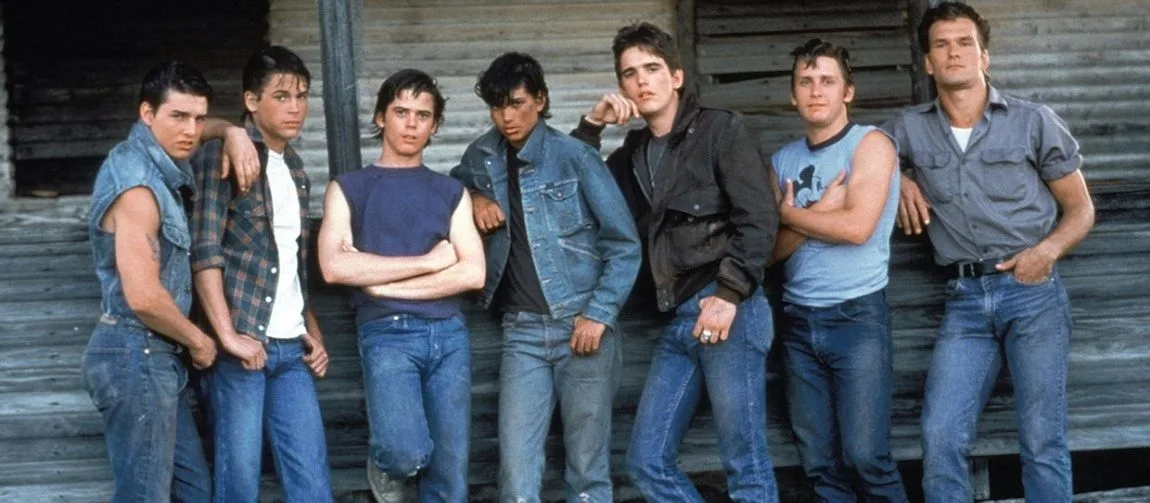
The novel was published in 1967, when Hinton was 18, but she began writing it when she was 15, after a friend of hers was severely beaten for being a Greaser. The film maps almost exactly onto the book and does so eloquently. In 1965, in Tulsa, Oklahoma, there was a violent rivalry between the Greasers and the Socs (or Socials). The former are poor kids who put too much grease in their hair, and the latter are rich kids allowed to get away with anything and everything. Socs often drive through the Greasers’ part of town looking for lone kids to jump. When Ponyboy (C. Thomas Howell) and Johnny (Ralph Macchio) get violently jumped by a handful of Socs, Johnny kills one of them, and the two boys go into hiding at the behest of Dally (Matt Dillon, his face as if carved by the hands of gods). The Soc kid’s murder brings on a reckoning for the two groups, and a rumble (a big fight) is scheduled to decide their fates: if the Greasers win, the Socs must leave them alone, and if the Socs win, then things go on as usual.
The story is many things, prime among them a consideration of wealth disparity and the treatment of poor kids in comparison to rich kids. Young Hinton does attempt to empathize with the rich through the character of Cherry Valance (Diane Lane), the girlfriend of the Soc Johnny kills. Ponyboy asks Cherry if she can see the sunset from her side of town, and realizes that they both admire the same sky. Everyone has it tough, no matter class, Cherry tells Ponyboy, but it’s a message that doesn’t sit too well with Ponyboy, who wonders until the end of the story at the unfairness of his lot compared to the Socs’.
The deck is stacked decidedly against Ponyboy and his friends. Ponyboy’s 20-year-old brother Darry (Patrick Swayze) takes care of him and Sodapop (Rob Lowe), the middle Curtis brother. Their parents are dead, and CPS threatens to separate the boys at any moment, at any misstep. Dally’s parents are uncaring of his existence; Dally could die in jail, and they wouldn’t bat an eye. And Johnny’s parents are never not fighting with each other or hitting Johnny; often, the boy sleeps on a dirty mattress in an abandoned lot because it’s better than going home. The Socs don’t have it nearly as tough as the Greasers, and Ponyboy, perhaps through a burgeoning class consciousness on Hinton’s part, feels this.
But what resonates most with kids, what resonated most with my eighth-grade class, wasn’t its critique of class so much as its bleeding heart. “Socs were always behind a wall of aloofness, careful not to let their real selves show through,” Ponyboy notes in the book. “[Y]ou don’t feel anything and we feel too violently,” he says to Cherry. The Greasers have “too much energy, too much feeling, with no way to blow it off,” the boy notes early on in the book. Too much “animal” energy, unchecked by societal mores. Energy like we felt at the time of our reading.
The Greasers fight hard and love hard. In the book, this is evident in the blood they make others shed and the blood they shed, in the tears they cry, in the hugs they are unabashed in giving to each other, in the words they say, and in the admiration they easily voice. All this is present in the film, too, and more. There is much to be said about touch and physicality in this film; the Greasers’ movement exudes communal joy and fearlessness. They love acrobatics, goofing around with each other, and they take immense pleasure in letting their energy flow from them to those around them through sport, an arm across another’s shoulder, or a back flip. These are young men who love without qualification or care for gender norms—time and again Ponyboy observes and remarks upon his brothers’ and friends’ beauty. It’s not sexual, but it can be if that’s how you want to read it; the relationship between Sodapop and Tom Cruise’s Steve is certainly sexual in the way that teenage friendships sometimes are. Johnny rhapsodizes about Dally’s gallantry. When Cherry tells Ponyboy that she would fall in love with Dally if she saw him again, Ponyboy understands; he sees the same qualities in Dally that Cherry does.
There seems to be no reserve among the Greasers, but rather honesty. All the feeling and energy is articulated as it arises in them; feelings of love and rage are honored, always, never rationalized away or suppressed or obfuscated in the way that the Socs have mastered. Ponyboy, Johnny, Dally, and the rest of them—despite how awful their material circumstances are, despite how hard they have to work to stay alive—are a beautiful lesson in feeling, in loving. We talk often about teenage hormones, how embarrassing and awkward they are, but “The Outsiders,” both film and book, is one of the very few works of art that doesn’t shy away from celebrating the earnestness of teenage feeling. Everything is urgent when we’re teens, and Hinton and the film understand this.
After “The Outsiders,” Hinton suffered a severe case of writer’s block, and it took her a while to pen “That Was Then… This Is Now,” which she published in 1971. Emilio Estevez, who plays Two-Bit with mesmerizing comedic grace in “The Outsiders,” penned the screenplay for the 1985 movie adaptation, “That Was Then… This Is Now,” and also starred in it as Mark, opposite Craig Sheffer’s Bryon, and Morgan Freeman’s Charlie. The story takes place two years after the events of “The Outsiders” (Ponyboy makes several appearances in the book), but focuses on Bryon and Mark’s friendship and how it unravels over time. The story is freighted with ancillary ideas about modernity, cultural attitudes toward hippies and drugs, and class consciousness (the Socs have started dressing like Greasers because looking poor is cool now). Hinton adds a simmering understanding of racial tension.
Sixteen-year-olds Bryon and Mark have been friends for as long as they can remember. When Mark’s parents killed each other in a domestic violence incident, Mark moved in with Bryon and his mom. The boys were reckless, as most of the other poor kids around them were. But as Bryon nears seventeen, he begins slowly growing out of his past ways, while Mark leans into them with a renewed ferocity, for fear that time will tear him away from the only family he has known and loved.
At one point in the book, Bryon’s girlfriend yells at her father for chiding her brother. “It’s not just a stage!” Cathy yells. “You can’t say, ‘This is just a stage,’ when it’s important to people what they’re feeling. Maybe he will outgrow it someday, but right now it’s important.” It’s an impactful encapsulation of the guiding idea behind much of Hinton’s work. Even as “That Was Then” is about the changes time wears on young people, it also doesn’t gloss over their feelings as time, as history, is happening to them. Much like “The Outsiders,” “That Was Then” articulates the yearnings and hurts both Bryon and Mark experience in the moment; it doesn’t trivialize their feelings, but rather sees them in their bigness, because they are big when they are felt, they are big right now.
In general, many teen movies are cautionary tales or raunchy comedies. Most films treat teens as just smaller adults, giving them problems that few kids in real life are saddled with; most films make sense of teens in reference to adults. Few films respect a teen’s feelings without also ridiculing them. A film like Kelly Fremon Craig’s “The Edge of Seventeen” is a rare gem for the way it wears a Hinton-esque gaze on its protagonist’s sadnesses, frustrations, and joys. The protagonist is shown to blunder or rage with hubris in the way that kids do, because the film understands that she is a kid, much like how “The Outsiders” understands that Ponyboy and Johnny are kids, and so doesn’t back down from showing them huddled together and crying after running away from home.
At the heart of Hinton’s stories about teens is the anger, the love, all those intense feelings that we often forget about when we grow up, maybe when the hormones stabilize, maybe because of the rush of time, the arrival of an age that we’re told matters more than the right-now messy thrum of a young life. The complexity and hectic immediacy of youth—all this small stuff that feels so important because it is important, because it is all a young person knows—are preserved and therefore honored by Hinton in her written word and in the films based on it. Mrs. Hughes seemed to come alive with these teenage feelings alongside us, evident in her excitement and in her recitation of the little words that begin “The Outsiders”. For a moment, Mrs. Hughes became just like us; for a moment, we, students and teacher, were on equal ground.
Time and again in Cain’s “That Was Then,” Bryon is told by the adults around him that everything he is feeling, what he’s going through, will not matter when he is an adult. He is told this as though it were something to look forward to. But the film, Cain and Estevez, knows better. The most poignant moment in “That Was Then… This Is Now” takes place a bit more than halfway through the film. Both Bryon and Mark are drunk; they have just pulled a childish prank on a girl they don’t like. Bryon asks Mark about his parents, why they killed each other. Mark sits by the window, and the deft camera and lightwork make the rainwater streaming down the windowpane look like tears are running down his face.
Mark says they were arguing over him, that his father doubted he was his real son, and that his mother finally told him Mark isn’t. “And they started screaming back and forth, and I just heard this sound like a couple of firecrackers,” Mark says. “That’s just what it sounded like, firecrackers. And then I thought to myself, I can go live with Bryon and his mom,” Mark says. “I was nine years old.” He says he got sick of them fighting all the time, that he was beaten a lot. “I remember thinking, man, this will save me the trouble of shooting them myself. I don’t like anybody hurting me.” It’s one of the film’s most jarring and frightening moments because of its honesty. I love this scene because it does something more trenchant than exposition or backstory or adding tension; it serves as a reminder of Mark’s kid-ness. The words Mark uses, many of them are Estevez’s own addition to Hinton’s, and together they depict the illogical wishful thinking any child in a dangerous situation partakes of.
“The Outsiders” and “That Was Then” never forget that they depict kids, even when the kids are given responsibilities or trials no kid should have to bear. Dally, as he playacts as a tough guy, still wishes his parents cared about him, which is why he loves Johnny so intensely. Darry, though he is 20 years old, is deathly afraid of losing his little brother, like he lost his parents, and shy, sweet Ponyboy cries because he is afraid and feels guilty about harboring bad thoughts about Darry.
Never do the films take pains to place blame for the teens’ living conditions on parents in an effort to solve the boys, to psychoanalyze them, because to do so would be to control the kids, to decenter the kids, to rationalize their existence away in the way a patronizing, paternalistic gaze might, or to turn them cold like the Socs, in the way a gaze that rationalizes that kids are adults in waiting would. The Socs are cold and aloof because their world is the world of adults, and seeing kids as smaller adults is to see them only in reference to adulthood. These stories remember their characters’ kid-ness and honour it; they remember they’re about how these kids feel in their environments right now. In Hinton’s worlds, the kids feel free, for better or worse. The Greasers aren’t responsible for the conditions under which they live, but they don’t spend much time trying to best them, either. Like most young people, they live their lives the best they know how–and this living is what Hinton limns.
At a time when much of society looked down on a group of kids fearfully, denied them their humanity, and ignored their pains and happinesses, Hinton gave this much-maligned group a voice and an image. Even now, we foist adulthood onto young people, hate teenagers for their loudness and silly slang, want them to grow up already, even as we see and exploit them for their power as consumers and buyers, forgetting all the while that we used to be just like that. We used to be just that. But Hinton remembers. She, and the films inspired by her work, taught me how beautiful unabashed love is, how it survives despite hurts, and how it is worthwhile right now, even if we might forget its vibrancy tomorrow. Right now, all these messy and loud and big feelings are important.
In my early and mid-teens in the 1970s, I was a loner jock/pop culture nerd who was obsessed with these pursuits:
Playing and watching baseball and football and to a lesser extent basketball, and consuming issues of Sports Illustrated and Sport and Baseball Digest, and reading books such as Roger Kahn’s The Boys of Summer, Jim Bouton’s Ball Four, David Wolf’s Foul! The Connie Hawkins Story and George Plimpton’s Paper Lion.
Watching late-night and weekend TV, especially talk shows such as “The Tonight Show with Johnny Carson,” “The Tomorrow Show with Tom Snyder,” ABC’s “Good Night America,” wherever Dick Cavett had landed in a given season—and the Chicago-based “Kup’s Show,” with the legendary Chicago Sun-Times columnist Irv Kupcinet presiding over an eclectic group of guests engaging in “the lively art of conversation.”
Movies. Movies movies movies.
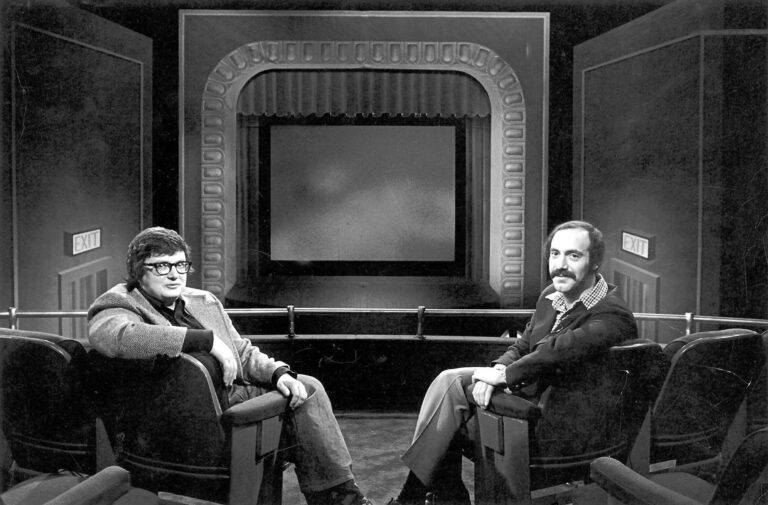
Then came a program that merged two of those three passions: movies and talk shows. At some point in late 1975 or early 1976, I became aware of “Opening Soon at a Theater Near You,” a monthly review program on WTTW-Channel 11. The show featured Chicago Sun-Times film critic Roger Ebert and Chicago Tribune film critic Gene Siskel talking about new releases in the low-key but instantly engrossing style that made you feel like you were eavesdropping on your two favorite teachers as they verbally sparred between classes. (Roger was 33 when the show debuted; Gene was just 29.)
It was great. I watched every week. I took notes. (I had piles of spiral notebooks back then, filled with scribblings about everything from stats comparing the 1927 Yankees to the mid-1970s Big Red Machine, to my ratings of various episodes of “The Tonight Show.” Like I said: nerd.) Conventional wisdom has it that Roger and Gene were awkward, unpolished and slightly geeky in those early years—and while there’s some truth in that, they were also pretty comfortable in their respective personas from the get-go, clearly knowledgeable and passionate about films, and respectful of each other’s opinions, even when they vehemently disagreed.
When I had the cash to see a movie at the Dolton Cinema or the River Oaks in Calumet City, I based my choices largely on Roger’s reviews in the Sun-Times (we were never a Tribune family, no offense)—and what Roger and Gene had to say on “Opening Soon at a Theater Near You.” It was a well-produced show from the start, but it also had a quirky, almost no-budget, enormously charming local public television vibe. The guys delivered insightful and sobering commentary on major films such as “Taxi Driver”—but they never took themselves too seriously, as evidenced by segments titled the “Dog of the Week” (with Spot the Wonder Dog) and later the “Stinker of the Week” (with Aroma the Educated Skunk), shining a harsh but playful light on terrible movies. As memory serves, in both cases, real animals were supplanted by plush toys. Easier to wrangle, I would imagine.
Fast forward to the 1980s and 1990s, when Roger and Gene were syndicated across the country. The review show was still must-see television for me—but as a talk-show geek, I was also a big fan of the Siskel & Ebert chat show appearances, including the grandaddy of them all, “The Tonight Show Starring Johnny Carson.” (Years later, Roger told me that when he and Gene were backstage at “The Tonight Show,” a producer told them Johnny was going to ask about the best movies currently playing in theaters—and they both drew a blank. From that point forward, whenever they taped a talk show appearance, a producer would be at the ready back at the Chicago offices in case they needed to make a call.)
They were great with Regis and Kathie Lee, with Oprah and Johnny and Jay and Arsenio, but best of all were the appearances with David Letterman, who recognized comedy gold in these fellow Midwesterners. Roger and Gene would come on and mostly talk about movies (the running joke was that while Letterman would have only one guest on at a time, he always kept two chairs on the set “for Siskel & Ebert”) —but they were also featured in comedy bits. They made quick cameos, gave their concession stand recommendations at a makeshift snack counter, and perhaps most famously, filmed a segment where Dave, Roger and Gene went door to door in New Jersey, cleaning the gutters at one woman’s house, playing a game of basketball in a driveway court, and even stopping in to pay their respects at a funeral home in West Orange. They had become such household names that when Michael J. Fox was on with Letterman to promote his movie “The Hard Way,” nearly an entire segment was devoted to Fox’s feelings about Gene and Roger and their respective reviewing styles.
It’s nearly impossible to overstate the impact Siskel & Ebert had on the careers of filmmakers, and on the popular culture. When they championed films such as “Hoop Dreams,” or did an entire show in black and white to decry the horrific practice of colorizing films, when they touted the works of Spike Lee and Errol Morris and Werner Herzog and the Coen Brothers, millions were watching and taking heed. At times, Hollywood players would take not-so-thinly-veiled shots at the lads. Roland Emmerich’s “Godzilla” had the incompetent “Mayor Ebert” (Michael Lerner) and his advisor, Gene (Lorry Goldman). In “The Ref,” where Richard LaGravenese had J.K. Simmons playing a deviant character named “Siskel” because Gene had said LaGravenese’s screenplay for “The Fisher King” was the least deserving of the Oscar nominees in that category in 1991. Gene and Roger were on “Saturday Night Live,” lampooned in Mad Magazine, on the Howard Stern Show, and were depicted in animated form on “The Critic.” They were as famous as the movie stars and directors they talked about.
Through it all, though, the Roger and Gene we saw in the balcony every week were the same guys who popped up on Channel 11 back in 1975. They never moved the production from Chicago to Hollywood. They never added unnecessary bells and whistles or gimmicks. It was two smart guys who loved movies sitting across the aisle from one another, speaking with passion and knowledge and savvy about the movies that would be opening that weekend at a theater near you. It was magic.
In Joachim Trier’s “Sentimental Value,” a once-revered Norwegian filmmaker struggles to mount a deeply personal project related to his family history, going so far as to attempt to enlist his estranged daughters—in defiance of their wishes—to help realize his vision.
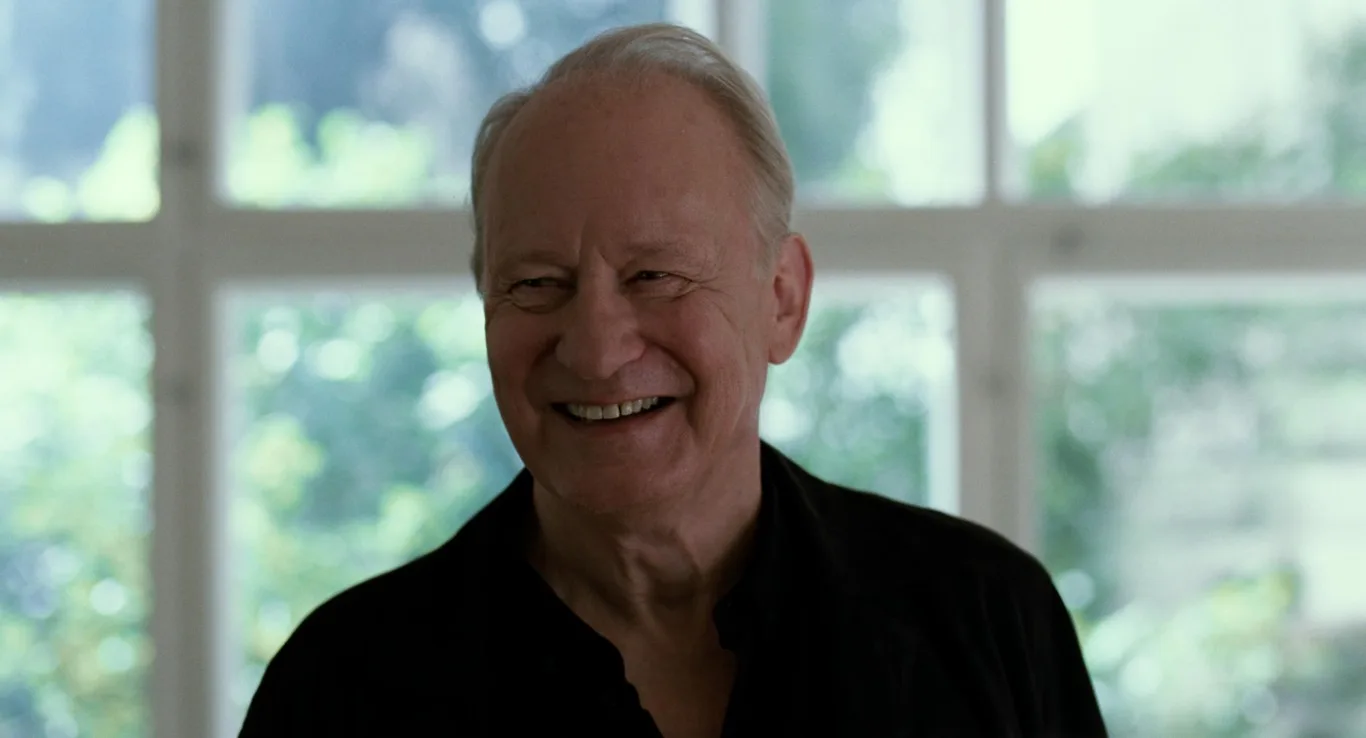
For Stellan Skarsgård, playing the filmmaker in question, Gustav Borg, was a uniquely rich opportunity; as his character grapples with the decades of distance from his daughters Nora and Agnes, both played with exquisite depth of feeling by Renate Reinsve and Inga Ibsdotter Lilleaas, he responds at first to their grief and resentment by avoiding it.
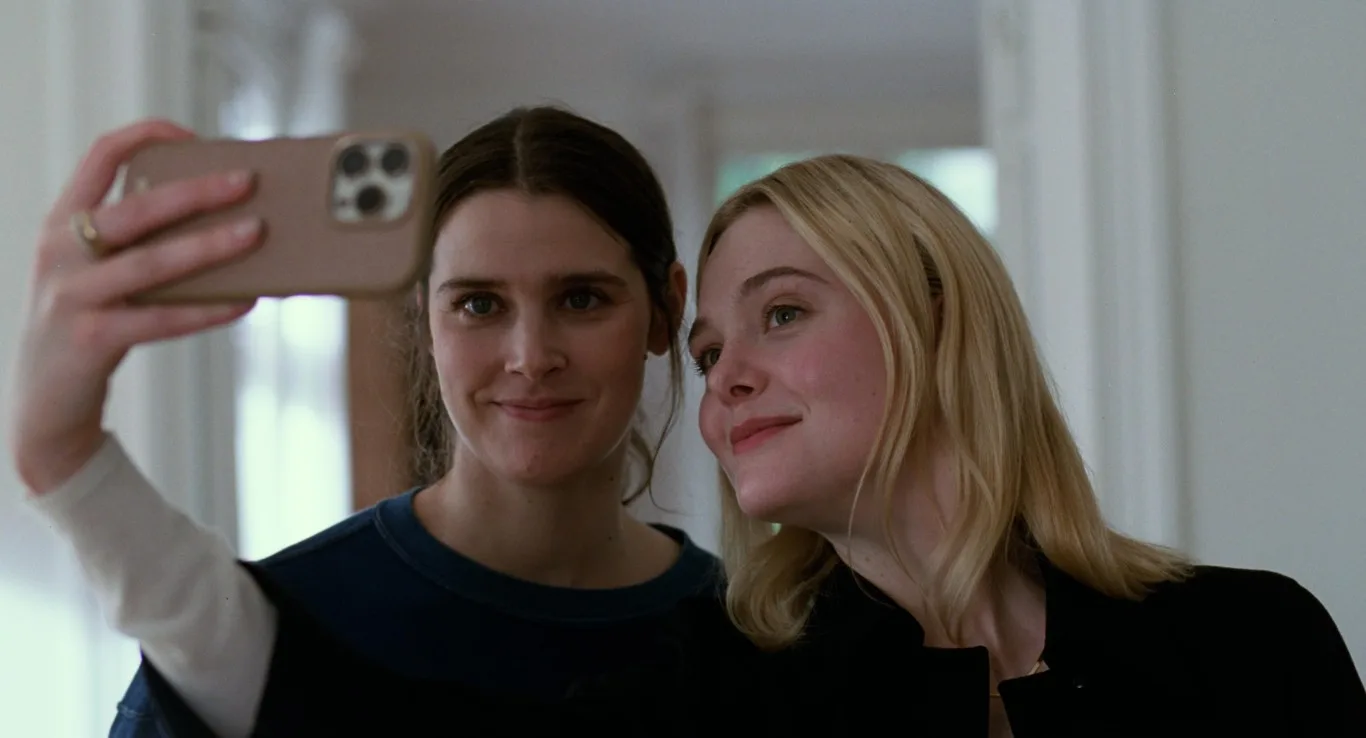
Instead, he proceeds with a new film about the death of his mother in the family home — where he intends to shoot it, even utilizing the office where she took her own life. Nora, his eldest daughter, is unwilling to play the lead role, so Gustav instead casts Rachel Kemp (Elle Fanning), an American ingénue he encounters at the Deauville American Film Festival, during a retrospective series screening the work—intensely emotional war-time dramas—that cemented his reputation as a European auteur.
In Trier’s film (now in theaters), the relationship between Gustav and Rachel, developing in unexpected directions as they work together to excavate the character he’s written, becomes a profound exploration of the strange, intimate alchemy that can occur between actors and directors, even as it also reflects Gustav’s struggle to reconnect with the daughters he once walked out on.
Trier never had any actor in mind besides Skarsgård for the lead role; desperate to cast him, he flew to Sweden and reportedly begged him to take the part. Sensing that the role would stretch his considerable range, the actor agreed. Fanning, meanwhile, came to Trier’s attention after a recommendation from Mike Mills, who’d worked with the actress in “20th Century Women.” An American actress on a Norwegian production, playing an American actress on a Norwegian production, Fanning added a metatextual layer to the story through her very presence, but that self-awareness compelled her to disappear further into the role of an actress lost in her career, desperate to experience more from the film industry than it has extended to her.
Taking a break from production in New Zealand on “Predator: Badlands,” Fanning flew to Oslo to rehearse with Skarsgård over a long weekend, where the two rehearsed together with Trier, working to mold their characters to better reflect their understanding of the roles. In between her commitments to the sci-fi “Predator” franchise, she was able to fly directly to Deauville and film her scenes there before carrying on to Oslo, where the actors further honed their collaboration.
With “Sentimental Value” now in theaters, Fanning and Skarsgård reflected on the unusual depth of their on-screen dynamic, the filmmakers they’ve felt truly seen by, their favorite moments of working together, and much more.
This interview has been edited and condensed.
This is such a delicate story. How did you find the connection between your characters—this young actress and this reclusive director—and the strange intimacy that grows between them?
Stellan Skarsgård: We’re actors, and actors do create an enormous intimacy—and a real intimacy—in seconds. But it only lasts for three months, and then it’s gone. [laughs] The intimacy was not a problem, and Elle is a fantastic woman, so it was easy to relate to her and play with her.
Elle Fanning: We’re both child actors, so we have that in common. We also started filming in Deauville, so the beach scenes where Gustav and Rachel meet for the first time were our first scenes together, which I think was a perfect starting point for our characters, to have that kind of spark and connection happen, then get to create from there. Like Stellan said, actors all speak the same language, and with a script this good and Joachim leading the charge, he cultivated that for us.
I’m curious what starting at Deauville, filming scenes set at a film festival, added for you in regard to the meta elements of making a film set in the world of acting that’s so often relevant to your lives outside of specific roles.
EF: We filmed during the film festival, while it was happening, with everything bustling around us. We had night shoots, and it was very cold in Deauville. As an actor, normally, I’m not used to shooting my first scene on the first day, or my last scene the last day, because you get used to shooting not in chronological order. But I do think starting in Deauville was helpful in that sense.
I also got to watch the movie that Gustav made, the clip of the film that Joachim actually shot; I got to watch that in real time in a theater, and it really struck me — because it’s very good. The girl, she’s so good, and it shows that Gustav is an amazing director, you know. Almost, in those moments, Rachel becomes a surrogate daughter. He’s able to open up to her and work with her in this artistic way that he can’t do in reality with his own children.
Rachel is definitely searching and longing for purpose; Gustav, he sees that in her. She feels almost like the light has shown on her; it’s something she’s wanted. She’s wanted an opportunity to showcase her talents, so she makes a bold decision to really go with him after their time at the beach, where they share a connection.
I always felt like Rachel probably hadn’t had that director-actor connection in that way before; that feeling, it’s a really special feeling, and I have gotten to feel that before, and I certainly felt that with Joachim, but we were trying to capture that.
SS: We started lighthearted. The scenes in Deauville don’t have a continuation, in a way. They’re standalone, like film festivals are. It’s a short party in the world of reality — and they’re irresponsible. Gustav has before had a scene been rejected by his daughter., so he’s down memory lane. He sees this retrospective of his films and meets this young, vibrant actress; he’s just enjoying it. He thinks he’s finished as a director, actually, and there’s a sad undertone to it, but that doesn’t affect his joy of spending the night with her.
In your careers as actors, when were the first times you remember feeling that type of intimate bond with a director, the sense of another artist really seeing you?
EF: I mean, I’ve been lucky. I’ve had it quite a few times, but also at different ages. I think the ages really matter, too — because it’s about at what age you need a certain thing. I worked with Sofia Coppola when I was 11, and she saw me. She was this cool aunt that took me under her wing and really valued my opinions, who didn’t talk down to me. That was something special.
I definitely can pinpoint a lot of people who have done that — certainly, with Joachim, it was a profound experience. He really sees his actors, and he has to — it’s the magic ingredient of what makes his films work so well, the minutiae of our faces, the small mannerisms and expressions. He’s able to capture those, because he creates such an environment that you know is safe, where you want to feel vulnerable, you want to express and be open. He encourages us to be spontaneous in a way, to react completely. He’s not afraid of silences, and you can see that in the movie. That’s my favorite type of directing. Now that I’ve worked with Joachim, I’m like, “Well… Can I go back?”
SS: I mean, there’s one director that I’ve worked with a lot in my life, who’s Hans Petter Moland, and we’ve collaborated on very different kinds of films. We’ve even been in the Arctic, and we’ve had a lot of fun together. Another collaborator is Lars von Trier, of course — the other Trier. He’s been so special and wonderful.
What they have in common, those directors, is that—in the case of all three of them—the set is a safe place. You can do anything on the set, and you’re not a tool; really, you’re a source of inspiration. You’re supposed to produce a mess of expressions, of different temperatures, which will lead the director to a lot of options when he fine-tunes it in the end and edits it.
There’s a heartbreaking honesty to so many of the conversations that your characters have, especially in the latter half of the film, around that idea of being potentially miscast, or realizing that you might not be on the same page in terms of your vision of a character, your place within a film that you’re working on. What were you able to bring into that part of the narrative, being actors with a great deal of experience? I imagine you’ve had to navigate that confusion before, in some way.
EF: It’s the heartbreaking element to Rachel: she’s so desperate for something that she’s miscast for, but she’s trying to find her way in. She starts to realize, over time, being amongst the family drama, and she starts to see the cracks and starts to actually have this immense empathy — to understand, possibly, where Gustav is coming from. But it is at the cost of what she wants, so she learns something. She’s very invested in the result of her career, of pushing forward; but, over time in the film, she has to take away that it’s really about the experience and the journey that she has.
Gustav awakens something in her; she later feels like she does have the confidence, and she does have the talent, but she ultimately knows, “I will walk away from this, but I will keep this experience with me, and that will make me a better actor and a better person.” There are personal things, for sure, that I can relate to in this — and, on a surface level, sometimes when you’re talking about a character with the director, you’re like, “Oh, we just see it so differently.” It can be a very confusing state to be in, when you want to do a good job.
Rachel quickly learns it’s not her; it’s his own demons that he’s facing, but he can’t say that. He doesn’t know how to say it. He keeps saying, “Well, it’s not about my mother,” because it’s really about his daughter. She comes to learn this and then does a really brave thing in walking away. But that changes her for the better.
SS: It’s a very important scene for me as Gustav, what we’re talking about, because it’s the first time he realizes it. He listens to her, and he hears her, and he realizes that maybe he wasn’t right. He’s been trying to project somebody else—his daughter, for instance—into this film, onto her. He says the one line: “I’ve let you down, and I’m sorry.” He sincerely means it. Gustav does not have much dialogue in it; Elle’s keeping the scene going, but, but his reaction to her—to her devastation—is wonderful to see, and it’s wonderful to play.
Elle, one of my favorite lines of dialogue in this film is one you say to Renate’s character, in discussing your struggle to understand your character: “The more that I study her, the more lost I feel trying to be her. It’s like her sadness is… It’s such an overwhelming part of her. It’s a beautiful theme. But I can’t tell if that’s just the cause or everything, or is it… a symptom of something deeper.” It’s a beautiful sentiment, in part because it gives us a sense of how Rachel approaches her process of trying to understand, of getting into her character. Tell me about finding your way into a form of the creative process that would be honest to your characters.
SS: It was crucial to find out what kind of director he was. What made it interesting, for me, is that he had to be an extremely sensitive director and an expert on expressing feelings in his words — as bad as he is in his private life, right? I’ve met several directors that are like that. They’re masters at expressing and explaining human feelings in their filmmaking, and they just can’t handle it in their personal life. Sometimes, it’s because the film work is an escape from reality for them, because it is manageable. That was my take on it. Of course, I did not want to have any sort of residual feeling of being cynical. When I go with Rachel as an actress, I go fully with her as an actress. I don’t know that I am trying to make her be my daughter.
EF: For Rachel, with that, she’s not used to working in that way. I think she’s someone who’s interested in the results. She’s academic when it comes to acting; she’s technical, and she has these big feelings inside of her but doesn’t know exactly how to portray them on screen. I mean, this is just something that I thought about. She’s like, “Okay, I know my lines, I’ve annotated this, I’ve done my homework,” but she hasn’t found that spontaneity.
The scene, when we’re doing the rehearsal, and she reads the monologue that Gustav wrote, something is really awakened in her. It takes her by surprise. I’ve had those moments before: of feeling like you’re on a set, but the emotion just comes, and it’s exhilarating. Normally, it’s caught on camera, although not necessarily in a rehearsal — but for Rachel, it’s a discovery in that rehearsal that she can go to those places. I think her relationship to her work really changes over the course of that scene, which was fascinating to play, because of that emotion. She’s very excited and giddy that she was able to have that.
Would each of you be able to share a memory that you look back on: whether with the experience of working with one another on this project, or with some moment where you felt like this project was enriching you as a performer?
SS: I think that was our final scene together. It moved me, in a real way, when it ended. It lingered, too. It’s something I could not process at the moment, but I experienced it. Elle was fantastic there.
EF: Thank you, Stellan. That was that day. That was a really special day. It was the culmination of the whole experience. For my character, it’s kind of her end, where he sends her off, and it was a very charged day. I think I came in with a lot of thoughts and emotions, and it took me to different places — but, always, I was looking into Stellan’s eyes.
For me, in Deauville, on the beach, there were a lot of dreamlike moments, where Joachim would say—without saying we were ad-libbing—that we could say what we wanted to say. It was about looking into Stellan’s eyes; playing this character, I found myself getting emotional and moved from completely seeing Gustav’s inner life: the devastation that he had felt, that he doesn’t know that he’s feeling, about the rejection from his daughter. All of that was completely there. It’s not necessarily in the lines, but it’s not acting any more, at that moment, and that was special for me, being taken on that journey.
In a career retrospective talk at the 2015 Toronto International Film Festival, Mamoru Oshii spoke, if not regretfully, mournfully about “Angel’s Egg.” The legendary Japanese writer and director—who secured his place in animation history with “Ghost in the Shell”—said that his dreamlike, allegorical 1985 OVA film nearly killed his career: “After that, nobody gave me jobs for three years,” he said. He went on to describe the film as his “poor daughter,” the one who stayed home while his other films went out into the world and found success.
To extend the metaphor, now she’s all grown up and moving out of the house. “Angel’s Egg” was restored in 4k earlier this year, and since then has enjoyed a global run that included a premiere at Cannes in May and a homecoming at the Tokyo International Film Festival in early November. It’s played at a mix of festivals, from modest and genre-specific to high-profile gala events; this reflects the shifting status of Japanese anime on the global cinema scene, as it evolves from a niche interest into a global box-office phenomenon and a genre worthy of serious critical consideration.
“Angel’s Egg” is at the forefront of the latter, a cryptic, symbolically loaded work of art that’s better felt than intellectually understood. It combines Christian imagery with delicate hand-drawn animation, and a story that’s stripped down to its most essential elements. There’s a girl, devoted to caring for the mysterious egg she carries with her at all times; a boy, carrying a gun in the shape of a cross, who joins her in her lonely vigil; an empty, bombed-out city, a heavenly host frozen in stone, and a floating eye covered in black spikes that may or may not be God.
We spoke to Oshii over email shortly after “Angel’s Egg” screened in Tokyo, in advance of the film’s theatrical debut in North America this week, November 19th. And his answers were as intriguing and enigmatic as the film itself.
You’ve talked about the influence movies have had on your work—what ideas or philosophies drive you as a filmmaker, or just as a human being?
It’s not an ideology or a religious belief, but rather a kind of religious passion—perhaps something closer to a “fetish” or “libido.” It’s extremely difficult to explain.
What was the motivation behind incorporating Christian imagery like the cross and the“heavenly host” into “Angel’s Egg”?
I was never a Christian, but I was fascinated by the Bible and read it passionately when I was young. I’m certain that experience laid the foundation for my way of expressing metaphors.
What references or influences did you use when you were designing the backgrounds in“Angel’s Egg”—specifically, the abandoned city?
I’ve been drawn to abandoned cities since childhood, so I’ve definitely been inspired by photo books of that kind. I’m also attracted to Western architecture, which I think works beautifully in animation.
The characters and the settings in “Angel’s Egg” are abstract; they contain elements ofour world but are detached from our reality. How did this elemental quality affect thecreation of the film: the design, the storytelling style, and so on?
My goal was to convey the concept through the film while minimizing the focus on the characters and the story. The characters, as well as the story itself, are merely symbols—materials for visualizing metaphors. When I made this film, I believed it was possible to express that idea through cinema.
Is your personal interpretation of “Angel’s Egg”—or any of your work—relevant to us in the audience?
A “movie” is an imperfect form of expression in many ways—and I think that’s its greatest charm. I feel a film truly fulfills its purpose only when it’s being discussed and talked about.
As temperatures drop, the promise of a guilty-pleasure thriller about a mysterious man who infiltrates a family with the intention of destroying its patriarch is an enticing invitation. With two episodes set on the shores of a Grecian vacation home, a beautiful cast, and a twisted mystery at its center, Prime Video’s “Malice” should draw the attention of viewers who have made streaming series like “The Hunting Wives” on Netflix and “All Her Fault” on Peacock into hits.
Everyone loves a good piece of escapist nonsense—shows in which the plot threads and character motives don’t have to ring true as long as they entertain. And yet, even the guilty pleasure has its breaking point and can vary in quality. When done well, we don’t mind irrational behavior and inconsistent characters in the name of thrilling twists. When done poorly, we get “Malice.”
Creator James Wood’s six-part series opens in Greece at the gorgeous vacation property of the Tanner family, led by the charming Jamie (David Duchovny). From the beginning, the writers drop narrative crumbs about Jamie’s past and personality. He’s a bit abusive and bullying to his son, and asks people to stay off social media, implying that maybe there’s a scandal about to burst. Almost hysterically, numerous “clues” dropped in the first couple of episodes just disappear, as if the writers forgot to weave them into their incredibly inane final act. What’s the opposite of a Chekov’s Gun? What do you call it when a playwright puts six loaded guns on a table and then forgets they’re there?
Anyway, we also meet Jamie’s wife Nat (Carice van Houten of “Game of Thrones”) and watch as Nat’s BFF Jules (Christine Adams) arrives at the Grecian mansion with her husband Damien (Raza Jaffrey), their son, and the family tutor Adam (Jack Whitehall). From the beginning, Adam is clearly the villain of the piece, a sort of Tom Ripley figure who has worked his way into Jules and Damien’s family just to get closer to Nat and Jamie. How do we know this? He tells us. And not through narration. “Malice” is the kind of show wherein Adam drops off a passed-out, drunk Jamie one night and tells him that he could kill him, but has chosen to destroy him instead. We get it.
(L-R): Nat Tanner played by Carice Van Houten. Adam played by Jack Whitehall, Jamie Tanner played by David Duchovny, Damien played by Raza Jaffrey and Jules played by Christine Adams
The most significant problem with this “Ripley”-inspired tale of a suave conman who tries to destroy the life of a wealthy businessman is that Tom Ripley needs to be charismatic and brilliant. We need to believe that smart people would let him into their inner circle in a way that would lead to their destruction. This simply never happens with Adam Healey, a character whom Whitehall plays like an obvious sociopath. He’s dead behind the eyes, which could be a choice to amplify how his quest for vengeance has destroyed him on the inside, but it also means that no one who has built a business from the ground up would leave him in their house alone, or around his children, or around his wife, etc.
And yet there are tiny little choices that will keep viewers with “Malice,” including a convincing performance from Duchovny as the kind of man who often ignores the harm done by his business choices. He’s casually selfish in a manner that can be convincing and could have made his Scrooge-esque downfall into thrilling television if Wood and company had the courage to really follow through on that idea.
Without spoiling, Adam’s plan to destroy Jamie’s life, and his motives for doing so, are so half-considered by the writers of “Malice” that they culminate in a finale that has no narrative or thematic conviction. It’s a show that never figured out where it wanted to end, and so picks one that could work as well as any other. The revelations and final choices feel so casually considered that they collapse under any sort of analysis. It doesn’t leave one marveling at the arc of a villain or even a victim, just feeling mistreated by bad TV.
Whole season screened for review.Now on Amazon Prime.
A profoundly moving portrait of a family reckoning with the painful memories embedded deep within the walls of their ancestral home, Joachim Trier’s “Sentimental Value” finds the filmmaker reflecting once more on the existential themes—of time, love, identity, and history—that have abounded throughout his career.
The film reunites Trier with Renate Reinsve, a Norwegian actress whose performance in “The Worst Person in the World” earned her the award for Best Actress at the Cannes Film Festival; as a theater actress revisiting old wounds, her performance—opposite that of Inga Ibsdotter Lilleaas as her younger sister—distills the kind of agonized emotional clarity that has governed Trier’s recent work.
Stellan Skarsgård stars as Gustav Borg, their father and a once-celebrated filmmaker whose efforts to repair his relationship with his two daughters are complicated by his interest in revisiting his own, fraught familial experience—including the suicide of his mother, who suffered during World War II during Nazi occupation—factors into this recent work. For Trier, the film is deeply personal; his maternal grandfather, Erik Løchen, worked as both a jazz musician and one of Norway’s better-known filmmakers, and his presence is directly felt in “Sentimental Value” through the voiceover narration of Bente Børsum, who appeared in Løchen’s “The Hunt,” as well as through the film’s extended exploration of filmmakers channeling angst through their work.
Ahead of “Sentimental Value” opening in theaters, Trier sat down for a wide-ranging discussion of his film’s poignant themes, the challenges and joys of working with time, his unique personal connection to this story, the inescapable influence of Ingmar Bergman, and much more.
This interview has been edited and condensed.
I’ve always felt that you identify so strongly with your characters—that the empathy of your filmmaking flows from your impulse to understand and connect with them. You come from a film family, and I’m curious about drawing on that personal experience in shaping the characters of Gustav Borg, his daughters, and Rachel Kemp.
It’s true. I think the idea of identification comes first from a writer’s point of view, then from a director’s, and finally from a collaboration with the actors. I need to understand them and identify their yearnings and their struggles. But that’s not the same as saying that the characters are biographically like me, or that you don’t need to vary up the characters. Still, this is a polyphonic kind of story, and so it’s nice to have that identification.
For example, Gustav is a film director. As you say, absolutely correctly, I come from a film family background. Without him being anyone I know, I understand the struggles and the joys, the passion for making films, so I identify with that—and also the anxiety, perhaps, that it will come to an end, that “one day they won’t let me,” which is what he’s going through. But this film was also about having characters like the younger sister, played by Inga Ibsdotter Lilleaas, who was in Gustav’s film as a child and certainly didn’t want to be in front of the camera again—something completely different.
With her, for example, I found this identifiable point: she wants everyone to connect and feel good. I have that in me. I always want people to get along. You do find something with all of them, after a while, when working on them. But the last thing I’ll say is that I don’t want to hinder the possibility of the actors coming in and taking charge of the characters. It’s good to leave an open space for them to fill in, as well.
The term you use, “polyphonic,” refers specifically to sound. I’m curious about your creative relationship to music, score, and especially sound design, as this was your father’s craft. Your film opens and closes with two wonderful tracks, Terry Callier’s “Dancing Girl” and Labi Siffre’s “Cassock Chase,” but how do you think about the role of sound design in your filmmaking?
Thank you very much for asking that. I really care about it. When I talk to friends about using music in film, I also tell them that one of the joys of life is the system of loudspeakers and the richness of frequency you get in a good cinema. It’s the best sound you’ll hear anywhere in the world. It’s a super hi-fi, complex, surround-sound experience. I feel that sometimes filmmakers forget how subtle you can be while still including a lot of sound and using the full range of frequencies. Hammering, loud sound doesn’t necessarily use the possibilities of a theater.
That’s something I think I’ve learned from my father: that you can create what feels like silence but is actually a full sound design of atmospheric subtlety. I love loud pieces of music; I love noise, but I also love the dynamics of daring to be quiet and gentle with sound. It’s almost like you draw the audience into the image by being very cautious about sound in certain areas.
For example, towards the end, there’s an almost climactic scene between the two sisters, full of emotion and action. And there’s no music. I tried to really build towards that feeling of presence: being there, hearing the breathing, all the movements of clothes. That can ultimately be so strong. Sometimes, when it comes to people talking about sound, they always talk about the loud films—And I think that the opposite could be equally complex and interesting.
Everyone has a childhood home, a place where they grew up; this film explores the poetics of such a location. You’ve referred to the house as a “witness of the unspoken.” But there’s an emotional residue in the house’s atmosphere; it reflects all this lived experience. What can you say about first conceiving of the house and its presence, and of mapping your story onto this setting once you had a physical location?
First of all, our spatial treatment of the narrative—to refine it so that it fit the space—was an exciting, visual task. When we write, Eskil Vogt and I write for the image in a way, and for the actors, but I think the sound aspect is really interesting as well.
Hania Rani was our wonderful composer; this was the first collaboration I’ve had with her. She wanted to go to the house and record its reverb and other sonic qualities, which, to me, was fascinating. I’ve never had anyone think like that, but she said it inspired and affected her approach to reverbs for certain pieces of music as well. The idea of sound always being present is very interesting to me.
And to elaborate on that spatial treatment of the narrative, this film required characters to move between rooms and down corridors, and it needed a location with a room that could be dressed to play different roles over time. We first see Nora enter the house through what had been her mother’s psychology office, where there’s still an empty chair… How much did the story change once you had a location, and how much did the narrative dictate the location you were looking for?
It was a bit of both. The first draft contained pretty much the story you see in the film, but the relationship between the upstairs and downstairs—and that hallway corridor towards the room where such dramatic events we realize throughout the story had occurred, all of that repetition of angles that is so fun to play with in movies—I think this house really gave itself to that. Along with our wonderful production designer, Jørgen Stangebye Larsen, we also built a replica of the house. In addition to shooting in the real house, we had a studio version so we could go between them.
The studio version got dressed for every 10 years of the 20th century, with different wallpapers and different moods. A lot of that was done through research; we also had in the studio these VP walls—virtual production walls—where we created an exterior, based on research, photo-realistically showing how foliage grew over time and how buildings were erected suddenly as others disappeared. We drew a map of time through the house and its surroundings.
You actually built a replica of the Borg family house on a soundstage to film a montage of the house across generations. What effect did that have for you, given the relevance of that filmmaking technique to the story? Gustav is so fixated on filming this deeply personal story in the actual house where so much has happened.
I’m primarily a location director, so I always feel it’s wonderful to look out the window and receive a gift, as something will happen that makes it feel close to life. But, actually, with the team we had, the studio experience was wonderful, as was the feeling of being able to create specific moods with a lot of control. So, control and chaos were both alive in this process, in new and unusual ways for me.
The replica house made me think about how directly you depict time in this film. How has your temperament toward dealing with time, which you’ve described as one of the primary aesthetic considerations a filmmaker can have, evolved with this film?
It’s such a great question, and it’s an essential one to the core of this story. The aspect of time begins with the film’s opening, which shows Nora, the eldest daughter, and her essay on the house’s perception of her family history. It’s the idea that, for the house, a human life is very short, because the house is a constant, in a way; it’s this longer, lasting structure. I thought that was a nice setup for a story about reconciliation, where the adult realization of the sisters that they’re not going to have their father around forever—even though he’s a complicated character—means they, in their own individual ways, have to reconcile their relationship with him.
That’s one aspect, but it’s also a possibility to put the idea of social history into context when we realize through the film that the Second World War and the Nazi occupation of Norway were affecting the lives of families, and many people’s lives, in ways that still impact us. Many people say that a war trauma takes three generations before it lets go. For people who haven’t seen the film yet, that’s not in the forefront of the story, but it’s there in the house, and the idea of the house witnessing life helps us tell that story.
It’s Agnes who seeks out more knowledge about her grandmother’s experiences during the war, and this has a profound effect on her. It’s my understanding you’ve personally been through that process of tracing your family history back into that conflict.
My grandfather was in the resistance during the war; he was captured and spent time imprisoned by the Nazis across two different camps, and he was very traumatized by that. He made films after the war, and I think that was a way to survive and find a place in the world again. He was creating something and seeking meaning in it.
I think that’s at the core of the process of making this film for me, but also the idea of the National Archive, the accounting of facts in a society, is fundamental. It’s a different narrative from the fictional one of the National Theater, where the older sister works; it’s the historical aspect of how necessary it is for democracy and society to hold themselves accountable to facts.
I found, through a piece of paper, a witness to the accounts of my grandfather’s imprisonment. It’s provable. No one can deny there’s proof that a terrible thing happened to him. With where the world is right now, that’s a very important thing to remember: that we need to learn from history. And I think the film asks this question of the ambivalence of history and memory. On one level, we need to forget, to forgive a difficult parent.
On the other hand, we owe it to the past to remember certain things, not to repeat those faults. And we owe it to the people who experienced certain things. That’s the space where we live in time, in between those two notions.
It’s better to live in impermanence than in any kind of finality, in how we reconcile with the past.
Life is a process—and making films is a process. Now that I have talked a bit about this film, and you’re asking me about memory and time and our relation to it—and also the process of making a film—there’s always that retrospective narrative that now is slowly being created as I’m talking to journalists.
But it’s a narrative that will never quite mirror the process, because in making it, you’re lost along the way. You think it’s about something, then you discover something else. It’s ongoing, but it’s nice, at the end, to try to summarize: “What the hell did we make?” and to meet people who can mirror it back to us.
To bring Gustav into that theme of excavating memory… Nora works within the theater, and Agnes explores the archives. As we see in Deauville, during a retrospective of his work, Gustav has been speaking through his art, making films like the one whose ending we see: a wartime drama about an orphan’s ordeal. What is he reckoning with?
“Anna,” yes. We thought a lot about that, actually, since we knew that Gustav is a character who’s quite clumsy at relating to people socially, particularly his family and his daughters, but whom we realize has a more sophisticated, emotionally engaging way to create art. It was very important that those films expressed some aspect of him; in the piece of his film we see, though more pieces didn’t make it into the final cut, the ending of “Anna” obviously deals with some sense of survivor’s guilt.
We later realize perhaps why that is a major theme with him. It was important for us to use everything in this film to get into character and to explain the layers of observation about human beings’ incapacity for communication, while still revealing them. That was an interesting way into him, the films.
Gustav speaks through his art in a way that he cannot in life; with the film he wants to make, it’s about his mother and his daughter, but it’s also about him. He’s trying to express something deeply personal by speaking through them. But one wonders whether he wrote this script specifically to bring about personal reconciliation, or whether he wrote it to revitalize his career because he knew it would be creatively stimulating.
My feeling is that you have a really great understanding of the complexity of that in your question, and I’m almost hesitant to answer, because I think you’ve put it very beautifully. There are a lot of different things going on with him, I think you’re right. It’s interesting for the audience to consider whether Gustav’s primary urge is reconciliation. Does he want to do something with his daughter? Or is it primarily just wanting to make a film? Or is it mainly to resolve his relationship with his mother and the trauma around her death? Or is it everything, and he’s confused, and he doesn’t know, and he doesn’t quite have to know, because at the end of the day, he knows how to craft a movie, and that’s what he does? All of those things could be playing out at different levels of his psyche at the same time or at different times.
Tell me about your relationship with both Eskil Vogt, your co-writer, and Olivier Bugge Coutté, your editor. You’re long-time collaborators. How do you work together?
Those two are people I’ve worked with since my short films and have made all six features with. I think Eskil is a starting point, then he leaves the project for a while, and I go and direct it—he’s not very involved at that point—and then, halfway through the edit, Olivier and I feel we have reached a place where we need feedback, so we show it to Eskil, and he comes back in. We sometimes have terrible arguments, but we always end up friends, all of us.
Olivier is all about what is actually at play in the material, and what the best version is now, while Eskil sometimes reminds us of the thematic complexities we shouldn’t lose. I’m the director in the middle, trying to listen as skillfully as I can to these smart people, to try to get it to land in the right place. It’s one of the most exciting things to have collaborators you’ve worked with for a long time. You have shorthand, so you can go deep quickly and get into the core of the challenges every new film will automatically present. It’s tricky making films and getting the balance right. That’s the art of it.
To the point, I felt your use of close-ups on your actors’ faces was beautifully balanced in this film. I know that’s been a fascination of yours through your career—and I love this film’s reference to “The Piano Teacher,” a film featuring one of the most unforgettable close-up shots: at the end, her with the knife. What’s the secret to maintaining that kind of proximity with actors, and what’s your process of knowing when you’ve found what you’re looking for in an actor’s expression?
I sit next to the camera and have a handheld monitor to check the frame, but I look at them with my eyes and try to feel what’s going on. That’s the best way of judging it. There is a very inspiring clip of Ingmar Bergman on set for one of his last films, in which an actor questions whether they got it right. And Bergman says something along the lines of, “Well, I felt it, and I don’t squander emotions with you guys. Let’s move on. I’m sure we could do a million other great versions, but I felt it now, so I’m done with this. Let’s move on.”
At the end of the day, we try a lot of variations, but if I feel that we’ve explored it properly, it’s not a rational thing. You’ve got to trust your gut and say to the actor, “I’m really pleased with this. Thank you. You gave me a lot of your experience of the scene. Let’s move on.” And that’s the art again: when do you call it? There’s a programmatic side to it, of course, having limited time and all that. But I felt that, in this one, we got to explore the material at hand deeply. I’m very grateful and happy for that.
I’m glad you brought up Bergman. One film I sense reflecting into this one, and not just because of the family Borg, is “Wild Strawberries.” I’m curious about how film influences you. But to frame that question more expansively, “Sentimental Value” is narrated by the Norwegian actress Bente Børsum, now 93, who worked with your grandfather on “The Hunt.” How did you think, with this film, about working with both your own family’s history and this larger lineage of Scandinavian cinema?
There are a lot of interesting things to talk about there. I’ll start with Bente, and then go to Bergman. Yes, Bente played the lead in my grandfather’s 1960 film, “The Hunt”; both were very young. It was her first lead role. It was his first film.
Long story short, I actually have a gym close to my house where there are a lot of old people present—a physiotherapy center, really—where it’s cheap to go and work out. And I went there and suddenly felt very young amongst all the old people; suddenly, I realized that Bente Børsum was there. I’d just met her briefly, but we got to know each other. We met there on Sundays, sometimes during our workouts/ I thought, “What a magnificent chance to work with her.” I never really had a part I could offer, but I could do the narration, and it suddenly clicked that she knew my grandfather.
She also has this beautiful narration about Agnes going to the National Archive, which you and I spoke about earlier, and she could talk about those things with great authority, as her mother was captured during the war. I know that’s a very dear theme to her: the grief and woundedness of the war, even though it was so long ago, she still carries that. That was a really wonderful thing, to have a little homage back to my grandfather’s first film.
When it comes to Bergman, I am very happy you brought up “Wild Strawberries.” That’s such a gentle yet deeply melancholic film about an old man asking questions of whether he lived the life he was supposed to. Did he connect, or why didn’t he connect with certain people? I think that’s very relevant to Gustav’s story.
It’s hard to talk about Bergman because he’s at play in so many indirect and unconscious ways for me, I’m sure. It’s always a problem when I say at home that Bergman inspires me; everyone wants to take me down a notch. “Oh, you’re not Bergman. He was much greater.” I’ve had a couple of asshole critics who are, like, “Oh, he thinks he’s Bergman.” I never thought I was anything. Ozu from Japan inspires me, as do many American filmmakers, as well as Bergman.
It’s just the ongoing process of being a film lover and seeing what film is capable of, trying to take that energy and bring it somewhere else. I think that’s unavoidable—because I’m Scandinavian, everyone thinks it’s Bergman, and that’s not a lie, but it’s so many other things as well, is my point. [laughs]
“Sentimental Value” is now playing in select theaters, via Neon.
FILE- Jeffrey Epstein appears in court in West Palm Beach, Fla., July 30, 2008. The Justice Department’s watchdog said Tuesday, June 27, 2023, that “a combination of negligence and misconduct” enabled Jeffrey Epstein to take his own life at a federal jail in New York City. (Uma Sanghvi/Palm Beach Post via AP, File)