

“You can’t create that kind of mayhem.”
The streaming wars are so fully blown right now that you could say there’s gum inside a lollipop. With Sony officially electing not to create their own service and instead make millions licensing their properties (arguably the smartest company of them all, at least as it pertains to that kind of decision), we have our major contenders. Disney’s Disney Plooos, Warner’s HBO Max, Universal’s Peacock, Amazon’s Prime, Netflix’s Netflix, Apple’s Apple TV+, and Adult Disney (TM)’s Hulu. I mean, what? Do we think some other studio will make a service? Oooh, is Neon gonna make Neon+? I’m so scared about how their one stripper movie and one Nicolas-Cage-bleeding movie per year will compete with the entire film catalog of Walt Disney. Yes, there are other more niche services like paramount+, Shudder, Discovery+, Crackle, all those. I won’t pretend like they’re on the same level as these seven, though. Hell, Peacock barely even seems like it is, but having The Office remains a trump card in this era. Regardless, I wanted to evaluate the seven heavyweights of the streaming wars and evaluate where they stand in the power rankings at the moment. I assigned scores to categories of usability/cost, originals, libraries, release schedules, and talent. These scores came through my own prism of understanding, so I’m sorry if you’d rather bang out the Zack Snyder DC movies instead of season three of Master of None.
Disney Plooos
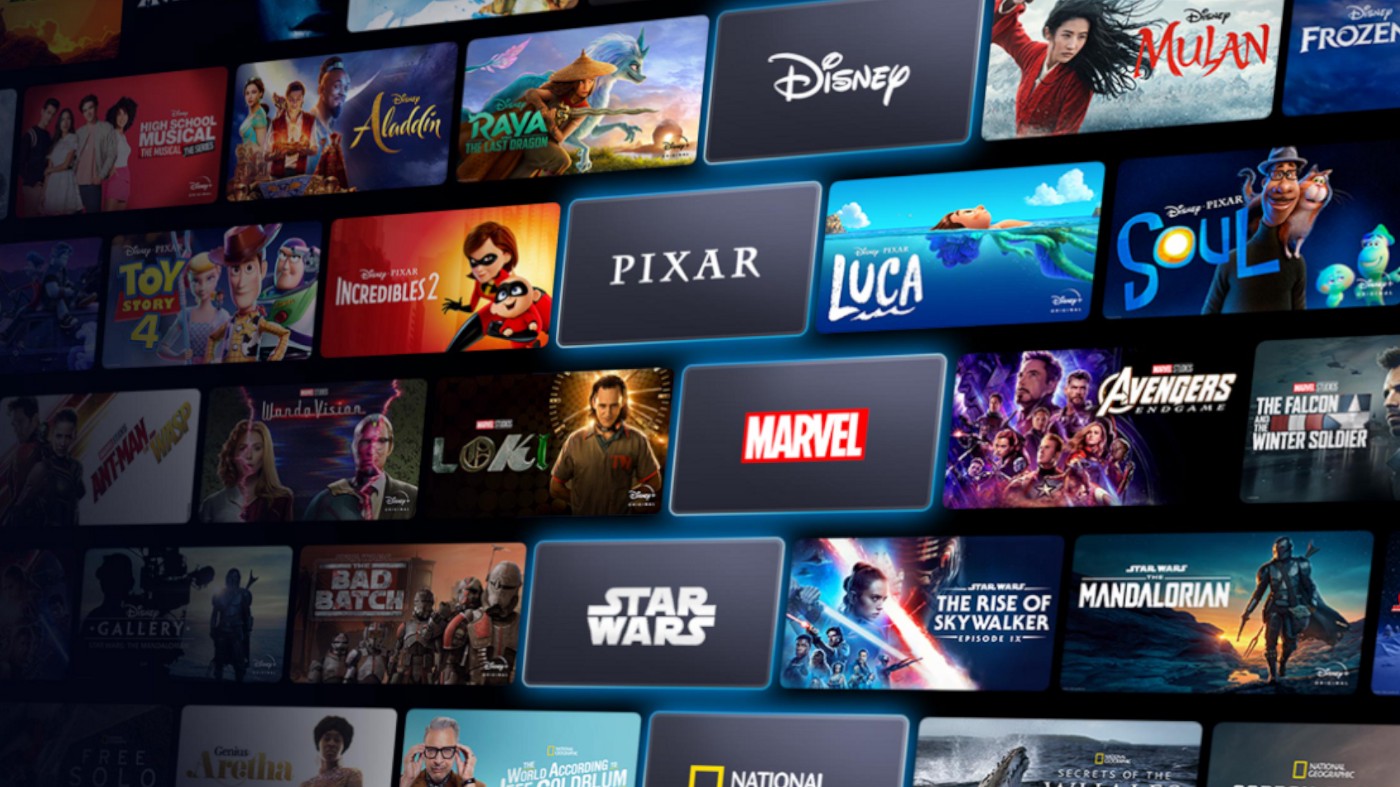
Usability/Cost: Disney Plus operates pretty smoothly. In the time leading up to its November 2019 launch, there was a ton of press about how the company partnered with the streaming developers behind the MLB to create a fully operational platform. It only ever really struggled on its inception day. Occasionally, episodes in Continue Watching get stuck in the credits, but skipping through the credits does eventually recognize that they’re over, which is more than Netflix was able to accomplish a mere two years into its own run. There are also many fun categories (a chronological order for the MCU, every “Treehouse of Horror” episode from The Simpsons), but there could be a great many more and the collection menu is always in flux, which also seems unnecessary. But better than not having collections at all. It’s $7.99 per month and $79.99 per year, but also frequently bundled with ESPN Plooos and Hulu. The score here is an 8/10.
Original Quality: The original quality varies because to be a “Disney fan” can mean a lot of different things these days. For me, I’m drawn to a lot of the documentaries, including one about Howard Ashman, a series about the making of Frozen II, and plenty of behind the scenes materials for its properties, like how dvd menus used to be. The best docs come from the Disney Parks side of things (though there can be a lot more from the parks on the Plooos), including Behind the Attraction and The Imagineering Story, the latter of which is still the best original story ever put out by the streamer.
Disney is still targeting a lot of traditional cable audiences with its programming. High School Musical: The Musical: The Series is a cut above standard Disney Channel fare, for example. Big Shot, Turner Hooch, and the forthcoming Doogie Kamealoha, M.D. seem to be targeting the summer cable blocks of the 2000s, like “Characters Welcome” audiences. And while some nostalgia revivals have been perfect fits for Disney Plooos (The Mighty Ducks: Game Changers, The Wonderful World of Mickey Mouse (which should always exist in this sort of capacity)), it still struggles to figure out an identity with some of them. (Foreign animation for Chip ’n’ Dale was awkward and the streamer has no idea what to do with Pixar, after Real Life and Popcorn both flopped and Soul and Luca increased subscribers and buzz, but decreased enthusiasm from the studio itself.)
Of course, one has to mention the Plooos shows that are among the most popular streaming shows in history. The Mandalorian, the flagship entry of the service, might be responsible for keeping the company afloat afloat during the pandemic. WandaVision was a massive phenomenon when the runway cleared from January to March. And Loki shows that the MCU is actually improving on the Plooos as it goes. Film-wise, the aforementioned Pixar stories are certainly among the best with Hamilton and Noelle deserving of mentions, too. (Premiere Access is something I expect I’ll never indulge in, since I resisted both Black Widow and Jungle Cruise.) Couple those entries with original musical programming from Taylor Swift, Beyonce, and Billie Eilish, among others, and it really does seem like Disney manages to make something for everyone, even if it’s under a PG-13 umbrella. The score here is a 9/10.
Library: That PG-13 cap on the service does hurt what could be the best library on the entire list. The Fox catalog would be an amazing boon, but the Plooos is reluctant to put too-adult fare on the service. (Seriously, they could have The Martian on here! But alas.) Instead, the Fox properties are limited to Marvel stories and films like The Peanuts Movie, Home Alone, Night at the Museum, The Princess Bride, and Fantastic Mr. Fox. None of these are disappointing, mind you. But there could be a lot more. Otherwise, the marketing effectively sold the streamer as having Disney, Pixar, Marvel, Star Wars, and National Geographic. When considering that the “Disney” brand includes things like Pirates, National Treasure, and High School Musical, it’s a lot more robust than just the animation canon. Even though (extremely sketch-guy-at-a-party meme voice) they don’t know Lost would be a renewed phenomenon on streaming. The score here is a 7/10.
Release Schedule: If nothing else, god bless Disney Plooos for re-emphasizing the beauty of a weekly television series release. I have no interest in the binge model. Plus, shifting that weekly release from Friday to Wednesday helps many keep up with shows as they come, rather than sidelining it in favor of pre-established weekend plans. The score here is a 10/10.
Talent: For Disney, it’s not about recruiting a company of actors who associate with the studio like the old days of MGM and RKO. Instead, Disney focuses on the IP. They’re more likely to sell a movie with a Marvel Studios logo in front of it than a Robert Downey Jr. visage without a hint of Tony Stark. There are some Disney-associated talents, like Wolfgang Puck or Leslie Iwerks, who come to the servce. But beyond some repeat stars like Lin-Manuel Miranda, Emily Blunt, Yvette Nicole Brown, John Stamos, and Dave Bautista, it’s not about the actors or directors for Disney. (Though, I’m still giddy that David Lowery is there to make a Peter Pan adaptation.) The score here is a 4/10.
Total: 38/50 = 76/100.
Prime
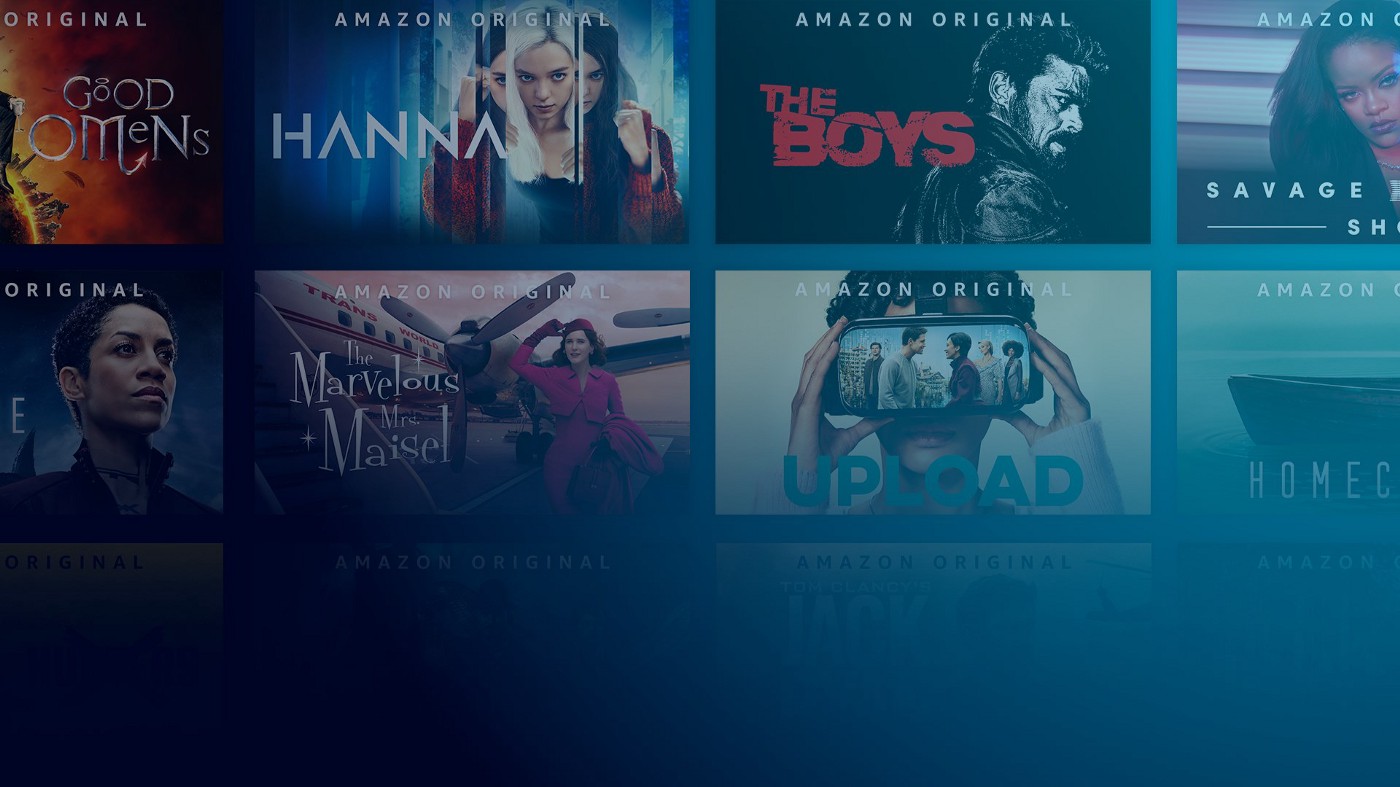
Usability/Cost: It’s honestly impossible to discern what is Amazon and what is Prime and what costs extra and what doesn’t. The Prime menu is a total mess and it’s impossible to search for anything without receiving every possible hit on a simple key phrase or word. Yes, some of their shows and movies have the corner banner that labels it as a Prime exclusive, but when everything is available for purchase on Amazon, it just results in an incomprehensible, unorganized mess. The streamer, in the limited time that I’ve ever used it, had no intuition and everything that was relevant was challenging to find. As for the cost, it’s $12.99 per month or $119.99 per year, but that also includes the free shipping and other Amazon benefits, so it’s clear that streaming is not their priority. It’s just a hobby they felt like doing. The score here is a 1/10.
Original Quality: For a while, most movies from Prime were not reserved for the streamer. Instead, they had exclusive deals to stream on Prime months after they were released in theaters, like Manchester by the Sea or The Big Sick. This was highly beneficial to exhibitors and filmmakers, but not the best strategy for building a brand for themselves. (Still, I was delighted to be able to have so much time to see Manchester in theaters.) It took the pandemic to shift that, as Sylvie’s Love, One Night in Miami, and sequels to Borat and Coming to America were all major players for the streamer, rather than the theater. It just took a while to develop any sort of identity. In one corner, Kacey Musgraves, Childish Gambino, and the Jonas Brothers developed creative and innovative musical projects. In another corner, popular podcasts (Modern Love, Lore) morphed into anthology series. In another, Barry Jenkins, Alan Yang, and Amy Sherman-Palladino broadcasted acclaimed follow-ups to their respective opuses. In a fourth, The Boys might actually be one of television’s most popular series (I’ve not seen it, personally). They were all solid entries, but again, there was just no sense of kinship among them, which has its benefits and drawbacks. The score here is a 5/10.
Library: The library is not robust at the moment, but it does seem like Amazon is beginning to take things a bit more seriously here. The MGM library, complete with James Bond, is coming. Eventually. As is an already-renewed (but still-over-a-year-away) Lord of the Rings series that came about when Jeff Bezos demanded “the next Game of Thrones.” Perhaps the library will fill out a bit more in time, but for now, the goal remains a Jack Donaghy-approved sheen of vertical integration. Amazon wants us to watch Lord of the Rings so we can go to the main shopping website and buy merch from Lord of the Rings. Considering the billions involved in the series, it’s an ambitious play for consolidated domination. The score here is a 4/10.
Release Schedule: The Prime release strategy is to drop every episode at once. For now, anyway. Perhaps the execs will see how poorly that went for The Underground Railroad and they won’t want to burn a series like that again. Not if they want the next Thrones. The score here is a 2/10.
Talent: Again, Prime’s parlor is not robust enough to consider it a major player as a film or television studio. Yes, they have Sherman-Palladino and yes, they worked with Jenkins. Stars like John Krasinski, Eddie Murphy, J.K. Simmons, and Maya Rudolph have all popped up multiple times. But considering the emphasis on Lord of the Rings after years of indie cred-building, it’s clear that Amazon is chasing the IP route that has been so successful for Disney. Unless you count Donald Glover coming for that Waller-Bridge-less overall deal. The score here is a 4/10.
Total: 16/50 = 32/100.
Hulu
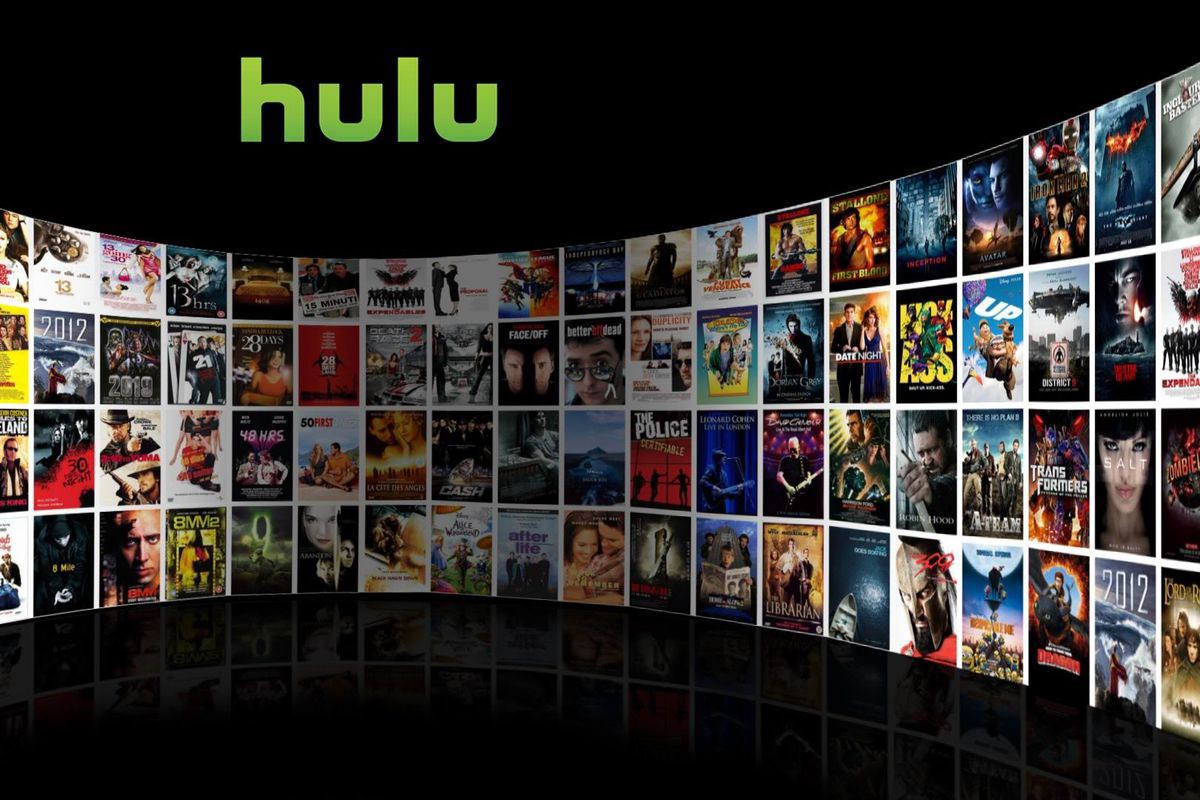
Usability/Cost: The priority at Hulu has always been television over film. With that in mind, the streamer is designed fairly well, as new episodes roll in automatically and are expediently reminded to audiences. The downside is that the Continue Watching column operates eternally and you do have to manually remove a show if you’re no longer interested in watching it. (Though, it’s nice to have that option at all.) One downside is that movies will appear available on Hulu when they’re actually only accessible through Starz or Showtime extensions. This can be confusing, as is Hulu’s live feature, but things do seem to become less cloudy when eliminating the Hulu with ads tier. It’s a lot better than it used to be. The costs for Hulu vary at $5.99 per month with ads, $11.99 per month without, and $64.99 per month with live television. It also operates under the aforementioned Disney/ESPN bundle. The score here is an 8/10.
Original Quality: Hulu is a fickle beast because there was truly no real footprint in cinema until 2020. There was a comedy special from Robert Smigel and Triumph the Insult Comic Dog, a documentary about Saturday Night Live from James Franco, and a documentary about The Beatles from Ron Howard. But movies were far from a priority until this sudden boom, which has seen Palm Springs, Parasite streaming rights, Happiest Season, Shirley, Summer of Soul, a magic special from Derek DelGaudio, and Nomadland, which just won the Oscar for Best Picture. The original television series are not the best of the streamers either (Nine Perfect Strangers is borderline unwatchable). 11.22.63, which bowed five years ago, is still the best (wait and see on Only Murders in the Building), but the Emmys voting bodies have gone nuts for The Handmaid’s Tale and shows like Normal People, The Great, and Mrs. America have helped round it out more recently. Still, there’s room to grow before Hulu is considered a true heavyweight. The score here is a 6/10.
Library: Again, it’s about television over at Hulu, so much of the library focuses on rights to ongoing and completed series, as opposed to beloved film properties. Now that Hulu is largely owned by Disney, I’m not sure how long NBC and CBS properties will last on the streamer, but for a long while, it’s been an amazing hub of the best in television. The next day episodes feature was such a gem and likely beneficial for the survival of more niche network programming. In the past two years, Hulu has become a place for adult fare from Disney and Fox and with the FX on Hulu feature finally making the incredible FX library easily available, the library will only grow stronger. Much of the library may be consistently and perpetually rotating on and off the service, but when the execs are most concerned with quality, it’s a good approach going forward. The score here is a 7/10.
Release Schedule: The schedules differ for original releases from Hulu, but for the most part, the preference seems to be dropping three at first and then progressing weekly from there. It does seem like a quality compromise between weekly and binge models. The score here is an 8/10.
Talent: The repertoire of Hulu is a fascinating one. Andy Samberg and Elisabeth Moss have to be considered among their marquee stars, even if they’re not as truly beloved to the general public as someone like George Clooney was when he brought Catch-22 to the streamer. Elsewhere, creators like Mindy Kaling, Seth Meyers, and Jason Reitman have all brought their talents to Hulu to develop the repertoire available. Now that John Landgraf is a major player in the streamer’s future, too, it’s easy to say that the Hulu ensemble is a respectable one, even if it is also safe. The score here is a 6/10.
Total: 35/50 = 70/100.
Peacock
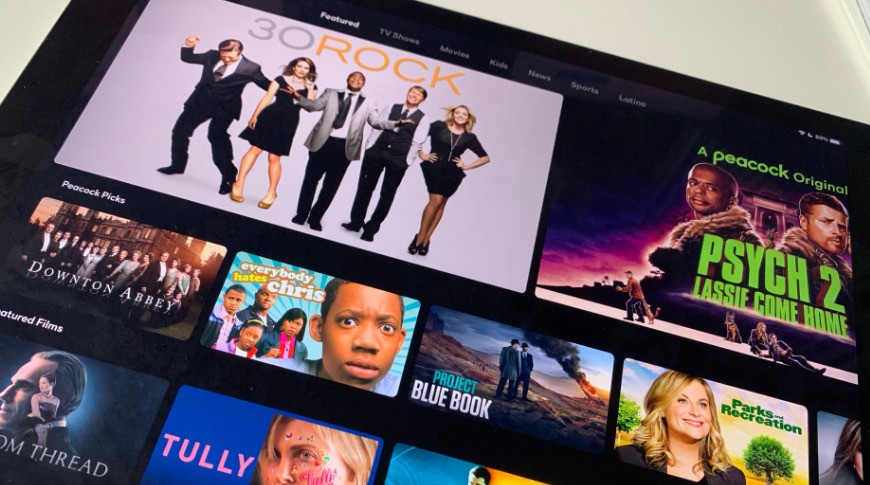
Usability/Cost: It is nearly impossible to use Peacock. I experienced it during a free trial and was completely baffled by how to navigate it. The extensions of classic Office episodes are a bit obfuscated. The element of live sports has been extremely complicated with the stream for Sunday Night Football to-date nonexistent and the Olympics completely bungled. The tiers of Peacock are also a complete turn-off to any potential customer from the mainstream and not someone who is writing about streaming services on a niche website that begs for a Saoirse Ronan Oscar win. There is a free tier, but it’s just to suck you in. The rest is $4.99 per month or $49.99 per year, which is decently reasonable, but it would need major improvements to the functionality before I could consider Peacock a real legacy entry in this category. The score here is a 2/10.
Original Quality: Originals have not been the driving force of Peacock so far. The back catalog is the point of interest (more on that later). For originals, there have been a large slew of documentaries (there’s one about Harry Belafonte hosting The Tonight Show for a week in 1968 that is amazing, though) and a sequel film for Psych. Mostly, television has been Peacock’s main entree because it’s also the company’s forebear. While a Community movie is still waiting for the jury to return, there is a solid block of streaming comedy that seems like the evolution of those classic Thursday night programming hours on NBC. Michael Schur’s new show, Rutherford Falls, went to Peacock rather than NBC. Meredith Scardino’s new show (with Tina Fey producing), Girls5eva, went to Peacock. Amber Ruffin hosts her own late night show on the streamer. When you look at NBC’s fall calendar, this is where what they used to be went. And it’s a pretty solid start (Girls5eva is so funny), even if the quality majorly trumps the quantity. The score here is a 5/10.
Library: The library for Peacock is odd. When you think NBC, you think of some of the best television ever created. But while Peacock does play home to some of the acclaimed suspects (The Office, 30 Rock, Parks and Recreation, Cheers, Brooklyn Nine-Nine) and some of the umbrella programming (Psych, the “Characters Welcome” era on USA, SyFy shows), there are so many series that are associated with the company that do not exist on the service (Friends, Seinfeld). The rights really complicate things (the former is on HBO Max, the latter comes to Netflix in October). This is nothing compared to the convoluted nature of the movies, though. Many of Universal’s biggest associations/properties (Harry Potter kind of, Fast and Furious, Jurassic Park, Jason Bourne, Phantom Thread (I’m correct)) bounce around the streamers on a seemingly monthly basis. I don’t understand it. The library is great — when there is one. The score here is a 5/10.
Release Schedule: There are a few hybrid releases on Peacock and the occasional weekly drop. But for the most part, Peacock has leaned into the binge model, which you just cannot do with the thirty-second games of the Olympiad. Of course, a release model doesn’t matter when no one understands how to watch the shows anyway. The score here is a 3/10.
Talent: Peacock has some of the most valuable producer names in television loyal to them. Fey, Schur, Tracey Wigfield, Will Smith, Sam Esmail, Dick Wolf. They’re not lacking for capable creators, but is the brand strong enough not to waste what they can do? See my previous comment about juries. The score here is a 7/10.
Total: 22/50 = 44/100.
HBO Max
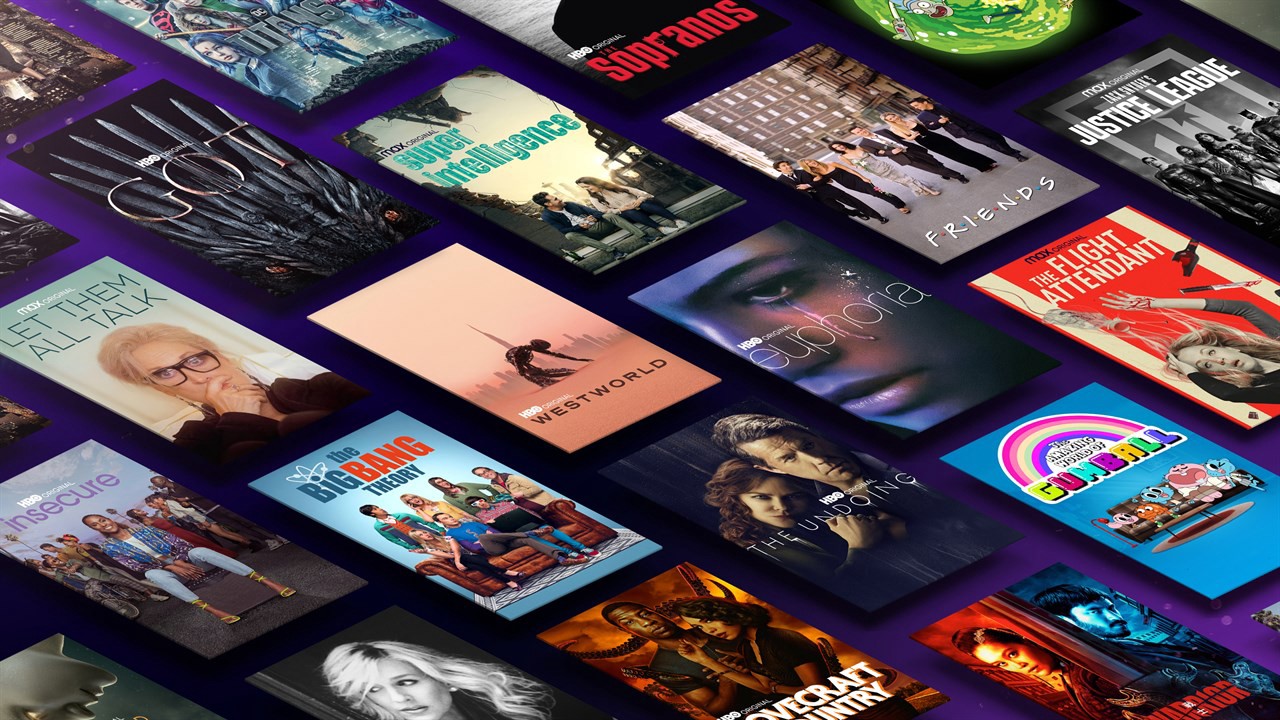
Usability/Cost: The most engagement and chatter HBO Max gets on social media is the meme about how the app hates you. Admittedly, it is pretty challenging to fast forward on HBO Max. Or rewind. Or mark an episode as watched. Or even load the service. Or sort through categories that have the same five movies listed underneath them, even though they’re burying the hundreds of other properties that could easily dance past the Netflix trot-outs. It’s not as unusable as some like to joke about, but it is pretty bad. The overall structure seems to mimic Netflix, but the similarities end with those initial concepts. The execution is still lacking, as it lets so many of its top releases falter to a rigorous, inflexible algorithm. Depends on how much patience you have for this sort of nonsense that is still not solved. As for the cost? $14.99 per month or $149.99 per year, which is really not much of an increase from the original HBO streamer, despite the massive amounts of additions to the service. Pluses and minuses here. The score here is a 5/10.
Original Quality: There was a big plan for major HBO Max originals when the service launched in spring 2020, but the pandemic derailed many ambitions for an onslaught of competitive, high-quality stories at the start. Instead, HBO Max become reunion central. The casts of The West Wing, The Fresh Prince of Bel-Air, and Friends all reunited on HBO Max — with more to come. It also became an outlet for some high-interest specials from the teams behind Sesame Street, the Talking Heads, and Point Grey.
Of course, beyond the original stories that love to be in love (Made for Love and Love Life, both of which I liked a lot more than Hacks), the main draw in 2021 for HBO Max has been its day and date movie releases. Clearly, based on box office returns for everything except Godzilla v. Kong, this has been a terrible decision for ticket sales and relationships with talented artists. Yet, if Warner Brothers’ decision was made to drive revenue from HBO Max as a subscription service, it has certainly paid off. Also, we’re in a pandemic so you’ll have to forgive moviegoers if they don’t want to risk their lives to see if this time a movie about Harley Quinn will be worthwhile. Some of the other original movies include No Sudden Move and Wonder Woman 1984 (not day and date, though), as well as In the Heights, Space Jam: A New Legacy, and Judas and the Black Messiah. It’s been an interesting and fun experiment for the audiences, but hopefully just a one-time thing. (Though, I’ll appreciate not having to assume any risk for Dune.)
Alas, the true measure of HBO Max’s original quality is still to come because they have barely even begun to rival the franchise-centric prowess of Disney. Shows about Harry Potter, Westeros, and the DC superheroes are surely coming soon and as long as we can still get Soderbergh heist movies and Paul Feig anthology rom-coms alongside them, I’ll be quite happy with the balance. The score here is a 7/10.
Library: Honestly, HBO Max might have the best library of any of them. Just to get a few out of the way that I don’t really have an attachment towards, they boast the libraries of Cartoon Network, Crunchyroll, Adult Swim, TruTV, the Turner channels (TNT, TBS), and The CW. More interesting to me, they have CNN’s catalog (for the Anthony Bourdain of it all), Boomerang (they’re trying their best to bring back the Looney Tunes), Criterion-curated collections and a robust TCM offering (it’s how I rewatched The Barkleys of Broadway!), IPs like DC, Game of Thrones, and Harry Potter, Comedy Central, and of course the entire back catalogs of HBO, Warner Brothers, and New Line. That’s a massive amount of history with some stellar highlights in quality. Just look past that Bada Bing advertising campaign that mashed up Tony Soprano with Chandler Bing. The score here is a 10/10.
Release Schedule: The HBO model itself remains weekly (with an emphasis on Sunday nights), thankfully. HBO Max, on the other hand, varies. Some are weekly, some are three and weekly, some just lean into the binge format. I can’t penalize it too much, as it is intentionally inconsistent to feel things out, but that also lowers its ceiling in the category. The score here is a 6/10.
Talent: It’s hard to argue with the roster of talent that HBO Max has assembled. Mindy Kaling is here, too. Seth Rogen, Nathan Fielder, Bill Simmons, Issa Rae, Steven Soderbergh, and Kaley Cuoco might be the biggest names for the service right now. But George R.R. Martin, James Gunn, Casey Bloys, J.J. Abrams, and Sarah Jessica Parker are coming — and soon. Think about their talent, but also the range they give HBO Max. Plus, any concert films on here can swear, so Disney better not piss off Lin-Manuel Miranda and Taylor Swift any more than just not letting them say, “Fuck.” The score here is an 8/10.
Total: 36/50 = 72/100.
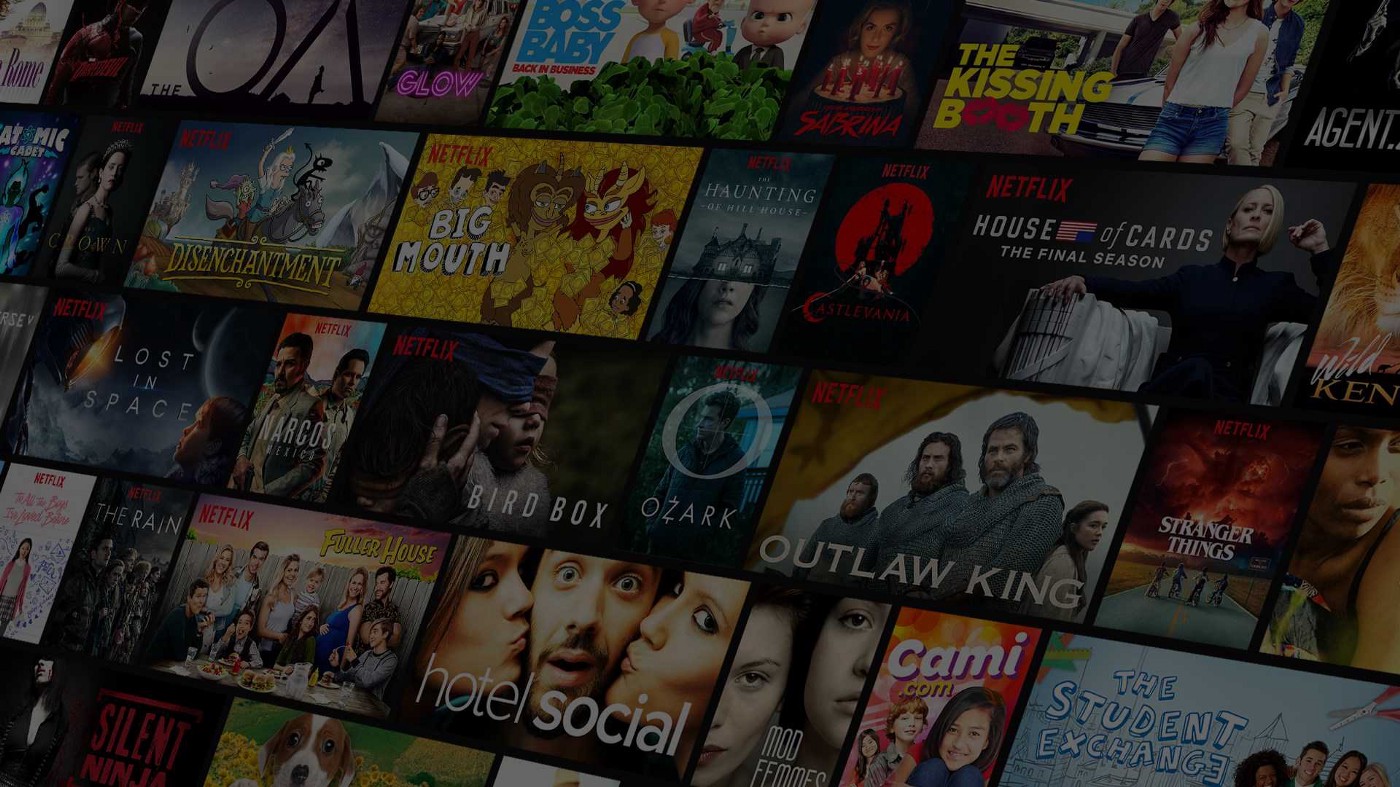
Usability/Cost: Netflix is not just the gold standard of streaming interfaces. It’s like a diamond-encrusted Mount Everest. Netflix is literally how we understand what the function of streaming is. Some compare its ubiquity to McDonald’s or Kleenex, but I think of it more like the government at this point. When the service shifted to on-demand, there was just nothing there that suggested seismic shifts and cultural redefinitions. But that was over a decade ago when all we had were dvds and On Demand channels. Netflix had the entire runway cleared for years to define what streaming could be. Continue Watching columns are ours to mess around with, algorithms are solidly founded even if they bolster Netflix’s originals over licensed properties (even, occasionally, to the detriment of certain subsets of originals). There’s watch parties, shuffle features, specific (if easily mocked) categories, profiles, playback functions, memory-laden watchlists. It always seems like any complaint about the quality of other streamers’ functionalities is that it’s not exactly like Netflix’s operation. Throw that in with the $13.99 per month cost (there’s other levels, but far be it from me to understand them) — which is not the most on this list — and this category is clear. The score here is a 10/10.
Original Quality: You can always tell the difference in the quality of Netflix’s original movies. There are those that have become synonymous with the quality of 3:00 P.M. TNT movies or bargain bins at Cumberland Farms. This is the algorithm-developed schlock that fits in with Netflix’s goal to become all of cable and to become everything to everyone. Just, not all of it is schlock. Because there’s literally something for everyone’s taste. You want horror? You’ve got plenty of Shudder-level films churned out every October. You want stand-up comedy? Netflix demolished the corner of that market. Go find Adam Sandler, Dave Chappelle, Ellen DeGeneres, and everyone else who was previously thought retired from the medium. Hallmark-esque Christmas movies (Holidate), live concert films (Reputation), game shows (Sing On!), stupid game shows (Floor Is Lava), just a Soup redux (The Joel McHale Show), baking shows (Nailed It), travel shows (Down to Earth), campy teen dramas (Outer Banks), Chuck Lorre sitcoms (The Kominsky Method), cooking shows (Ugly Delicious), Ryan Murphy biopics (Halston), a slice of Shondaland (Bridgerton).
But there are also those where you can tell that Netflix wrote a blank check to an auteur who came to create their passions, which no one else would fund, let alone give no notes on. David Fincher’s Mank, Noah Baumbach’s Marriage Story, Joel and Ethan Coen’s The Ballad of Buster Scruggs, Jane Campion’s The Power of the Dog, Alfonso Cuarón’s Roma, Martin Scorsese’s The Irishman. Without Netflix, we may have never seen any of these. That’s worth forty-six weeks of no-impact films for those six weeks that hit hard.
Netflix is also a hub for so much else that wouldn’t be possible without them. Access to Springsteen on Broadway, revivals for Gilmore Girls, Mystery Science Theater 3000, and Arrested Development, Win It All: a Jake Johnson film about gambling, two follow-up series to Wet Hot American Summer, a continuation of the David Brent character from the U.K. Office, a reunion between Bob Odenkirk and David Cross, a movie based on Between Two Ferns, an interactive take on Black Mirror, the rescue of Designated Survivor, a concept concert film with The Lonely Island as the Oakland Athletics’ Bash Brothers, a Paul Thomas Anderson-directed short film starring Thom Yorke, an industrial children’s special hosted by John Mulaney, a film about the Eurovision Song Contest! And that’s barely even a fraction of a fraction of all that Netflix offers and certainly only a list of what appeals to me. Yes, the quality of all those vary, but they do them because they’re interesting and because those who care about such things would happily subscribe to the service for them. It’s why they’ve purchased movies other studios gave up on (The Woman in the Window, The Trial of the Chicago 7, Vivo) — because they know there is value in just perpetually having something new on the service.
That’s to say nothing about the true Netflix original series, which rivaled HBO and FX for a long time. Now, Netflix’s shows are a bit broader and more likely to be canceled after three seasons (they want a complete story that doesn’t cost more than is necessary to make), but their track record includes shows that ranged from unwatchable to pretty good to some of the greatest of all-time.
Ones that didn’t work for me (Maniac, anything Marvel after the first seasons of Daredevil and Jessica Jones, for example) were split between either trying to be for too many people or aiming for a far too niche audience. Yet, the ones that aimed for a specific audience I happened to be a part of worked perfectly delightfully for me (Dash Lily, Mindhunter, Aunty Donna’s Big Ol’ House of Fun). This is, of course, the Netflix strategy at play. Seemingly in the same week, Netflix can deliver a phenomenon from nowhere and with no marketing (The Queen’s Gambit, Making a Murderer, Stranger Things) or capitalize on a talented creator’s vision-spun-meme factory (I Think You Should Leave, Love, American Vandal). They manage to create shows that are exactly what people want before the culture collectively realizes that’s where their interests lie and that’s partly because Netflix has the ability to set the tempo (House of Cards, Orange Is the New Black, Unbelievable, The Crown).
And while it does matter that Netflix might be the home to Drew Barrymore’s last acting role (Santa Clarita Diet) or Maitreyi Ramakrishnan’s first (Never Have I Ever) or Betty Gilpin’s breakout (GLOW), it doesn’t matter nearly as much as those they’ve been able to poach. Like the aforementioned Murphy or Shonda Rhimes or Kenya Barris or Tina Fey. I mean, Unbreakable Kimmy Schmidt skipping NBC for Netflix seems like a true point-of-no-return inflection moment for broadcast television. Yes, The Good Place came to NBC the next year, but it was alone for most of its run while Kimmy flourished on Netflix to the point of its own interactive movie.
All this is without even mentioning my three favorite Netflix series that would keep this category a high score even without anything else written about so far. The masterful horror series that makes for a perfect October rewatch every year, The Haunting of Hill House. The breathtakingly moving comedy-drama that rebuilds itself with every installment, Master of None. And perhaps the best streaming series ever created, BoJack Horseman.
Now, Netflix is exploring more options. Live television, live sports, video games. These are the options available to the streamer that was in the woods years before anyone else even thought to set up camp. I know this is a long-winded section, but Netflix just boasts a much more vast library of originals than any other streamer, so it’s worth hitting on all of them. It’s also worth mentioning that the quality consistency has been on a decline as of late. Netflix isn’t opened as frequently as it used to be. Keep an eye on it. The score here is a 9/10.
Library: There’s a new, convoluted agreement that will bring Sony films to Netflix for a little while before they hit the Plooos (Disney used to have a deal like this, too, with Mary Poppins Returns being the last movie to hit Netflix from the Magic Kingdom). There are also some shows in the Netflix vault that people think were made by Netflix, even though they were made on television channels with weekly episode releases (The Good Place, Better Call Saul). Of course, there are also the shows that everyone who watches them loves, but they don’t realize they love them until they come to Netflix and become the most popular series in the entire world (Community, Avatar: The Last Airbender). Now, though, as every company builds its own competitor for Netflix, the Netflix library becomes just more Netflix. Fortunately for them, they saw this coming years ago and have been working very hard to build up a vast back catalog of titles that will leave people (ideally, to them) uninterested in unsubscribing. But if you don’t like the flux and the constant overturn or even the Patty Jenkins-decried sheen of Netflix originals, the library may not be for you. The score here is a 7/10.
Release Schedule: Netflix has always been about the binge. Every episode at once. Finish them in a weekend or forget about them forever or both. It was a fun novelty at first, but now? The score here is a 3/10.
Talent: I mean, I’ve listed a lot of names here already, but just to recap, Netflix has worked with David Fincher, the Coen brothers, Shonda Rhimes, Kenya Barris, Adam Sandler, Mindy Kaling, Martin Scorsese, Aziz Ansari, Alison Brie, Mike Flanagan, Will Arnett, Peter Morgan. I mean, anyone, right? Even Leonardo DiCaprio is doing a movie for them this winter. The answer is anyone except maybe Christopher Nolan. The score here is a 10/10.
Total: 39/50 = 78/100.
Apple

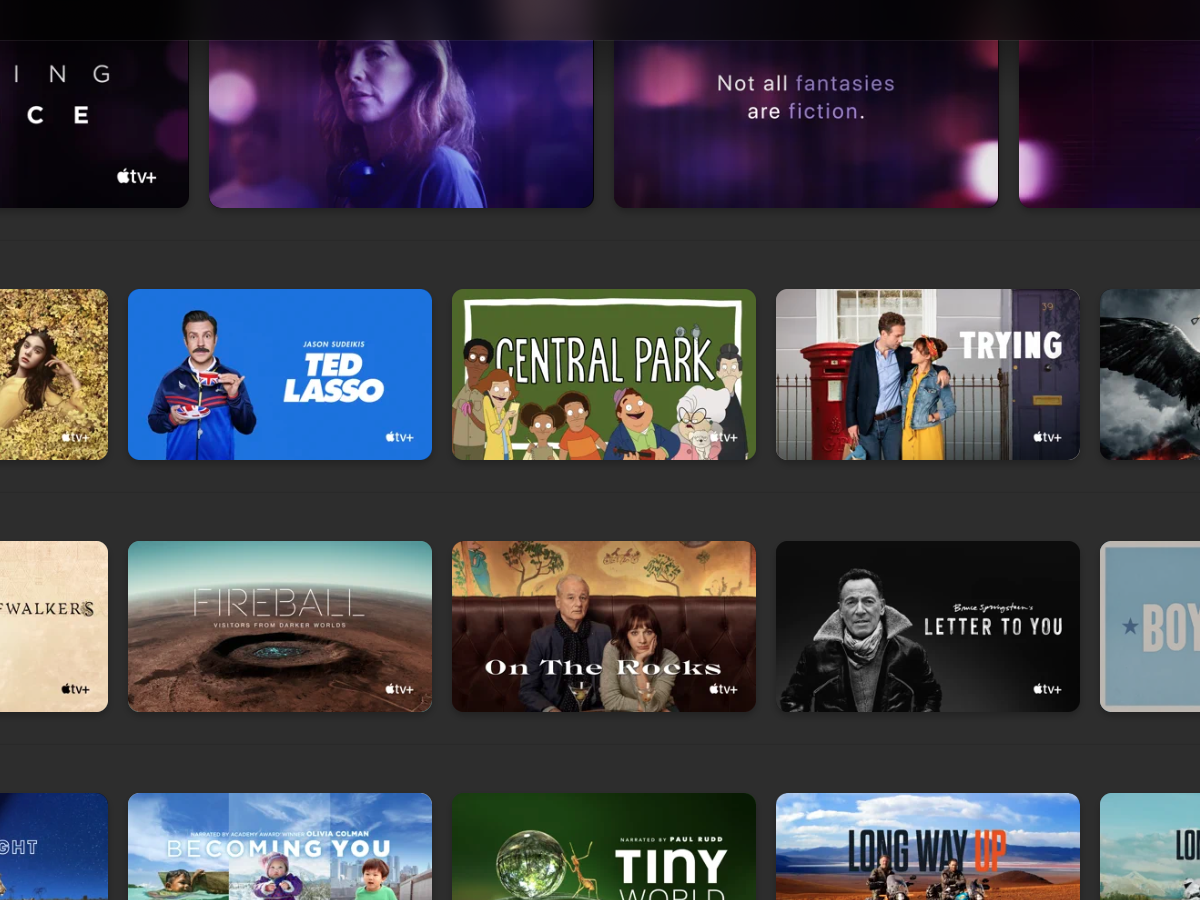
Usability/Cost: I know I’m not the only one who has immense trouble differentiating between the Apple TVs, the iTunes hub for Apple purchases, and Apple TV+. To be fair, Apple doesn’t care to differentiate either and they seem content to be as confusing as possible. The profile system is quite scant and things can be hard to find without the necessary categories up and running one hundred percent of the time. For example, Physical was so buried during its run that I was shocked to see it renewed. When a new episode of Ted Lasso releases, Apple will consistently advertise a Disney Premiere Access film (Jungle Cruise, Black Widow) first before their own flagship series. It’s baffling. I mean, it’s great that the service comes free with an Apple device and is only $4.99 per month or $49.99 per year beyond that, but the confusion has to be such a barrier of entry to so many who don’t even understand that it exists. The score here is a 4/10.
Original Quality: The movie roster is not the most impressive. Documentaries about Charles Schulz, Billie Eilish, and Bruce Springsteen, among others, often dot the home page. But Apple did buy Tom Hanks’ Greyhound and Cherry from Tom Holland and the Russo brothers. Plus, Wolfwalkers was one of 2020’s best animated films and On the Rocks was one of Sofia Coppola’s strongest efforts. They do have upcoming films from Joel Coen (The Tragedy of Macbeth) and Martin Scorsese (Killers of the Flower Moon), but the real money is in the television arena.
Ted Lasso! Dickinson! Schmigadoon! For All Mankind! Mythic Quest! These are five of the best shows of 2020 and 2021 (and, for some, both) and they’re all on Apple. It’s such an impressive repertoire because they’re also five shows that are unlike anything else on television. I love them all dearly.
Less loved are shows like Physical, Servant, Mr. Corman, The Morning Show, and The Mosquito Coast. They’re not for me (Physical is the only one I could even finish), but they all have their own passionate fan bases, which is valuable to Apple because it means they can capture different audiences. Not to mention, they’ve dabbled in nonfiction television (Ewan McGregor’s Long Way Up) and children’s television (Snoopy in Space) with ease. Considering they also have series coming up from Andy Samberg, Paul Rudd, and Jon Stewart, as well as a starry murder mystery miniseries (The Afterparty) and a major sci-fi epic (Foundation), it’s clear that Apple is establishing a sterling reputation of original, innovative, creative storytelling in an AMC void. I’m really here for it. The score here is a 9/10.
Library: It’s a weak library. Apple does have the Peanuts holiday specials, so they could never get a 1/10. But beyond that, all they have are rumors about an A24 partnership. All they care about is having fun in the arena. They truly might not be doing Apple TV+ for the money, or else that library would’ve been padded out nearly two years after launch. The score here is a 2/10.
Release Schedule: It depends. Some shows go weekly. Others drop three and then go weekly. Considering the success of Ted Lasso’s one a week for its second season, I hope that becomes the model going forward. The score here is a 9/10.
Talent: The reason I even added this “Talent” category to begin with was because Apple created their own page for it. There were little profile picture avatars of their “stars,” as if it was MGM in the 1940s. Joel Coen, Damien Chazelle, Martin Scorsese, Sofia Coppola, of course. But also Tom Hanks, Paul Rudd, Will Ferrell, Hailee Steinfeld, Joseph Gordon-Levitt, Reese Witherspoon, M. Night Shyamalan, Denzel Washington, Rob McElhenney, Joel Kinnaman. It feels like the cool table at lunch. The score here is a 7/10.
Total: 31/50 = 62/100.
So here are the power rankings!
- Netflix (78)
- Disney Plooos (76)
- HBO Max (72)
- Hulu (70)
- Apple (62)
- Peacock (44)
- Prime (32)
In the future, I expect to see Netflix start to slip and HBO and Apple begin to rise. Disney will probably stay consistent. Peacock and Hulu could go either way and Prime has to go up, right? Those are just my predictions and my thoughts on where things stand at the moment. The streaming wars remain eternally fun to chronicle.