
For Ricki Spencer, a trans woman from Melbourne’s western suburbs, Melbourne University was always a sanctuary where they could watch the diverse world pass by.
“I didn’t have to worry about being sneered at, spat on, called a poofter, tranny, freak or fag or being punched, all of which had happened to me regularly in the west,” says Spencer, who is now the LGBTIQ officer at Melbourne University’s Graduate Student Association.
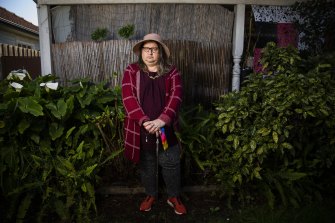
Transgender woman Ricki Spencer says Melbourne Uni is no longer the welcoming space it was.Credit:Paul Jeffers
But Spencer no longer feels welcome at the university.
“This academic [Lawford-Smith] has used her privileged space and place to weaponise trans and gender-diverse students on our university spaces and make them people to be ‘feared’ and be ‘reported’.”
But for Lawford-Smith and others on the gender-critical side of the debate, the key issue is the threat allegedly posed to cis-women by some trans women (who in their eyes remain men, regardless of how they identify). That threat needn’t amount to actual harm, she says; it’s enough that women should feel uncomfortable in spaces whose primary purpose is to make them feel safe.
“Women grow up in a culture saturated in male violence, harassment and sexual objectification, and this severely impacts on their use of public space,” she says.
“Women are taught how to keep themselves safe, and then activists take away their ability to do that by saying any man who wants to include himself in any women-only space is allowed to. There don’t have to be rapes or assaults for there to be a conflict of interests.”
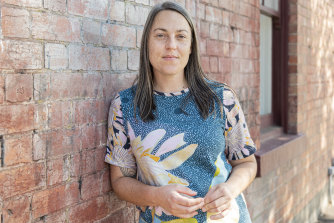
Associate Professor Holly Lawford-Smith launched a website in February inviting cis-women to share stories of times they had felt threatened by transgender women.
Yet there is substantial evidence that trans people, and especially trans women, are far more likely to experience violence, including sexual violence, than to threaten it, being subject to assaults, sexual and otherwise, far more than any other group in society.
The 2015 US Transgender Survey – the largest of its kind ever conducted anywhere in the world – found 47 per cent of its more than 27,000 respondents had been sexually assaulted at some point in their lives. One in 10 said they had been sexually assaulted in the year prior to the survey, and more than three-quarters of those (roughly one in 12 of the entire sample population) said the incident took place in a public bathroom.
In Australia, a 2014 study found 65 per cent of young trans and gender-diverse people avoided using public toilets. The 2017 Pathways survey of trans youth found almost one-quarter had been sexually abused by someone outside the family (and more than 7 per cent by someone within it).
Evidence of harm in the other direction is, by contrast, relatively scant.
The Victorian Equal Opportunity and Human Rights Commission says it is not aware of any evidence of attacks by trans women on cis-women in toilets having occurred in Australia.
“Continued questioning of trans people’s right to access bathrooms that align with their gender is fuelled in large part by transphobia and sensationalised media coverage,” says the commission’s head of strategic communications, Aram Hosie.
Hosie says education has a key role to play in defusing a debate that is often toxic. “First, to disprove the myth that trans or gender-diverse people present any kind of risk to other users of public bathrooms. But also to educate businesses about their obligations under the Equal Opportunity Act not to discriminate against trans and gender-diverse people.”
To that end, employers could soon be required to include all-gender bathrooms in Victorian workplaces wherever possible, with WorkSafe considering feedback from a review before making a final decision.
Mama Alto, CEO of Transgender Victoria, cites as best practice the facilities at the recently opened Victorian Pride Centre: lockable single rooms with a toilet, mirror, sink, hand dryer, menstrual hygiene disposal bin, plus a number of toilets with hoists and other aids for the disabled.
“These inclusive measures enable all people to use the bathroom comfortably and safely, with dignity and privacy,” says Alto. “No matter who they are.”